
🤓 Latest Submissions
Wardrobe.AI
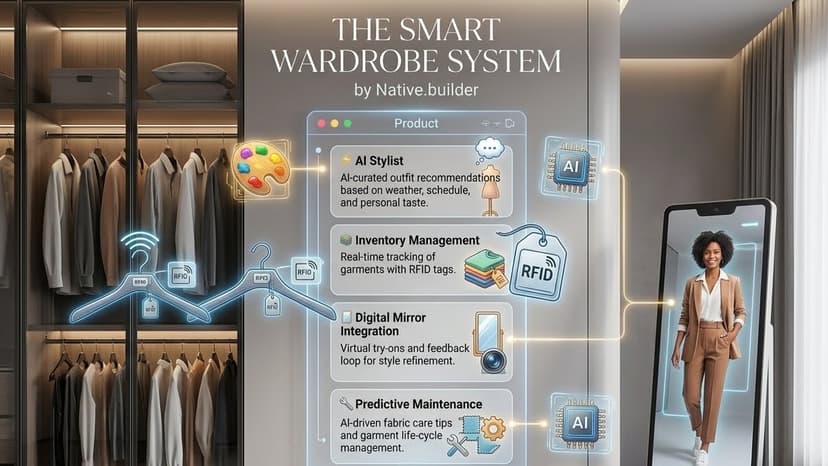
WARDROBE.AI is a mobile-responsive, client-side web application engineered to eliminate daily decision fatigue by digitizing personal clothing inventories and generating context-aware outfit recommendations. Built using React 18 and custom-tailored with a minimalist luxury boutique aesthetic, the platform integrates an intuitive wardrobe manager with a robust, rule-based styling engine. To remove onboarding friction during evaluation, the app requires no backend configurations, server databases, or user sign-ups. Instead, it leverages local session storage and boots instantly with a pre-seeded, high-fidelity digital catalog, ensuring judges can test full functionality right on first load. The core technical differentiator lies in the dual-layered algorithmic matching engine. When a user inputs a specific event formality (such as Business, Casual, or Formal) and a current climate condition (like Hot, Cold, or Rainy), the application queries active inventory to build a complete four-piece layout containing a Top, Bottom, Footwear, and Accessory. If the closet lacks an exact mathematical intersection for the requested parameters, a resilient fallback sorting algorithm activates. This "Best Available" matrix strategically relaxes weather and styling constraints to construct the closest possible alternative outfit, preventing frustrating empty-state errors while keeping the user experience fluid.By leveraging Native.builder as the core layout compiler, the application achieved exceptional development velocity during the hackathon cycle. Native.builder automatically handled the structural distribution layers, complex grid systems, responsive navigation states, and utility-first Tailwind CSS styling tokens, freeing up critical engineering cycles to focus on pure state logic and algorithm design. The resulting MVP balances a high-end fashion catalog interface with a fast, zero-latency execution architecture that runs entirely in the browser.
10 Aug 2026

GrubGuide Helps you in finding food locations
GrubGuide is an intelligent, agent-based application that allows users to discover restaurants or hotels using natural language — either via text or voice input. It leverages large language models (LLaMA 3 via Groq API) to understand user intent and fetches accurate, real-time results from Google Maps using the SERP API. The tool filters and displays places based on location and preferred cuisine, enhancing the experience with photos, reviews, and open status. With built-in memory, it adapts to returning users by storing preferences in a knowledge graph, making GrubGuide a smart, personalized travel and food discovery assistant.
8 Jul 2025


