
🤝 Top Collaborators
🤓 Latest Submissions
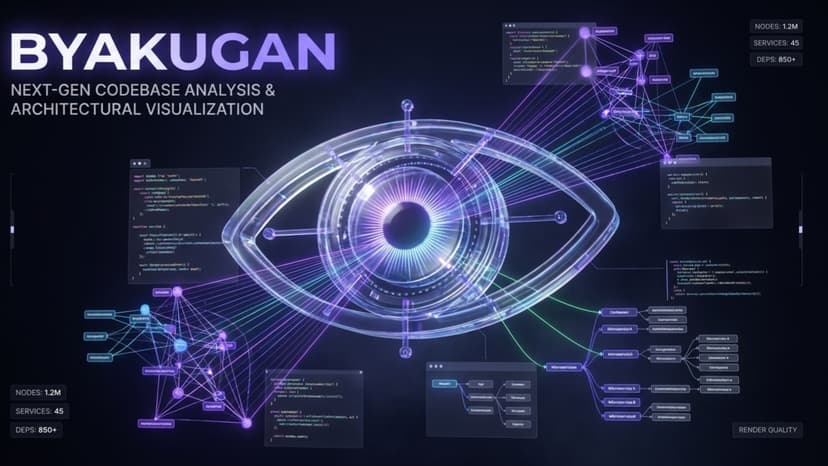
Byakugan
Every developer eventually inherits code they didn't write — a new job, a legacy system, a mid-project handover. The result is always the same: one to two weeks of confusion. Files are opened at random. Architecture is guessed. Design patterns are recognized but not understood. And the biggest risk — "what breaks if I change this?" — has no reliable answer. Documentation is stale or missing. Senior engineers are interrupted with questions that could be self-served. Rework happens because the change was made without understanding the blast radius. Existing tools fail at this. IDE search finds files but doesn't explain why they exist. AI chatbots give generic answers without codebase context. Static analysis tools find bugs but don't teach concepts. Byakugan is a command-line tool that gives developers 360° vision into any unfamiliar codebase. The user points it at a project, and it produces a personalized, interactive HTML report that adapts to two things: the developer's skill level (Junior, Mid, Senior, Lead, GodMode) and their intent (Onboarding, Modification, Migration, Documentation). The report contains five sections plus a quiz. Overview covers what the project does, its entry points, architecture pattern, and a flow diagram. Chakra Network is a visual dependency graph of how modules connect. Techniques presents concept cards for every design pattern found, explained in plain language with where-it-appears references. Impact Sight, for any file, shows direct and indirect dependents, test coverage gaps, blast radius, and a safe modification approach. Files is a browsable file explorer with per-file summaries and exports. Quiz asks five questions that verify the developer actually understood the code before they change it. The target users are developers onboarding to a new team, engineers inheriting legacy systems, contractors joining mid-project, and anyone asked to own code they didn't write. They interact with it through three commands. byakugan analyze ./project analyzes the codebase once. byakugan report --intent=... generates an adaptive HTML report. byakugan chat asks follow-up questions about the code. The analysis runs once, and the report and chat read from the saved analysis, so users can view and query the report indefinitely without re-running the analyzer. Byakugan doesn't just summarize code — it adapts. The same codebase produces a different report for a Junior onboarding than for a Senior modifying a specific file. Impact Sight shows blast radius before a change is made, something no IDE or linter does today. The quiz closes the loop by verifying understanding, not just reading. One analysis run replaces one to two weeks of manual codebase exploration. It is deterministic, portable, and works offline after the initial scan. It is safe and read-only by design
27 Sep 2026


