
🤓 Latest Submissions
RippleGuard
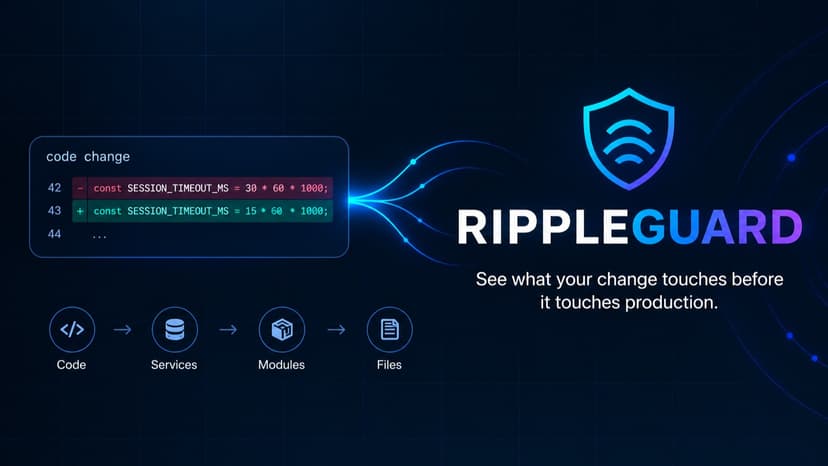
Problem Software changes rarely stop at the lines a developer edits. A small change to shared behavior can affect authentication, routes, tests, security-sensitive paths, and complete user journeys. Developers often have to discover these connections manually, creating missed checks, rework, and uncertainty before release. Solution RippleGuard is an AI Change-Impact & Developer Workflow Intelligence prototype built around one question: “What else must I check because of this change?” RippleGuard uses ShopSphere, a controlled ecommerce application, to demonstrate the workflow. A developer starts with a concrete code change, such as reducing the session timeout from 30 minutes to 15 minutes, and selects Analyze Ripple. RippleGuard then presents the likely downstream impact across connected code, automated tests, user journeys, and security-sensitive behavior. The result is presented through a Ripple Map, an impact breakdown with evidence and confidence, and a Change Completion Plan containing specific verification actions. The workflow concludes with validation evidence so the developer can see what has been checked. Target Users The primary users are software developers and engineering teams maintaining applications where changes to shared behavior can have consequences beyond the files being edited. How It Works The developer reviews the proposed change, analyzes its ripple, examines the affected areas, follows the completion plan, and validates the resulting work. Instead of simply showing changed files, RippleGuard connects a code change to downstream tests, user journeys, and security-sensitive behavior. What Makes It Different RippleGuard focuses on turning change-impact analysis into a developer workflow rather than stopping at a dependency list. Its core visual, the Ripple Map, makes the relationship between a small code change and its wider consequences visible. The Completion Plan then converts those findings into concrete work that a developer can verify. The prototype does not claim perfect prediction. Its purpose is to surface likely impact, provide evidence-backed areas for verification, and reduce the manual effort required to reason about the consequences of a change before it reaches production.
27 Sep 2026
