🤓 Latest Submissions
Change Impact Workbench
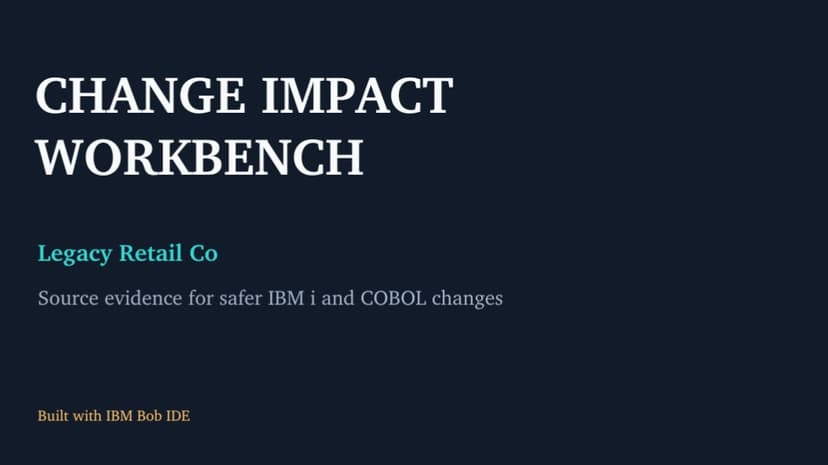
A small change to a legacy business rule can affect programs that are not obvious from the original request. A developer adding a new order status, for example, must inspect file definitions, online programs, batch jobs, callers, and predicates that may treat the new value differently. Missing one dependency can produce a wrong business outcome even when the changed program itself works. Change Impact Workbench helps developers and reviewers investigate that risk before editing. In its interactive Flask website, users describe a proposed change, browse the Legacy Retail Co sample repository, select a field or program, and generate an impact report. The report separates source references confirmed by exact file-and-line evidence from behavioral questions that need human review. Users can inspect the cited source, triage findings, and build a change checklist. The main demonstration adds an “H” Hold value to the IBM i order-status field ORDSTS. The workbench finds its DDS definition, RPG programs with status predicates, an online write, and indirect CL batch callers. A Python behavioral simulation then shows why two existing predicates need attention: a held order appears on a pick list and inflates a sales commission. The corrected simulation demonstrates the expected behavior. A second, compact COBOL billing example traces BILL-RATE from a copybook into programs that use it, showing that the same approach can cover another legacy language. The creative element is the combination of navigable source evidence, explicit uncertainty labels, and an observable before-and-after business consequence. The prototype analyzes fictional representative source; it does not claim to compile IBM i or COBOL programs or to perform complete data-flow analysis. It gives teams a practical starting point for safer impact assessment and more focused validation.
27 Sep 2026

