

Begoa Emmanuel@begoa77743952
3
Events attended
3
Submissions made
Kenya
1 year of experience
About me
I am an undergraduate Information Technology student with a strong focus on cybersecurity, network architecture, and data analysis. I enjoy exploring practical environments; from local home labs using Docker and virtual environments to auditing networks and configuring infrastructure. I am eager to collaborate with developers, engineers, and creatives to build robust, scalable, and secure AI-driven solutions.
🤝 Top Collaborators



🤓 Latest Submissions
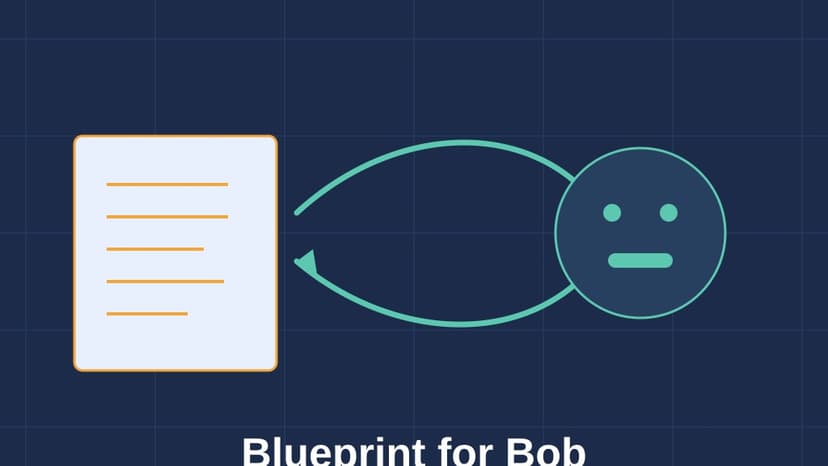
Blueprint for Bob
The Problem Coding agents like Bob are powerful, but they have no memory of what "good" means for your specific codebase. Standards live in a developer's head, not in a file Bob can actually read. When Bob makes a mistake, nothing captures the lesson, so the same error can quietly repeat in a later session. And when work needs to move to a client or a new developer, there's nothing readable to hand them that explains what was decided and why. The Solution Blueprint for Bob is a standards enforcement dashboard that closes that loop. It audits a real GitHub repository against a defined set of coding standards, scanning actual file contents for issues like hardcoded secrets, unhandled async calls, risky SQL string concatenation, and missing test coverage. Those standards export as a real .bobrules file, in the exact plain-markdown format Bob reads and injects directly into every conversation, so they aren't just guidelines being tracked, they're rules Bob is actually enforcing. The feedback loop is what makes this different from a one-time linter. Users can import a real Bob session transcript, and the app automatically detects likely mistakes from it. One click turns any logged mistake into a new standard, so the same class of error gets caught automatically the next time Bob touches that code. An audit severity score (graded A through F, weighted by issue severity) gives an at-a-glance read on codebase health that improves as the loop runs. Target Users This is built for freelance developers and small teams, especially ones who inherit messy, undocumented codebases from clients and need Bob working by their standards from day one, not its defaults. It's also useful for any developer who wants Bob's output to stay consistent across long projects instead of drifting session to session. What Makes It Unique Most Bob demos show what Bob can do in a single task. Blueprint for Bob is about what happens across many tasks over time: it's a governance layer that compounds. The handover report feature also solves a real business problem specific to freelance/consulting work: a one-click, client-readable document summarizing standards, open issues, and known mistake patterns, with no tooling required to read it. Impact By catching issues before Bob starts, enforcing standards Bob actually reads, and converting every mistake into a permanent rule, Blueprint for Bob reduces repeated errors, speeds up onboarding for new developers or clients, and turns Bob usage into a measurable, improving process rather than a one-off tool.
27 Sep 2026

RadarAI — Live Watch Over Your Market.
Target Audience & Market Validation RadarAI is built for U.S. brick-and-mortar small business owners and solo-founders in the service and hospitality sectors (coffee shops, bakeries, car washes, salons, and auto repairs).Official SBA reports confirm that over 82% of U.S. small businesses are solo-founders with zero paid employees. Reddit sentiment research validates that these owners are completely trapped in daily operational tasks like sales, inventory, and staffing, leaving them with zero time or capacity to manually track local market fluctuations or competitor pricing trends. The Problem Small business owners lack the time for daily market research. When competitors alter working hours, adjust pricing, or secure new reviews, surrounding businesses remain blind to the shift until weeks too late. This critical visibility gap causes immediate customer attrition, margin erosion, and thousands in lost revenue. These busy entrepreneurs don't need complex data dashboards—they need immediate, stress-free market clarity. Product Solution & User Journey RadarAI is an automated revenue shield with a 10-second setup requiring only Google Maps links—no passwords or bank data.The live version provides an instant-value sandbox of Marfa, Texas. The user journey is seamless: the owner hits "Explore" on the landing page, views the interactive map, zooms into their neighborhood, and clicks "Refresh Data." RadarAI handles the rest, turning public web data into instant actionable insights. Infrastructure, AI Logic & ScalingBuilt via Native.Builder, RadarAI uses scraping and an OpenAI core to parse real-time map data into a three-step plan: Fact, Opportunity, and Prediction with Zero-Data Retention. Validated and ready to scale, the SaaS pipeline expands from niche tracking to scenario simulation, storefront sync, and global multi-sector deployment.
10 Aug 2026
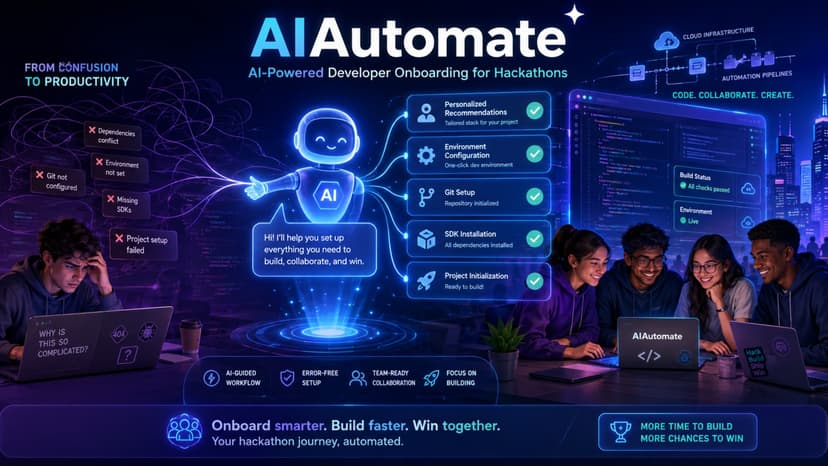
Team AIAutomation Submission
The solution is a hackathon onboarding ecosystem that helps participants move from registration to a working team setup with minimal friction by using a hackathon-specific onboarding page as the main source of truth for setup checklists, team assignment or team-creation instructions, submission rules, teammates, and mentor information, while an AI assistant only steps in when the page is unclear or when users need troubleshooting for issues like missing credits, promo codes, team confusion, or mentor lookup; the flow starts by identifying the participant’s hackathon and routing them to the correct page, then guides them through creating an AMD Developer Cloud account, claiming cloud credits, creating a Fireworks.ai account, redeeming promo credits, generating an API key, connecting that key to the AI builder, and linking GitHub so teams can access a boilerplate repository and collaborate quickly; at the team layer, it helps users find their team, team leader, teammates, Discord handles, GitHub usernames, team channels, repository links, and mentor details when available, and if data is missing or inconsistent it explains the limitation and points users back to the onboarding page or organizer instructions; the architecture should be model agnostic, token efficient, secure, observable, rate-limited, and evaluated for faithfulness, relevance, coherence, groundedness, and toxicity so the system remains reliable throughout the hackathon.
13 Jul 2026


