
Jeffery Vincent@jefferyvincent664
1
Events attended
1
Submissions made
United States
20+ years of experience
About me
I'm a staff mobile engineer based in Virginia Beach, currently building React Native infrastructure for youth sports leagues. Outside work I build autonomous systems with one consistent rule: the model can propose anything, but deterministic code decides what actually happens. That's HAL — a local voice-driven trading agent, ~17k lines of Python, with hard risk gates sitting between the LLM and Alpaca order submission. Before this I was CTO of Vestalyze, an options-tracking fintech, and ran TradeScans, an options strategy engine I sunset when the numbers said to. Building HAL Street for this hackathon. jefferyvincent.com
🤓 Latest Submissions
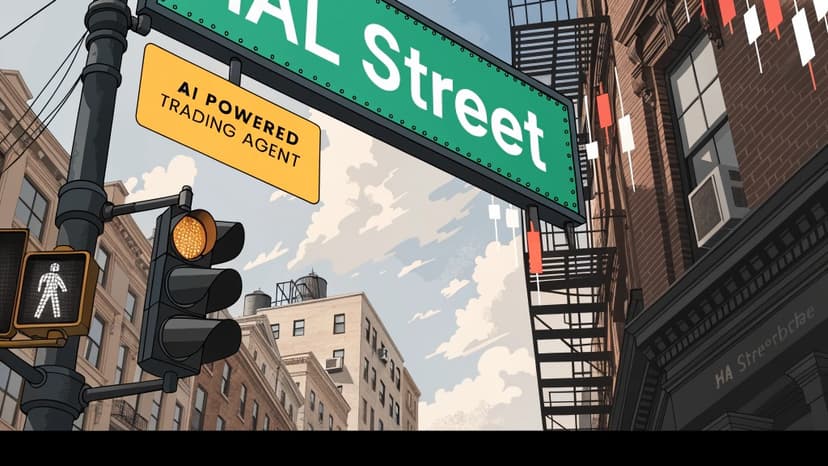
Hal-Street
Most LLM trading agents let the model decide and execute. I think that is the wrong shape, so HAL Street splits them. A deterministic strategy engine builds a menu of defined-risk option structures from the live chain — credit spreads and iron condors, strikes chosen by delta, priced at the touch. The model's job is narrow: pick one, size it, and write down why, as closed-schema JSON. It can also decline, and a decline is counted as a decision rather than a failure. Then the proposal meets seventeen risk gates written in plain Python. No model call, no network, no clock beyond an injected date. They check defined risk, max loss, portfolio risk, options buying power, liquidity, spread width, concentration, correlation, net greeks, assignment proximity, days to expiry — and every one of them runs on every proposal, because "rejected by four gates" is a more useful record than "rejected by the first one checked." The model can be wrong, hallucinate a strike, or talk itself into something stupid. It still cannot put on an undefined-risk position, and it has no say in whether the gates run. Everything above the line is probabilistic. Everything below it is auditable.
4 Sep 2026
