🤝 Top Collaborators

🤓 Latest Submissions
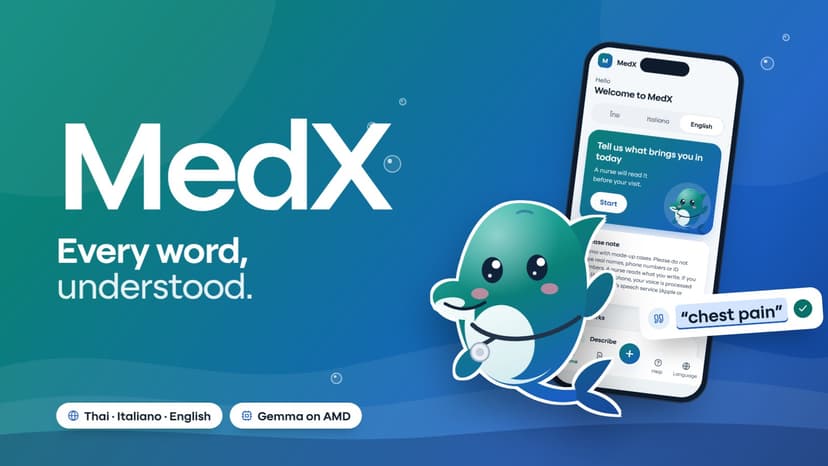
MedX: Multilingual AI Copilot for Clinic Visits
Problem: when patient and clinic do not share a language, communication errors become safety events. In six US hospitals, adverse events in limited-English patients caused physical harm in 49.1% of cases vs 29.5% for English speakers (Divi 2007), and 13-59% of admission medication lists contain unintended errors. MedX follows one patient journey across four roles: - Patient (Thai, Italian or English) answers a guided intake by voice or text and confirms the voice transcript before sending. - Nurse: a consult assistant listens during history-taking, keeps a live summary where every field links to the patient's own sentence, and suggests "ask next" and "rule out" questions. Vitals give a NEWS2-based triage suggestion that the nurse confirms. - Doctor: doctor-only considerations from a fixed rule list (not a diagnosis) with guideline links, an evidence-linked draft note to sign, and orders with deterministic checks (allergy, interaction, duplicate, pregnancy, dose range). Overriding a high alert needs a written reason. - Pharmacist verifies or returns each prescription and reconciles the patient's medicines. Every case has a Case trace: the executed graph of rule checks, model calls and human decisions, exportable as JSON. AMD: designed to run Gemma via the AMD Token Factory (OpenAI-compatible) for extraction, translation, an add-only red-flag screen and follow-up questions. Current results use a mock model until the endpoint is connected. Safety: 18 deterministic red-flag rules run before any model and cannot be cleared by it; fields without a verified patient quote show "needs check"; failures go to human review; the AI never diagnoses, orders, prescribes or confirms triage. 1,872 automated tests, 52 synthetic cases and an 18-case blind holdout. Research prototype with synthetic data only; not clinically validated, not a medical device.
18 Oct 2026

