
🤝 Top Collaborators

🤓 Latest Submissions
Recall Desk
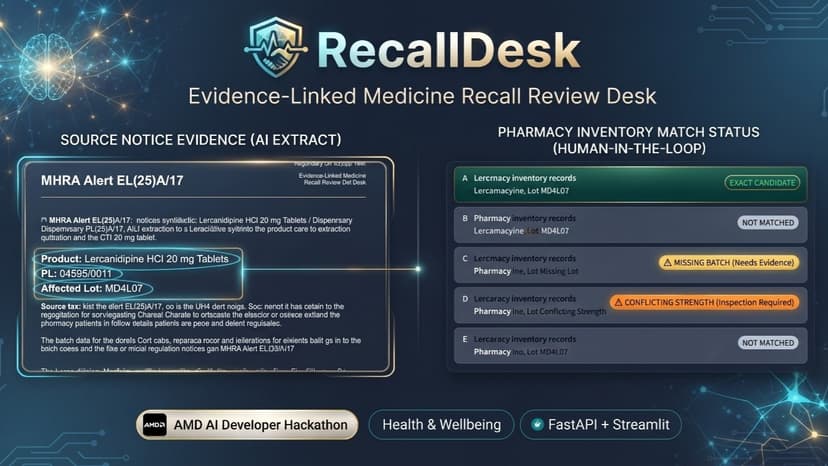
RecallDesk is an AI-assisted workspace connecting official medicine recall notices with pharmacy inventory. Notices identify an affected product, but pharmacies must still determine which shelf items need attention — complicated by missing batch numbers, inconsistent descriptions, and conflicting label details. Users import a stock CSV and upload a notice (PDF or text). An AI model, accessed via an AMD endpoint, extracts product details, identifiers, and affected batches into a draft for human review. Matching logic compares reviewed details against stock, separating likely matches from records needing more evidence or containing conflicts. Inventory details appear beside notice excerpts so reviewers see the basis for each finding. Missing batch data stays flagged as unresolved, never guessed. Our demo uses a historical MHRA recall with fictional inventory — an affected batch, a different batch of the same product, a missing batch, conflicting strength info, and an unrelated medicine sharing the same batch string — showing why a name or batch code alone can’t confirm a match. Users can save cases, log supported batch corrections as revisions, repeat checks, document review decisions, and export a case report as PDF. The app also shows model-request provenance: endpoint, model label, and duration. RecallDesk’s value is resolving incomplete evidence within one workflow — existing tools already support recall matching; our focus is surfacing unanswered questions and the next evidence needed. This is an educational hackathon prototype. Roles are simulated, and “no match” doesn’t establish safety. It doesn’t prescribe, recommend substitutions, or verify stock isolation. Notice excerpts don’t yet persist on reopened cases. Next steps: evidence persistence, form reliability, pharmacist evaluation, and country-specific sources.
18 Oct 2026


