

🤓 Latest Submissions
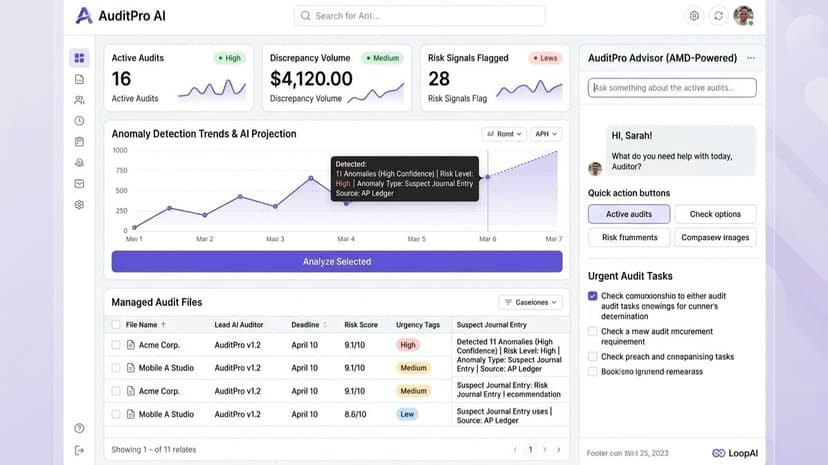
AuditPro Agent
The Problem Traditional financial audits and risk assessments are severely bogged down by massive volumes of unstructured documents, including general ledgers, invoices, contracts, and regulatory filings. Auditors spend countless hours manually parsing text, tracking down transactional anomalies, and cross-checking compliance policies. This manual overload creates severe bottlenecks, raises the risk of human error, and delays critical business insights. The Solution Our project introduces an intelligent, autonomous financial and audit agent built for the AMD Hackathon. By integrating Evolus AI, the platform seamlessly handles heavy document chunking, semantic embedding, and high-performance text indexing to instantly process complex ledgers. Running natively on robust AMD infrastructure (leveraging AMD Instinct GPUs and the ROCm software stack), the agent executes automated anomaly detection, flags fiscal risks, verifies transaction compliance, and delivers real-time audit results directly through an intuitive dashboard—drastically cutting down audit cycle times and streamlining compliance workflows.
18 Oct 2026
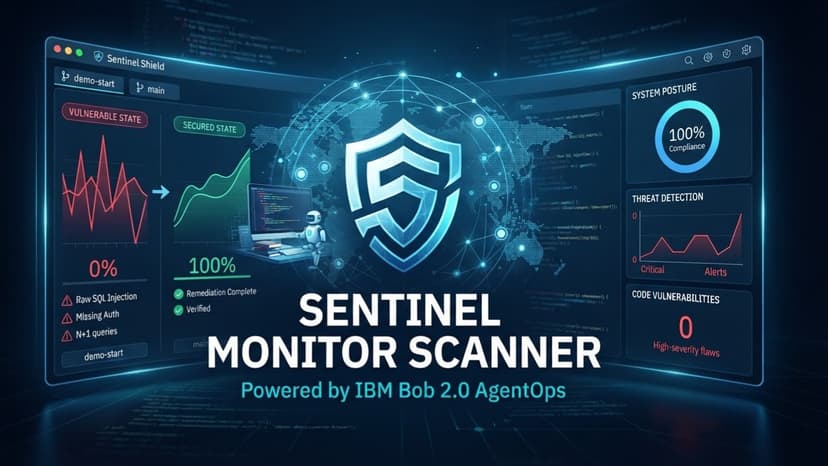
Sentinel Monitor Scanner
The Problem: Modern software development moves at breakneck speed, leaving engineering teams drowning in technical debt and security blind spots. Legacy codebases and rushed prototypes frequently inherit critical code smells and severe vulnerabilities—ranging from raw SQL injections (CWE-89) and unauthenticated endpoints (CWE-306) to hardcoded secrets (CWE-798), missing rate-limiting (CWE-799), N+1 database query bottlenecks, and zero automated test coverage. Manually auditing these flaws, writing patches, and constructing robust test suites takes days of painstaking human effort, delaying deployment and exposing organizations to enterprise risk. The Solution:Sentinel Monitor Scanner Sentinel Monitor Scanner solves this by combining a high-performance Django Ninja and Vue.js telemetry dashboard with autonomous agentic remediation. The project features a dual architecture split across two states: The Live Enterprise Dashboard (main branch): Hosted in production, this portal serves as the definitive "After" state showcase. It displays real-time security posture metrics, zero critical vulnerability indicators, 98%+ code coverage validation, and system health logs. The Local Agentic Pipeline (demo-start branch): A deliberately flawed development environment engineered to test AI capabilities. Using Sentinel Monitor Scanner, developers no longer spend hours fixing code manually. Instead, they deploy an intelligent orchestration workflow where AI subagents completely refactor, secure, and test the entire workspace in a single operational loop. The result is a seamless bridge between continuous security monitoring and automated code remediation.
27 Sep 2026
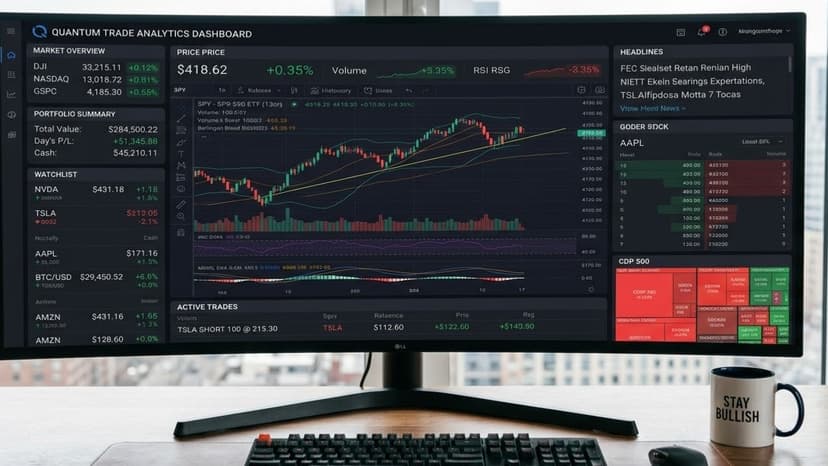
Bloom Trading Agent - AI-Powered Market Insights
Bloom Trading Agent is an autonomous, options-only trading system built for the Alpaca Builder Hackathon. It combines a Django backend API, Vue 3 dashboard, and Node CLI to deliver real-time portfolio monitoring and AI-driven hedge management on Alpaca paper-trading accounts. Each user operates in complete isolation—cookie-based silent authentication binds browser sessions to individual `UserProfile` records, which store encrypted Alpaca credentials. The agent's cognitive loop continuously perceives account data through the Alpaca MCP server, embeds market facts as semantic vectors (Chroma locally, pgvector on Neon in production), recalls relevant context via similarity search, and reasons through trading decisions using an LLM (Fireworks primary, Featherless fallback) that operates under a strict options-only system prompt. When no LLM is available, it degrades to deterministic heuristics without losing functionality. The system enforces protective strategies: buying puts to hedge long positions, selling covered calls for income, entering cash-secured puts, and executing vertical spreads—never naked directional bets. Configuration is granular and per-user: dry-run mode defaults to safe simulation, autonomous position entry is disabled by default, and emergency controls flatten the entire book or liquidate individual positions with two-step confirmation. The architecture transparently switches between local SQLite/Chroma (development) and production Postgres/pgvector, requires zero external dependencies for inference failover (both LLM providers speak OpenAI's wire format), and uses native `fetch` instead of axios so the same REST client works identically in the browser and Node CLI. The dashboard is read-heavy and monitoring-focused; the CLI provides deterministic, keyboard-driven operations for traders who need immediate action without a browser. All decisions, orders, hedges, and portfolio snapshots are persisted for audit, backtesting, and P&L analysis.
4 Sep 2026
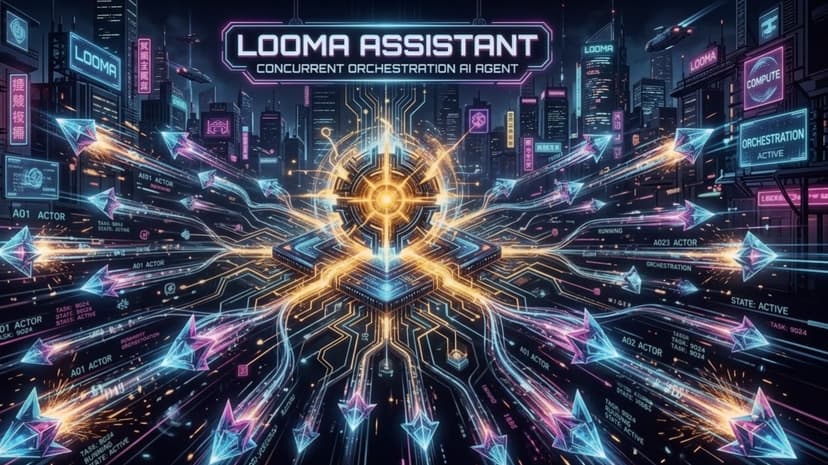
Looma Assistant: Concurrent AI Orchestration Agent
Looma Assistant is a general-purpose, event-driven AI agent designed to excel in high-concurrency environments. Unlike traditional linear task processors that suffer from synchronous bottlenecks, Looma Assistant utilizes an advanced supervision tree built on Akka Actors. By decoupling task ingestion from execution, the system dynamically analyzes incoming workloads and maps them directly to specific Akka sub-workers tailored to the distinct task categories outlined in the guidelines—such as code debugging, logical reasoning, and code generation. A primary driver of our operational cost efficiency is the intelligent restriction of remote token consumption. Looma Assistant configures rigid max_tokens boundaries for each individual worker actor, ensuring no single processing branch can over-consume resources or generate runaway completions. By enforcing these tight, category-specific caps alongside proactive prompt sanitization, we drastically minimize overall API token usage while maintaining data integrity. This granular control allows our Akka Actors to execute bulk datasets concurrently, making Looma Assistant an incredibly resource-conscious and stable engine for enterprise-scale asynchronous intelligence workflows.
13 Jul 2026


