
🤝 Top Collaborators
🤓 Latest Submissions
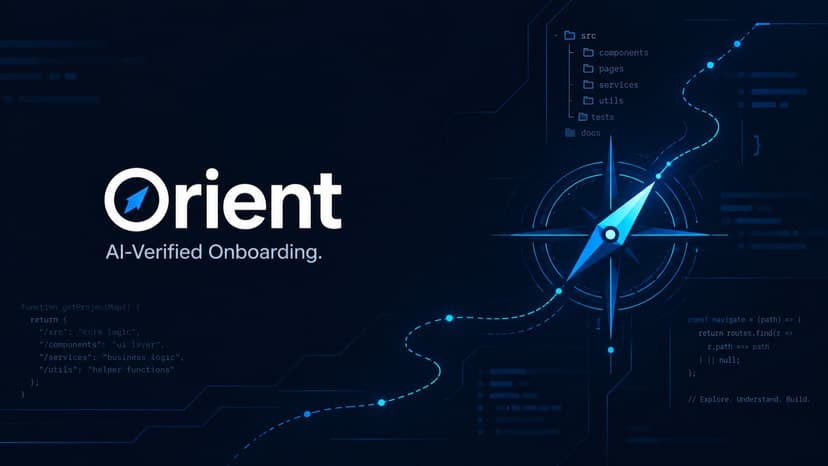
Orient
The problem: Every developer who inherits an unfamiliar codebase loses days before their first useful commit — not to hard engineering problems, but to archaeology. The README's setup steps don't actually work. Undocumented config is required to run the app. The docs describe the system as it was designed, not as it exists today. Nobody knows which code is live and which is dead. This isn't intellectually difficult work, but it is slow, tedious, and repeats for every single new hire a team brings on. The solution: Orient runs a small pipeline of focused IBM Bob agents over a target repository to eliminate that archaeology entirely. An "env archaeologist" agent scans the actual code to find every environment variable it reads, then generates a complete .env.example and a real, working SETUP.md. A "doc reconciler" agent compares the existing README against the real codebase and produces a list of every contradiction, backed by exact file-and-line evidence. An optional "architecture mapper" agent generates a Mermaid diagram of the system's modules, its request flow, and any dead code paths. Critically, Orient doesn't just generate documentation and hope it's correct — it proves the result. A fresh Bob agent, given zero prior context about the codebase, is handed only the generated onboarding pack and tasked with setting up the app and completing a starter task using nothing else. If that agent succeeds, the pack is verified as genuinely sufficient for a human newcomer too. Target users: Engineering teams onboarding new hires, open-source maintainers trying to lower the contribution barrier, and any developer inheriting a legacy or handed-off service. Interaction: A user points Bob at their repo, runs the skill-driven task prompts, and Bob writes the finished onboarding pack directly into the project. What makes it unique: Most onboarding tools generate static documentation once and let it rot. Orient treats onboarding docs as something that must be proven correct against the running code, using a second, context-blind agent as an automated grader — closing the loop between "we wrote docs" and "the docs actually work.
27 Sep 2026
Amadeus-Student-Agent
The Amadeus Student Agent is a comprehensive academic productivity suite designed to revolutionize how students learn and manage their time. It integrates two powerful functionalities into a single, seamless experience on Replit. First, at its core, is an AI-powered research assistant built on the groundbreaking Coral Protocol. This allows the agent to move beyond being a simple chatbot. When a student submits a complex query, the Coral client orchestrates a structured dialogue, while a dedicated Coral server executes precise web searches and processes information from credible sources. The result is a clear, comprehensive, and properly cited answer, ensuring transparency and fostering genuine learning instead of passive consumption. Second, to combat procrastination and enhance focus, we integrate a dedicated Timer and Pomodoro Technique feature. This allows students to break their study sessions into focused intervals (e.g., 25 minutes of work followed by a 5-minute break), directly within the same environment where they conduct their research. By combining deep, tool-assisted discovery with proven time-management frameworks, the Amadeus Student Agent provides a holistic and scalable foundation for academic success.
21 Sep 2025


