

Muhammad Asim@muhammadasim117
3
Events attended
3
Submissions made
Pakistan
1 year of experience
About me
I have experience in python, Gen AI and deploying apps on huggingface, streamlit etc. I have expertise in Microsoft office with typing speed of 40wpm. Moreover, I have understanding of Data Structure and Algorithm. Looking forward to make and build something impressive. Feel Free to DM me.
🤝 Top Collaborators



🤓 Latest Submissions
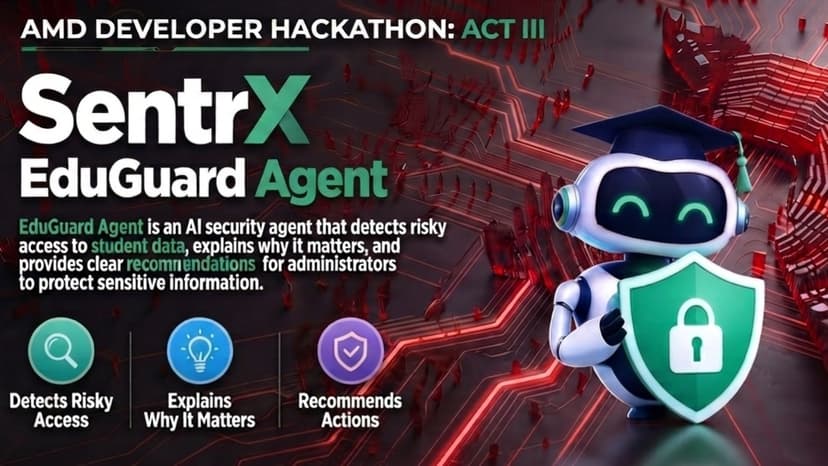
EduGuard Agent
EduGuard Agent is an AI security assistant built for schools and universities. Running on AMD hardware with Evolus workflows, it keeps student data safe by monitoring user accounts and activity. EduGuard scans for three main risks: staff keeping unnecessary permissions, unused accounts left open after employees leave, and suspicious behavior like late-night mass file downloads. When it detects a threat, EduGuard explains the issue in simple language and suggests a clear fix. It never makes changes automatically—an IT administrator simply reviews the recommendation and approves the fix with a single click to protect campus data.
18 Oct 2026

Pebble: a payments app built by an agent factory
Most multi-agent demos add agents and hope. We measured what actually goes wrong, then redesigned the team around it. THE PROBLEM. In run 1, our five agents built a payments app, but a reviewer rejected a batch while three more batches were stacked on the broken code, and it flagged the same blocker three times. Stale branches blocked merges, a fixed-interval timekeeper sent 49 of 65 wake-ups while nothing was wrong, one room hit Band's 10,000-message cap, and a human had to step in. THE FIX IS COORDINATION, NOT MORE AGENTS. Same five seats, new operating model, written into the mandates: work is a dependency graph; a batch starts only when what it builds on is merged; one branch per batch; one review per batch; the reviewer checks screenshots at phone and desktop width; a close-out roll call gates every stage report; the timekeeper speaks only when the room is quiet. Claude Sonnet plans and reviews; a low-cost model writes code and tests. THE RESULT, FROM THE ROOM LOGS. Four stages built and verified from one dispatch, with zero human messages after it (run 1: 5). Batches stacked on a rejected one: 4 to 0. Needless timekeeper wake-ups: 75% to 2%. Rejections fixed and merged in 7 to 58 minutes (median 15), against 3 h 31 min and still unmergeable in run 1. 35 committed screenshots. Stage 4 acceptance suite: 70 passed, 0 failed, 1 expected skip. THE APP. Pebble: pay, request, split, hold and refund. Payments are retry-safe: 50 concurrent identical requests produce exactly one payment, so money is never spent twice. WHAT DID NOT IMPROVE. Run 2 cost more messages (+28%), time (25.6 h to 29.8 h) and spend (about $10.50 to $25). Claude session limits stalled both runs for about 30% of the clock, and our process did not fix that unless we use api keys without any limits. We went with Claude sessions for now. The mandates name no product, so the factory can be pointed at a new problem.
6 Oct 2026
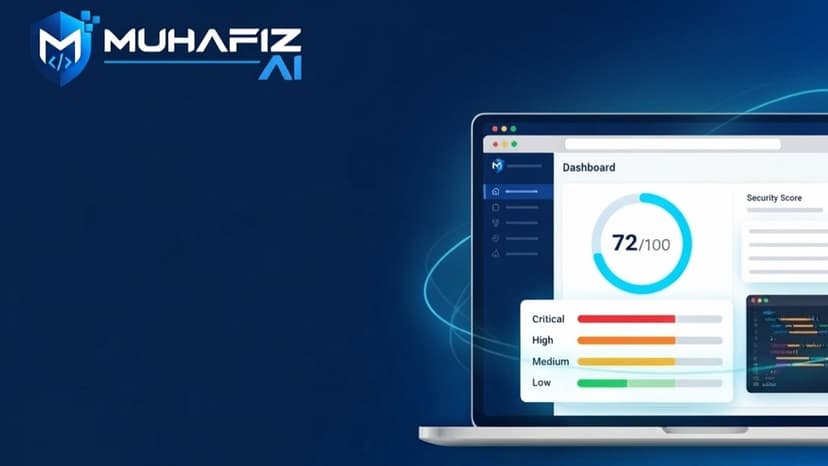
MUHAFIZ AI
The Problem: Security vulnerabilities are one of the most expensive, preventable mistakes in software development — yet most developers can't afford enterprise tools like Snyk or Veracode, and don't have the security expertise to know why a piece of code is dangerous or how to fix it correctly. Existing scanners flag issues and stop there, burying developers in jargon-heavy reports that force them to Google what a vulnerability even means and guess at a fix — often introducing new bugs. Critical security flaws routinely reach production simply because no one had the time, budget, or expertise to catch and fix them properly. The Solution: Muhafiz AI is an AI Security Engineer built for developers, students, indie hackers, and small teams who can't justify a dedicated security hire or an enterprise security budget. Users simply upload a single file or an entire project (full ZIP uploads supported) through the web dashboard — no configuration and no security background required — and step through one guided workflow: Find → Explain → Fix → Rescan → Improve. Instantly, they receive a detailed report covering vulnerabilities such as SQL injection, XSS, command injection, hardcoded secrets, weak authentication, path traversal, insecure file uploads, missing input validation, and insecure dependencies, each tagged Critical, High, Medium, or Low. What makes Muhafiz AI unique is its depth of explanation and action. For every vulnerability, it explains what it is, why it's dangerous, what could happen if exploited, exactly where it lives in the code, and how to fix it — written so even a beginner can follow along. Its AI Auto-Fix feature then generates a corrected, more secure version of the code side-by-side with the original, with a plain-language explanation of what changed and why. A built-in AI Security Assistant lets users ask natural follow-up questions — "why is this dangerous?", "fix this without changing my app's behavior" — turning a passive scanner into an interactive security partner. After every scan, users see an overall Security Score (e.g. 72/100) broken down across Injection Protection, Authentication, Input Validation, Secrets Management, Data Security, and Dependency Security, so they instantly know what matters most. Rather than dumping a long list of issues on them, Muhafiz AI prioritizes what to fix immediately versus what can wait, and lets users rescan after applying fixes to see measurable improvement (e.g. 54/100 → 91/100) — proof the tool is actually solving the problem, not just flagging it. Built privacy-first — secure transmission, minimal data retention, no sharing of code across accounts — Muhafiz AI turns security from an afterthought into a fast, understandable, guided part of every developer's workflow, helping them catch what they'd otherwise miss and fix it with confidence before insecure code ever reaches production.
27 Sep 2026


