🤝 Top Collaborators


🤓 Latest Submissions
MapLLM
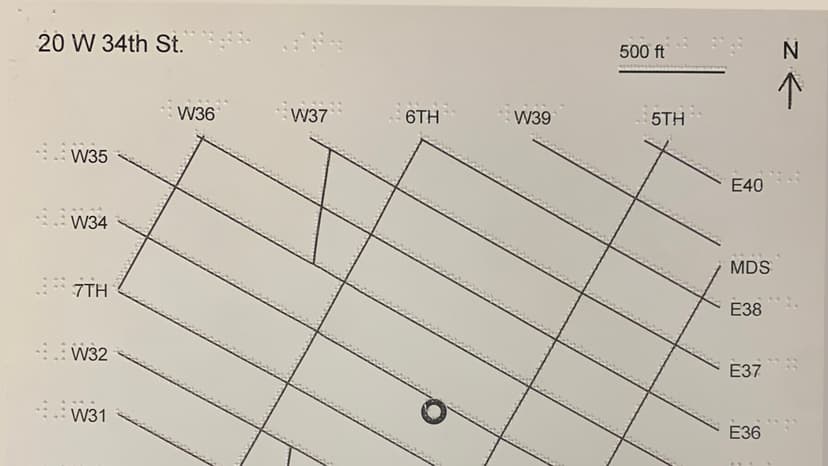
Digital maps are great for navigation but nearly useless for exploration if you're blind: a screen reader gives you a list, never a layout. Tactile maps give real spatial layout under your fingers, but a sheet only fits a dozen braille labels — no store names, distances, hours, or "what is this?" MapIO keeps the cheap embossed sheet and moves all the information into audio. A camera looks down at the map; SIFT homography locks the sheet and MediaPipe tracks your index fingertip, which becomes your avatar on a street-and-POI graph. Wherever you touch, you hear what's there. The audio layer is unbounded, so density is limited by curiosity, not emboss space. For open-ended questions ("what's the closest coffee, and how far from here?") MapIO uses Gemma 4 served locally by Qualcomm AI Hub GenieX on the Snapdragon X Elite NPU. The model never guesses distances or routes: it calls tools on the map graph (get_distance, nearby POIs, guide_to_destination) and speaks deterministic answers. Everything runs on-premises; nothing leaves the LAN. The Qualcomm angle is two chips, two roles. The X Elite is the room's brain: one local LLM and speech server shared by every map. The Arduino UNO Q (QRB2210) is a sub-$60 map station that runs the whole perception loop on-device — SIFT, hand tracking, graph lookup, TTS — and streams speech straight to a speaker over Bluetooth. Plug in, it boots, it says "Map detected." A laptop alone works, and that's a supported deployment. But a board per map is what makes a museum floor or classroom practical: N cheap stations, one shared server, touch feedback that never crosses the network. Next: speech-to-text on the UNO Q itself, and unified Q&A that follows a visitor from map to map.
16 Sep 2026
Minecraft in Real-Life: A Local AI Shelter Builder
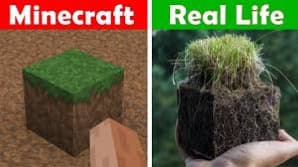
So we have all played Minecraft right? For those who have not, Minecraft is a sandbox game where the player spawns with nothing and can ‘mine’ the environment for resources in order to build things like houses, castles, farms, etc. The limit is really your imagination. Now imagine yourself a poor farmer in a remote location, no-internet connectivity, no money to pay for help, and no prior knowledge of how to build a home and survive in the area. All you have is your empty land AND your smartphone (as we all do these days, even the most remote tribes in Africa often have access to a smartphone). So the problem becomes how do we leverage the technology available to us today, namely a Samsung S25 Ultra smartphone (Powered by a Qualcomm Snapdragon chip), with the on-device software and AI models to provide a step by step guide of how to build a solid shelter without accessing the internet and without a human expert to oversee the process. It’s Minecraft in real life. Why is that important? And beyond being a cool game you can play in real life why does it actually matter? Well for a moment again think back to when I asked you to imagine yourself as a poor farmer in a remote location without any resources or internet access. However instead of a farmer this time you are a robot. And instead of a remote location here on Earth you're on Mars or another planet in outerspace. The environment and setup is remarkably similar: You have no internet access since youre many miles away from that, there is no human expert present to guide you step by step (there couldnt even be if we wanted to send one since the conditions dont permit habitability) and communication latency makes expert remote operator control infeasible. You have just your computer vision via camera scan data and on-device software/models. Your task is the same: Construct shelters (or other infrastructure) for humans prior to their arrival. Its Minecraft in real life.
28 Jun 2026

