

Panati Nitesh@nitesh_reddy_
1
Events attended
1
Submissions made
India
1 year of experience
About me
I’m a Computer Science (Data Science) student passionate about full-stack development, AI/ML, and software engineering. I enjoy building real-world applications, solving complex problems, and turning ideas into practical products. I have hands-on experience with Java, Python, React.js, Node.js, Spring Boot, SQL, and MongoDB, along with internship and hackathon experience. I’m always looking to learn, collaborate, and contribute to impactful engineering projects.
🤝 Top Collaborators

🤓 Latest Submissions
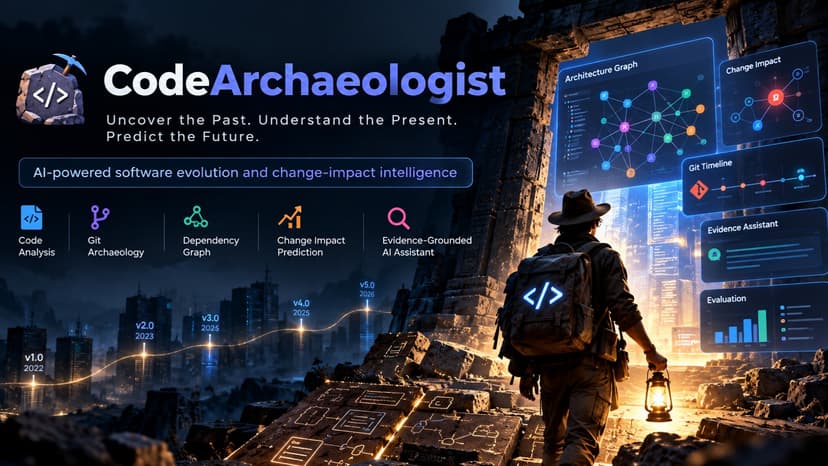
CodeArchaeologist: Legacy Code Intelligence
Problem & Challenge Statement: Engineering teams inherit massive, undocumented legacy codebases where the original authors have departed. Crucial architectural context is lost: Why was an abstraction introduced? What historical incidents shaped this module? More dangerously, when engineers modify shared services or interfaces today, they face the "blast radius dilemma"—unforeseen ripple effects breaking downstream consumers, APIs, and untested flows. Existing developer tools either provide superficial code autocomplete (Copilot/Cursor) or hallucinate architectural relationships without verifiable graph grounding. The Solution: CodeArchaeologist is an AI-powered software evolution and change-impact intelligence engine. Rather than relying on LLM guesswork, it builds a deterministic analytical core by parsing source code into dual AST directed dependency graphs (NetworkX) and mining 4+ years of chronological Git history (GitPython). It computes topological reachability, identifies exposed public endpoints, and evaluates an empirical co-change frequency matrix to predict downstream impact risk before code is committed. Target Users & Workflow: Our primary users are software architects, lead engineers, DevOps/SRE teams, and developers refactoring legacy systems. Users interact through: 1. Interactive Visual Studio: A sleek, dark-mode graph studio visualizing multi-tier architecture (Controllers, Services, Repositories), evolutionary commit timelines, and cascading blast radii. 2. 1-Click Refactor Risk Check: Selecting any file or symbol instantly calculates the transitive blast radius and highlights dependent APIs and test suites requiring validation. 3. Grounded Evidence Assistant: Developers query architectural decisions ("Why does PaymentService use a fallback queue?") and receive answers backed by clickable file lines and exact Git commit hashes. Creative & Unique Differentiators: - Division of Analytical Truth: The LLM is never the brain guessing architecture; static analysis (AST), graph topology (DAG), and historical co-change mining compute verifiable ground truth. - Honest Calibrated Risk: We explicitly avoid making unverified claims of "what will break." Instead, we calculate empirical change-likelihood estimates calibrated against historical commit backtesting. - 100% Air-Gapped Capable: Operates completely offline with zero API keys required, running local AST parsing, graph diffusion, and deterministic extractive synthesis. Effectiveness & Efficiency: By automating dependency traversal and historical change correlation in milliseconds, CodeArchaeologist cuts legacy onboarding from weeks to minutes, eliminates refactor regressions in pre-merge checks, and provides defensible, audit-grade architectural clarity.
27 Sep 2026
