
🤝 Top Collaborators

🤓 Latest Submissions
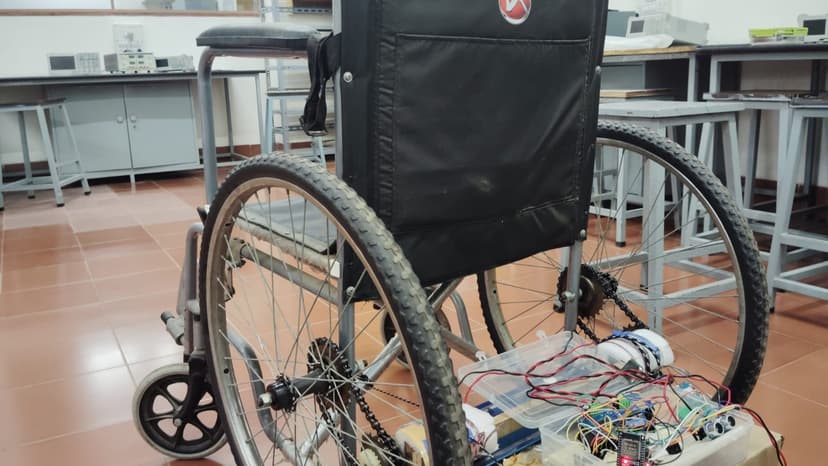
Brain-Controlled Verbal Communication Wheelchair
Brain Controlled Verbal Communication Enabled Wheelchair is a low-cost assistive mobility system designed to improve independence, safety, and communication for individuals with severe motor disabilities, paralysis, or speech impairments. The system enables hands-free wheelchair control using a wearable EEG headset that captures brain activity and voluntary eye-blink patterns. Machine learning-based signal processing and classification interpret these patterns as movement commands such as forward, left, right, and stop. An ESP32-based embedded controller processes the commands and sensor data, controls the motor drivers, and coordinates the wheelchair’s real-time operation. Ultrasonic sensors continuously detect obstacles and support collision avoidance, improving navigation safety. An MPU6050 sensor is integrated for fall detection and system monitoring. A real-time dashboard provides visibility into EEG parameters, blink detection, wheelchair movement, obstacle alerts, battery status, fall events, and system diagnostics. GPS-based location tracking can help caregivers monitor the user’s location during emergencies. The system also includes a voice communication module that provides audio feedback about the direction of wheelchair movement, supporting users who may have difficulty communicating verbally. The proposed platform combines Brain-Computer Interface (BCI), Artificial Intelligence, Embedded Systems, Internet of Things (IoT), and Assistive Robotics into a single scalable solution. Unlike conventional powered wheelchairs, the system focuses on hands-free control, integrated safety monitoring, caregiver awareness, and communication support at a lower cost. The modular design can be adapted for hospitals, rehabilitation centers, and home environments, with the goal of making intelligent assistive mobility more accessible and practical.
10 Aug 2026


