
🤓 Latest Submissions
Security Drift
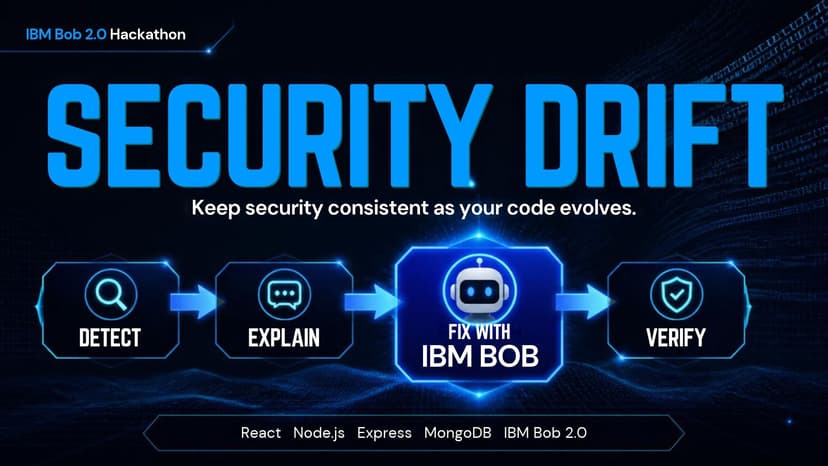
When developers work on an existing project, new code can sometimes follow a different security approach from the code that is already there. Even if the new code doesn't look obviously vulnerable, this difference can create security inconsistencies. We call this security drift. Security Drift helps developers find these inconsistencies before they become bigger problems. The developer gives the tool a repository path, and Security Drift reads the project's SECURITY_PATTERNS.md file and scans the relevant source code. It compares the existing implementation with the security patterns already followed in the repository. Potential issues are then validated and classified as confirmed drift, intentional design, or a general security gap. For a confirmed drift, the developer can see the established pattern, the code that differs from it, why it is considered a drift, and the relevant code evidence. Security Drift can then create a focused remediation brief for IBM Bob, containing the exact problem, file, requested action, and constraints. IBM Bob can use this brief to make the targeted fix and run the relevant tests. Security Drift then analyzes the repository again to verify whether the drift has been resolved. The main idea behind our project is simple: instead of only asking "Is this code secure?", Security Drift also asks "Is this code consistent with the security practices already established in this project?" This is useful for developers and teams maintaining existing applications where security practices need to remain consistent as the codebase changes. Workflow: Analyze → Detect → Explain → Fix with IBM Bob → Test → Verify
27 Sep 2026
