DeepSeek Guide: Architecture, Features, and Competitive Edge

General
HeadquartersHangzhou, China
FoundersLiang Wenfeng (Zhejiang University graduate)
Key ModelsDeepSeek-V3 (671B MoE), R1 (reasoning specialist)
GitHub ReposDeepSeek-V3, DeepSeek-R1
API Pricing$0.55/million tokens (input), $2.19 (output)

What is DeepSeek?

DeepSeek represents China's breakthrough in democratizing AI through:

  • Ultra-Efficient Training: $5.6M training cost for GPT-4-level models vs OpenAI's $100M+
  • Military-Grade Optimization: 2,048 H800 GPUs completing training in days vs industry-standard months
  • Open Source Dominance: Full model weights available on HuggingFace (V3/R1)
  • Specialized Reasoning: R1 model achieves 97.3% on MATH-500 benchmark vs GPT-4o's 74.6%

Core Innovations

  1. Multi-Head Latent Attention (MLA): 68% memory reduction via KV vector compression
  2. DeepSeekMoE Architecture: 671B total params with 37B activated per token
  3. FP8 Mixed Precision: First successful implementation in 100B+ parameter models
  4. Zero-SFT Reinforcement Learning: Emergent reasoning without supervised fine-tuning

Technical Architecture

DeepSeek-V3 Architecture

Key Components

ComponentImplementation DetailsPerformance Gain
Multi-Head Latent AttentionCompressed KV cache via WDKV matrices4.2x faster inference
Device-Limited RoutingTop-M device selection for MoE layers83% comms reduction
FP8 Training Framework14.8T token pre-training at 158 TFLOPS/GPU2.8M H800 hours
Three-Level BalancingExpert/Device/Comm balance losses99.7% GPU utilization

Benchmark Dominance (Selected Tasks)

TaskDeepSeek-V3GPT-4oClaude-3.5
MMLU (5-shot)88.5%87.2%88.3%
Codeforces Rating2029759717
MATH (EM)97.3%74.6%78.3%
LiveCodeBench (COT)65.9%34.2%33.8%

How to Implement DeepSeek

Deployment Options

  1. Self-Hosted MoE

  2. Cloud API

  3. Distilled Models (Qwen/Llama-based) 1.5B to 70B parameter variants 2.79.8% AIME 2024 accuracy in 32B model

Useful Resources for Deepseek

1.Deepseek r1 2.Deepseek V3

Deepseek AI Technologies top builders

Explore the top contributors showcasing the highest number of Deepseek AI Technologies app submissions within our community.

Deepseek AI Technologies Hackathon projects

Discover innovative solutions crafted with Deepseek AI Technologies, developed by our community members during our engaging hackathons.

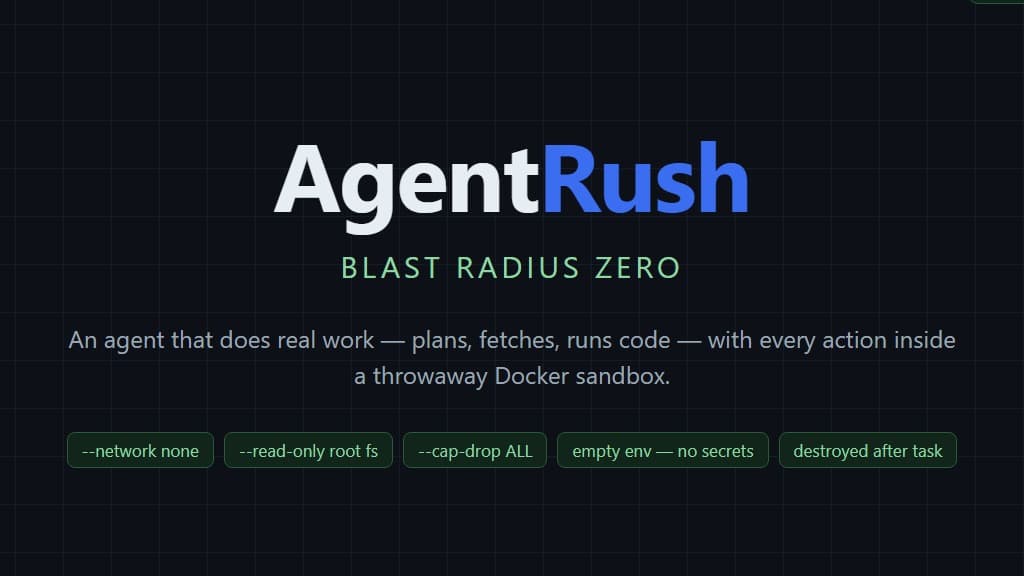
SRE Incident Agent — Blast Radius Zero

SRE Incident Agent — Blast Radius Zero

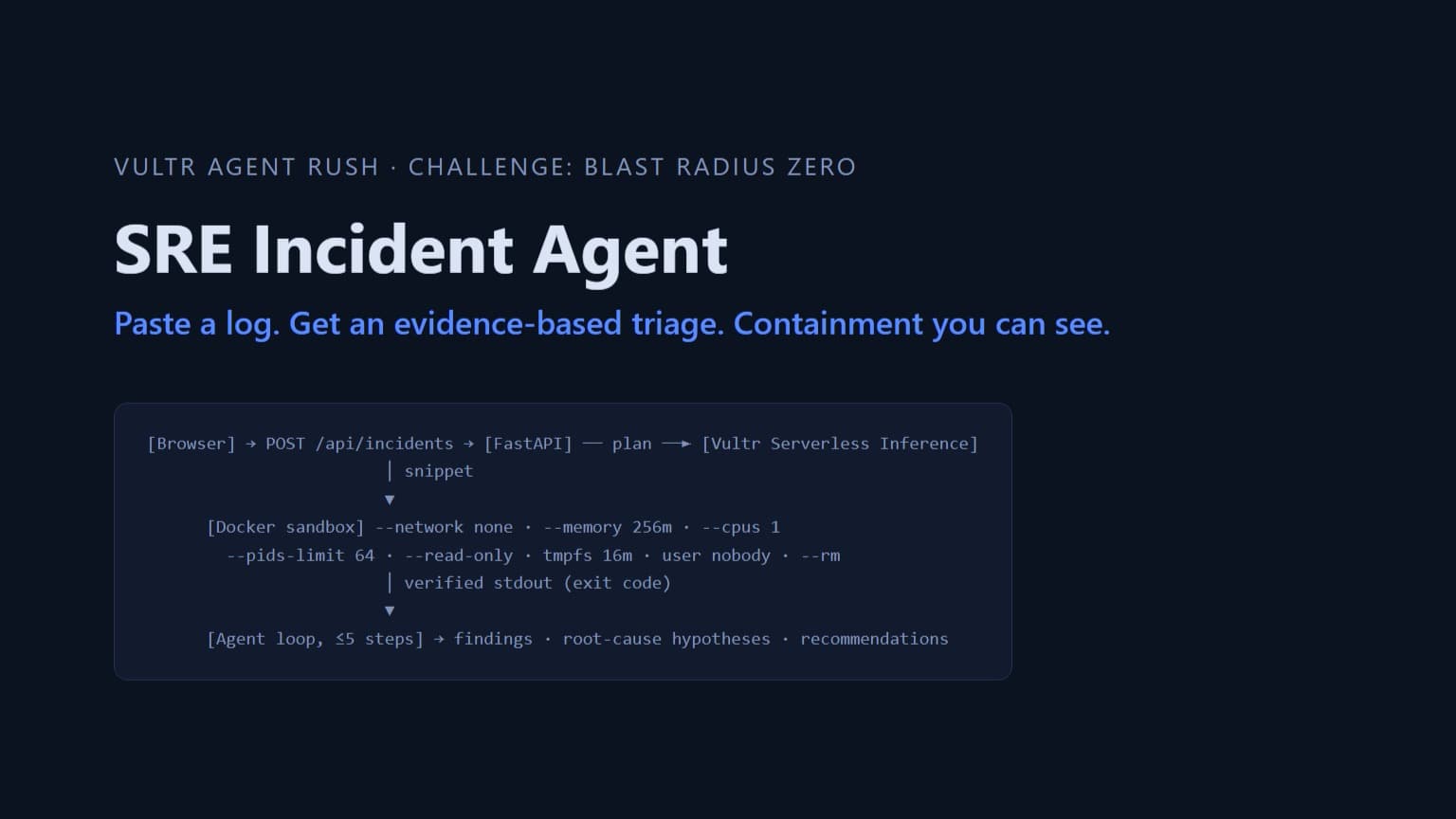
The problem. An on-call SRE facing a cryptic 500-line log spends 20–40 minutes of manual grep/correlate work to know what broke and what to do first. LLM assistants can draft guesses, but executing LLM-generated code on a real system is the classic blast-radius problem: run it blind, with network access and secrets in the environment, and a hallucinated diagnostic becomes an incident itself. What we built. SRE Incident Agent closes the loop safely. Paste a log — the LLM plans a diagnostic step, the step runs as real Python in an isolated Docker container, the verified stdout and exit code feed back into the agent's context, and after ≤5 steps it returns a triage report: findings backed by numbers from executed code, three ranked root-cause hypotheses, and an ordered runbook. Nothing the LLM claims is trusted unless an executed snippet printed it. Blast radius zero. The LLM-written code is the attack surface, closed in layers: a static guard refuses subprocess, sockets, URL fetches, file writes, eval/exec and host paths before anything runs (shown as BLOCKED · contained); each snippet runs in a one-shot container with --network none, 256 MB RAM, 1 CPU, 64 pids, read-only rootfs, uid nobody, no-new-privileges — destroyed after every run; secrets never enter the container; a hard 20 s kill per step. The video shows a live containment moment: a hallucinated exfiltration snippet blocked pre-execution. On Vultr. The full backend runs on a Vultr Compute VM (Amsterdam): FastAPI, the Docker sandbox runner, Caddy/TLS. All LLM calls go to Vultr Serverless Inference — primary deepseek-v4.1-flash-1017, whole-step fallback retries on mimo-v2.6-flash. Business case. The author supports storage systems and virtualization fleets already off vendor support, where every incident is triaged manually: this cuts incident triage from ~30 min to ~60 s, with evidence attached.