Easy OCR

EasyOCR is a font-dependent printed character reader based on a template matching algorithm. It has been designed to read any kind of short text part numbers, serial numbers, expiry dates, manufacturing dates, lot codes, printed on labels or directly on parts.

General
Relese dateJune 09, 2019
TypeCharacter reader template matching algorithm

EasyOCR Libraries

Discover EasyOCR

  • EasyOCR Paper EasyOCR Original Generative Adversarial Network Paper
  • EasyOCR repository Ready-to-use OCR with 80+ supported languages and all popular writing scripts including: Latin, Chinese, Arabic, Devanagari, Cyrillic, etc.
  • EasyOCR DEMO EasyOCR demo from Jaided AI who created this open source library

EasyOCR top builders

Explore the top contributors showcasing the highest number of EasyOCR app submissions within our community.

EasyOCR AI technology page Hackathon projects

Discover innovative solutions crafted with EasyOCR, developed by our community members during our engaging hackathons.

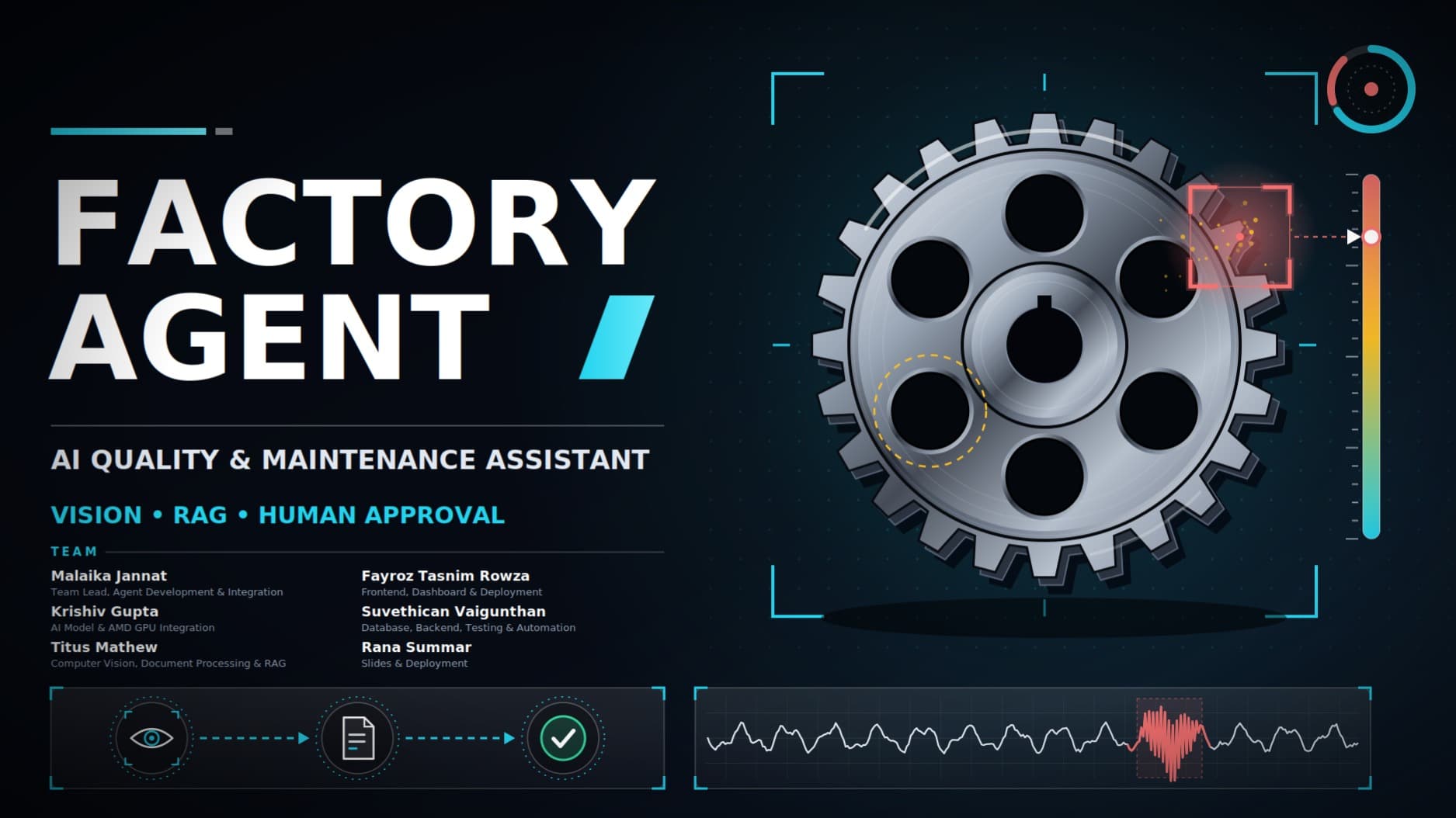
Factory Agent: AI Quality & Maintenance Assistant

Factory Agent: AI Quality & Maintenance Assistant

Factory Agent is an end-to-end AI quality inspection and industrial maintenance assistant designed for modern manufacturing environments. It addresses costly equipment downtime and the safety risks of unverified AI recommendations through multimodal defect detection, retrieval-augmented generation (RAG), evidence-grounded diagnosis, and human-in-the-loop governance. The system accepts machine-part photographs, sensor telemetry reports in CSV, JSON, or TXT formats, and technical inspection documents in TXT or PDF formats, including OCR-based text extraction. For visual inspection, Factory Agent combines an advisory local CNN with AMD Token Factory vision models, including Qwen3.8-Flash-Next and Gemma-4-31B-IT. It evaluates individual model predictions rather than averaging confidence scores, flagging low-confidence results and disagreements as UNVERIFIED for expert review. Its RAG pipeline retrieves relevant maintenance procedures from technical manuals. Primary and fallback language models, MiMo-V2.6-Flash and DeepSeek-V4-Flash, generate diagnostic explanations and repair recommendations grounded in retrieved evidence. The system validates recommendations against source manual text and provides citations identifying relevant manuals and pages where available. A human-in-the-loop interface enables plant managers to review predictions, examine supporting evidence, and approve or reject proposed maintenance actions. Only approved cases proceed to Evolus automation workflows for maintenance work-order generation. Built with Next.js, React, TypeScript, FastAPI, PyTorch, and Docker, Factory Agent supports cloud integrations and an offline mock mode for demonstrations and development without API keys. By combining automation, traceable evidence, and human oversight, Factory Agent aims to make industrial AI safer, more transparent, auditable, and practical.

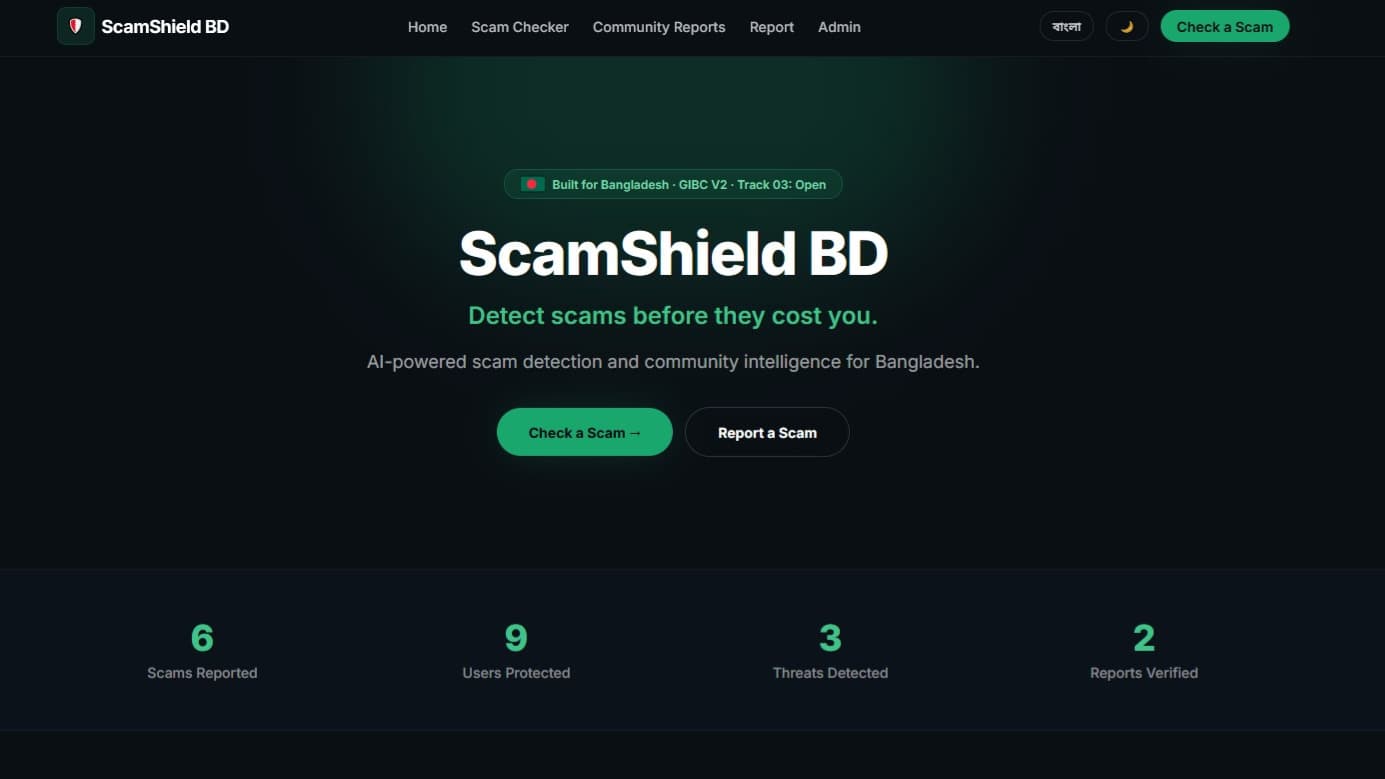
ScamShield BD — IBM Bob Spec-Compliance Audit

ScamShield BD — IBM Bob Spec-Compliance Audit

ScamShield BD is an AI-assisted scam detection and awareness platform designed for Bangladeshi users who face phishing messages, fraudulent links, fake offers, suspicious phone numbers, and other common online scams. The problem is that many users cannot easily determine whether a message, phone number, website, or online offer is trustworthy. Existing scam detection tools may also provide limited support for Bangla users and often do not explain the reasons behind a risk decision in a simple way. ScamShield BD provides a localized platform where users can submit suspicious content and receive a risk assessment with understandable explanations. The platform combines rule-based analysis with optional AI-assisted analysis. It can analyze scam signals, identify suspicious patterns, detect lookalike domains, and process screenshots through OCR. Users can also view community reports and feedback, while administrators can monitor reports, patterns, analytics, and scam hotspots. The target users are everyday internet and mobile users in Bangladesh, especially people who receive suspicious SMS messages, social media messages, links, payment requests, or online offers. A user can open the platform, submit suspicious information through the scam checker, and review the generated risk assessment and explanation. The interface supports both Bangla and English to make the system more accessible. A key part of this project is its use of IBM Bob 2.0 as an engineering workflow rather than simply as a coding assistant. The project includes a reusable Spec-Compliance & Consistency Audit workflow. Bob first analyzed the project requirements, then used specialized scanning tasks to check localization and theme consistency. A reviewer step prioritized the findings, followed by human approval before fixes were applied. The workflow was then used to verify the changes and packaged as a reusable Bob skill. During the audit, Bob identified 9 localization findings and 0 theme violations. After human review, 3 findings were approved for fixing across 2 files. The fixes addressed missing Bangla localization in the ScamChecker and an incomplete Bangla community empty state. TypeScript verification completed with 0 errors. The creative aspect of ScamShield BD is the combination of localized scam detection, explainable risk signals, community-driven reporting, and an auditable AI-assisted development workflow. Instead of treating AI only as a feature inside the application, the project also demonstrates how IBM Bob can improve the engineering process through structured scanning, human approval, automated verification, and reusable workflows.

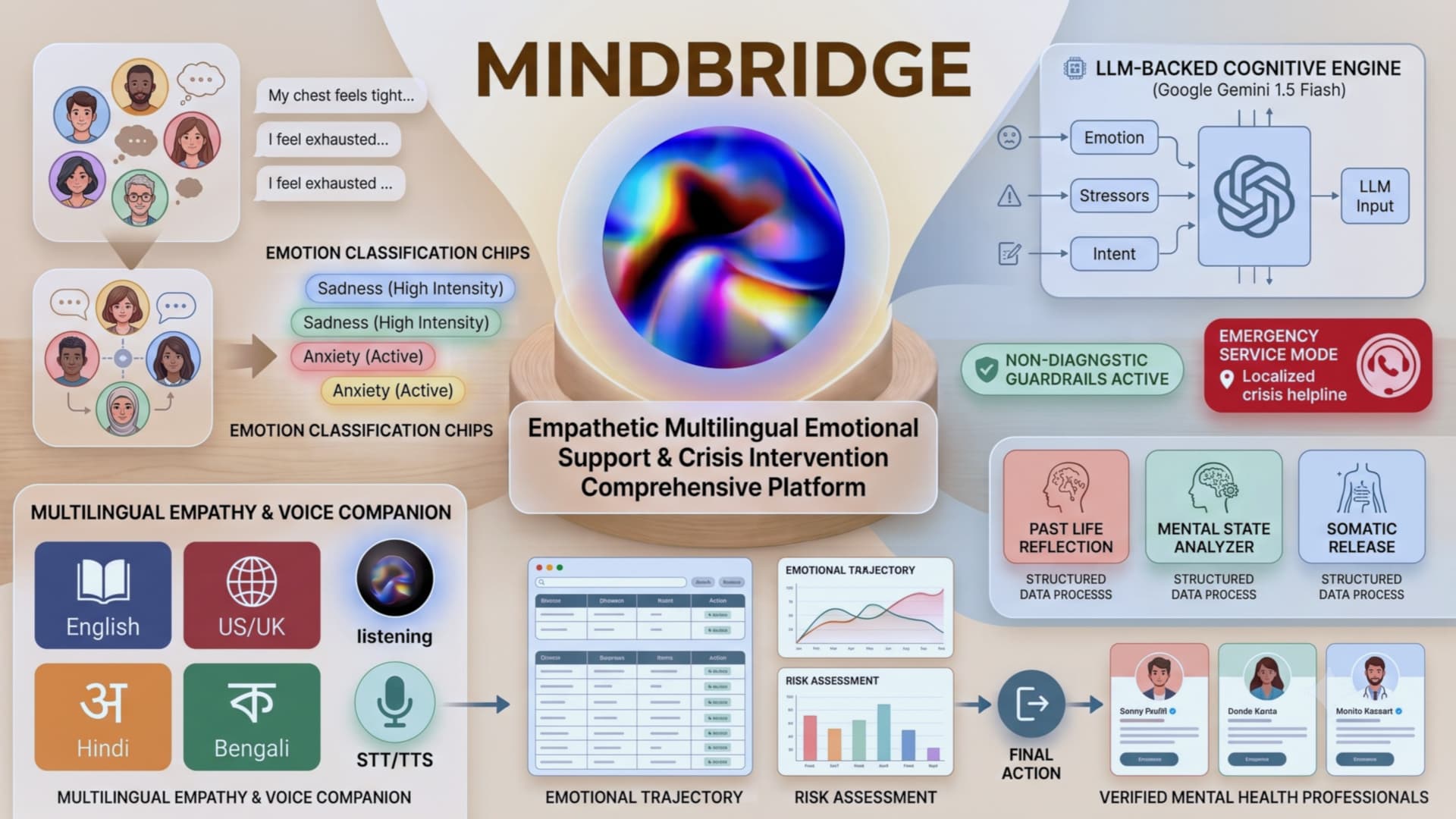
MindBridge: AI Mental Health Support

MindBridge: AI Mental Health Support

Problem And Solution Statement: Many people deal with stress or feeling down, but they are not sure what it means or how to get help. It can feel awkward to talk to someone about it because of what others might think or because it costs too much or seems too far away. During a really bad moment, it gets even harder to know where to turn. MindBridge tries to help with that by giving a simple way to check in on how you are doing. The screening part asks about twenty questions and then gives a summary of things like mood or sleep without saying it is a real diagnosis. I think that part matters because it just points people toward what might help next instead of acting like a doctor. Users can type or talk to it in English, Hindi, or Bengali, and the chatbot answers in a normal way. It also shows breathing exercises or other small steps for handling daily stress. If someone leaves some questions blank, the result just says it is not complete, which makes sense so the summary does not get messed up. One thing that stands out is how it handles bigger worries. When someone mentions thoughts about hurting themselves or other serious stuff the system switches to emergency mode and shows numbers or places to go right away. People can reach that without finishing anything else or signing up first. It also lets users look up nearby therapists using their location or a city name and it tries to show which ones are checked out properly. The idea seems aimed at students or anyone who wants an easy first step. It combines the chat part with finding help and safety checks all in one place, but I am not totally sure how well that works in practice. Some parts feel like they could still be confusing if the person is already overwhelmed. It keeps saying it is not meant to replace actual professionals, which is probably good to repeat.