PaLM

PaLM 2 is a groundbreaking large language model developed by Google, setting extraordinary standards in the realm of artificial intelligence. Outperforming its predecessors and other LLMs in various aspects, PaLM 2 showcases unparalleled capabilities in complex reasoning, multilingual translation, and coding expertise.

General
Release dateTBA
AuthorGoogle
TypeLarge Language Model

Experience PaLM 2: Where Unparalleled Performance Meets Responsible Innovation

We have collected the best PaLM 2 resources to help you explore the capabilities and potential applications of Google's cutting-edge large language model. Unleash the power of PaLM 2 with these valuable resources and see for yourself the future of artificial intelligence.


Explore curated libraries and resources to help you build outstanding projects with PaLM 2, Google's transformative large language model.

  • PaLM 2 Documentation - Dive into the in-depth technical report of PaLM 2, providing valuable insights into its development and capabilities.

  • PaLM 2 Overview - Discover the key features, capabilities, and evolution of PaLM 2, Google's groundbreaking large language model.

  • PaLM 2 Developer Guide - Access a comprehensive guide to using Google's generative AI models like PaLM 2, offering a plethora of support and resources for developers.

PaLM top builders

Explore the top contributors showcasing the highest number of PaLM app submissions within our community.

Google PaLM AI technology Hackathon projects

Discover innovative solutions crafted with PaLM, developed by our community members during our engaging hackathons.

Fresno LUX: A Living City

Fresno LUX: A Living City

Fresno LUX is a prototype for a living intelligence layer across an entire city. Fresno already contains enormous amounts of intelligence: residents know where problems exist, nonprofits know where help is needed, businesses know where opportunities exist, educators understand gaps in learning, researchers generate knowledge, and government maintains critical infrastructure and data. The problem is that much of this intelligence is fragmented across disconnected systems. Fresno LUX connects those pieces. The platform creates a shared city graph where people, organizations, resources, needs, projects, observations, experiments, and outcomes become connected nodes. Instead of simply collecting data, LUX continuously asks: What is happening? What do we know? What is missing? What can we test? What changed? A community problem can become an observable signal. That signal can become an experiment. The experiment produces evidence. Evidence changes the system's understanding. That updated understanding informs the next action. Observe → Connect → Understand → Act → Measure → Learn → Converge. The goal is to move Fresno from disconnected information toward collective intelligence—a system where knowledge can travel across boundaries and successful solutions can be discovered, tested, measured, and replicated. LUX is designed to make the invisible connections visible: the relationship between a neighborhood and its resources, between a student and educational opportunity, between a business and workforce capacity, between environmental conditions and community health, and between an idea and measurable real-world impact. This hackathon prototype demonstrates the beginning of a Living Fresno Graph: a city that can observe itself, learn from evidence, and coordinate toward better outcomes.

ROCmPorter Agent — CUDA to ROCm

ROCmPorter Agent — CUDA to ROCm

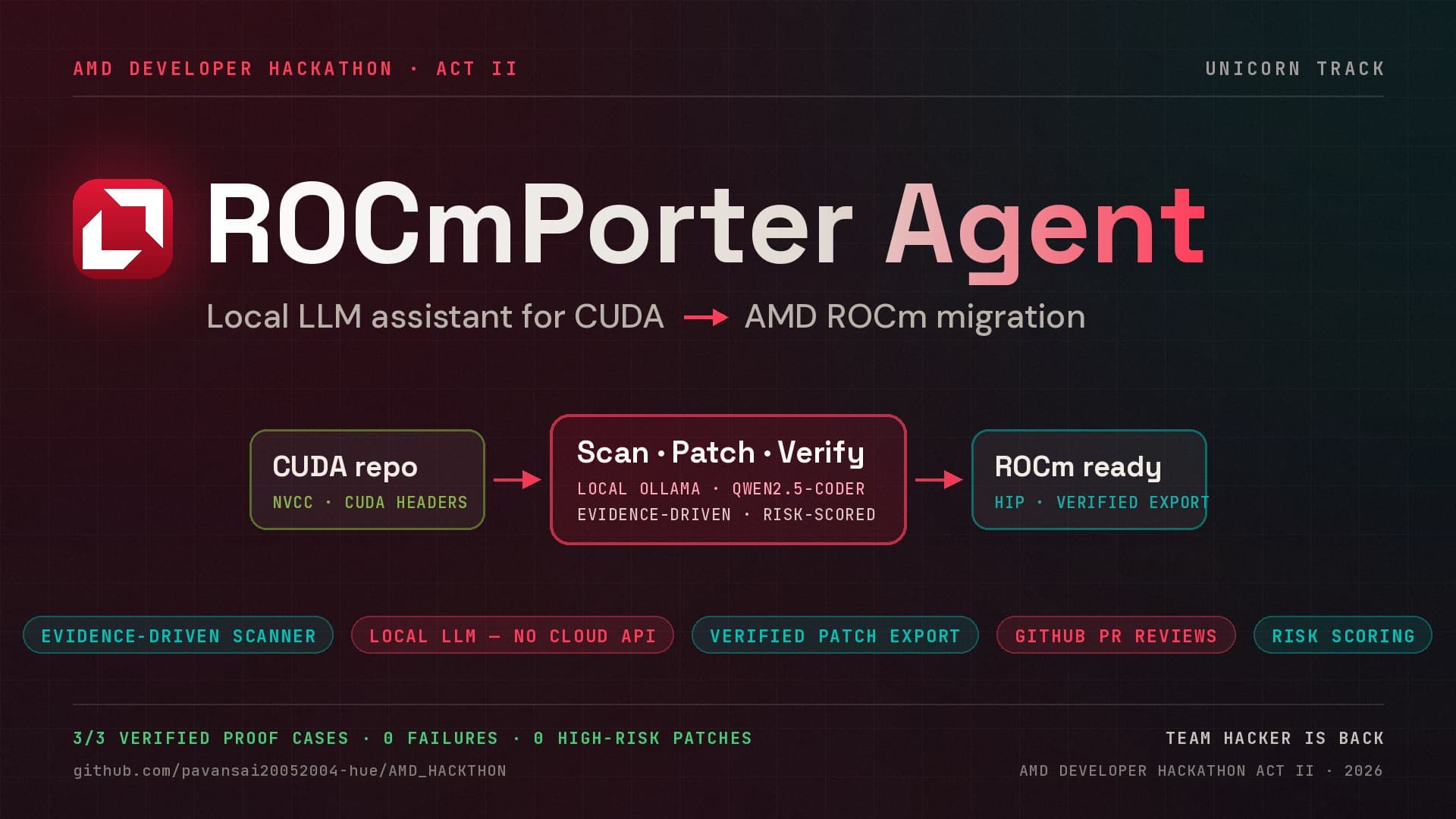
ROCmPorter Agent turns CUDA lock-in into a verifiable migration path to AMD ROCm. Most AI and HPC projects are built around NVCC, CUDA headers, nvidia/cuda containers, and CUDA-only Python wheels. Teams that want to move to AMD hardware face two problems: they can't see which files actually block the port, and they can't trust raw LLM-generated migration patches, which routinely hallucinate APIs and break builds. ROCmPorter solves both. The workflow has five reviewable steps. Scan: clone any public or private GitHub repository and detect CUDA/NVIDIA assumptions with a deterministic, evidence-driven scanner — every finding cites a concrete file and line with severity and confidence. Report: get a ROCm portability score, an executive summary, and a migration checklist. Patch: generate a single-file ROCm review artifact using local Ollama with qwen2.5-coder — no paid cloud LLM API, so private code never leaves the machine. Verify: every artifact passes syntax validation, source drift checks, diff replay, artifact hashing, and CUDA/ROCm-aware semantic risk scoring. Apply stays gated until verification returns applyReady=true — the product is honest about what AI output can and cannot be trusted to do. Export: offline HTML/JSON/Markdown bundles, checksummed zips, and GitHub-ready PR review comments with inline suggestions. The proof is tracked in the repo: benchmark run submission-proof-v2 completed 3/3 cases against real repositories (pytorch/extension-cpp, NVIDIA/cuda-samples) with 3 export-ready review artifacts, 0 failures, and 0 high-risk patches. Stack: React + Vite frontend, FastAPI backend, local Ollama. Live demo hosts the production UI — click "Load Sample Scan" for the full offline judge flow. Built by Team Hacker Is Back for the AMD Developer Hackathon ACT II, Unicorn Track.

RoboGripAI

RoboGripAI

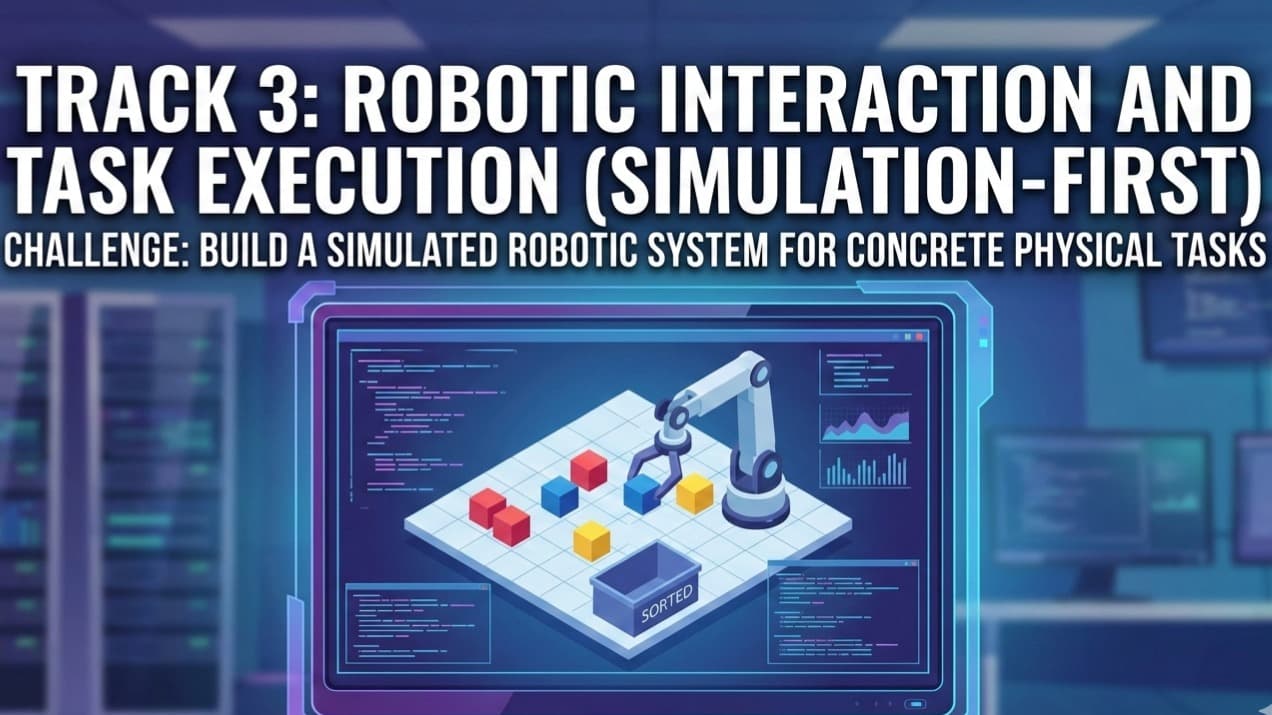
This project presents a simulation-first robotic system designed to perform structured physical tasks through reliable interaction with objects and its environment. The system focuses on practical task execution rather than complex physics modeling, ensuring repeatability, robustness, and measurable performance across varied simulated conditions. Simulation-first robotic system performing structured physical tasks such as pick-and-place, sorting, and simple assembly. Designed for repeatable execution under varied conditions, with basic failure handling, environmental interaction, and measurable performance metrics. A key emphasis of the system is reliability under dynamic conditions. The simulation introduces variations such as object position changes, minor environmental disturbances, and task sequence modifications. The robot is designed to adapt to these variations while maintaining consistent task success rates. Basic failure handling mechanisms are implemented, including reattempt strategies for failed grasps, collision avoidance corrections, and task state recovery protocols. The framework incorporates structured task sequencing and state-based control logic to ensure deterministic and repeatable behavior. Performance is evaluated using clear metrics such as task completion rate, execution time, grasp accuracy, recovery success rate, and system stability across multiple trials. The modular system design allows scalability for additional tasks or integration with advanced planning algorithms. By prioritizing repeatability, robustness, and measurable outcomes, this solution demonstrates practical robotic task automation in a controlled simulated environment, aligning with real-world industrial and research use cases. Overall, the project showcases a dependable robotic manipulation framework that bridges perception, decision-making, and action in a simulation-first setting, delivering consistent and benchmark-driven task execution.

SupplyGenius Pro

SupplyGenius Pro

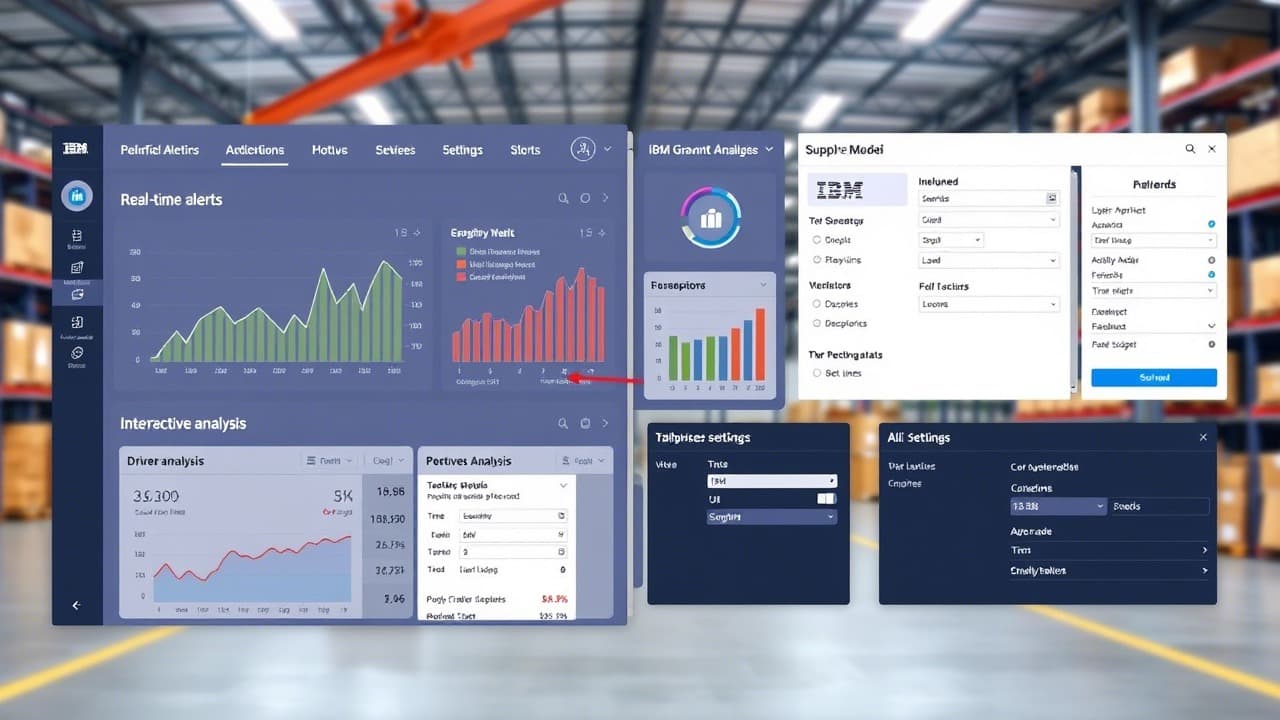
Core Features 1. Document Processing & Analysis - Automated analysis of supply chain documents - Extraction of key information (parties, dates, terms) - Compliance status verification - Confidence scoring for extracted data 2. Demand Forecasting & Planning - AI-powered demand prediction - Time series analysis with confidence intervals - Seasonal pattern recognition - Multi-model ensemble forecasting (LSTM, Random Forest) 3.Inventory Optimization - Real-time inventory level monitoring - Dynamic reorder point calculation - Holding cost optimization - Stockout risk prevention 4. Risk Management - Supply chain disruption simulation - Real-time risk monitoring - Automated mitigation strategy generation - Risk score calculation 5. Supplier Management - Supplier performance tracking - Lead time optimization - Pricing analysis - Automated purchase order generation 6. Financial Analytics - ROI calculation - Cost optimization analysis - Financial impact assessment - Budget forecasting 7. Real-time Monitoring - Live metrics dashboard - WebSocket-based alerts - Performance monitoring - System health tracking 8. Security Features - JWT-based authentication - Role-based access control - Rate limiting - Secure API endpoints -- Technical Capabilities 1. AI Integration - IBM Granite 13B model integration - RAG (Retrieval Augmented Generation) - Custom AI toolchains - Machine learning pipelines 2. Data Processing - Real-time data processing - Time series analysis - Statistical modeling - Data visualization 3. Performance Optimization - Redis caching - Async operations - Rate limiting - Load balancing 4. Monitoring & Logging - Prometheus metrics - Detailed logging - Performance tracking - Error handling