Open Interpreter

Description of the technology.

General
AuthorKillianLucas
Repositoryhttps://github.com/KillianLucas/open-interpreter
TypeAI Development Tool

Start building with Open Interpreter

Open Interpreter empowers language models with code execution capabilities in your local environment. It supports Python, JavaScript, Shell, and more. Engage with it through a ChatGPT-like interface in your terminal by running '$ interpreter' after installation.

This provides a natural-language interface for various tasks:

  • Edit photos, videos, PDFs, and more.
  • Control a Chrome browser for research.
  • Analyze large datasets, create plots, and perform data cleaning.

Note, code execution requires user approval.

Open Interpreter Tutorials


Open Interpreter Libraries and Resources

A curated list of libraries and technologies to help you build great projects with Open Interpreter.


open-interpreter top builders

Explore the top contributors showcasing the highest number of open-interpreter app submissions within our community.

open-interpreter AI technology page Hackathon projects

Discover innovative solutions crafted with open-interpreter, developed by our community members during our engaging hackathons.

Legal-Voice – Voice Legal Forms

Legal-Voice – Voice Legal Forms

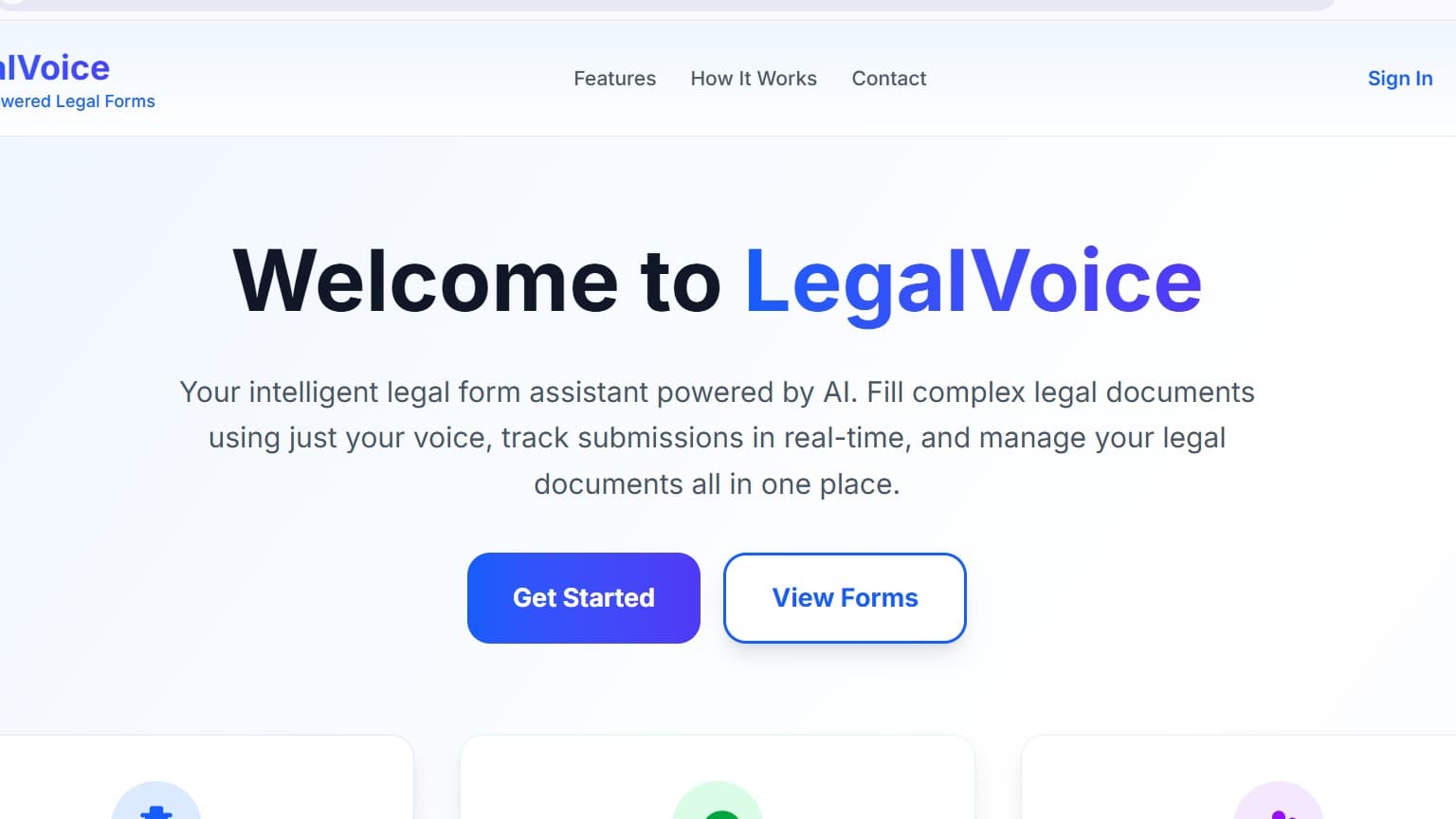
LegalVoice is a voice-first legal form assistant that I built to make complicated legal paperwork easier to complete. Instead of asking users to manually type every field in a long form, the application lets them provide information naturally through conversation and voice. This is especially useful when users are more comfortable communicating in their preferred language rather than dealing with a complex form interface. The application takes the user's responses, converts spoken information into text, translates it when required, and uses AI to understand the response and map the relevant information to the correct legal form fields. Users can review the extracted information before completing the process, helping them stay in control of the final data. The system can then generate the completed document as a PDF. I built the project as a full-stack application with a Next.js and React frontend and a FastAPI backend. It also includes authentication, multilingual support, document uploads, AI-powered extraction, form handling, submission tracking, real-time communication, PDF generation, and an admin workflow. The main idea behind LegalVoice is simple: legal forms should not require users to understand complicated digital forms before they can provide basic information. By combining conversational interaction, voice input, multilingual support, and structured AI extraction, the project turns a traditionally form-heavy process into a more natural interaction while keeping the user involved in reviewing the final information.

Fresno LUX: A Living City

Fresno LUX: A Living City

Fresno LUX is a prototype for a living intelligence layer across an entire city. Fresno already contains enormous amounts of intelligence: residents know where problems exist, nonprofits know where help is needed, businesses know where opportunities exist, educators understand gaps in learning, researchers generate knowledge, and government maintains critical infrastructure and data. The problem is that much of this intelligence is fragmented across disconnected systems. Fresno LUX connects those pieces. The platform creates a shared city graph where people, organizations, resources, needs, projects, observations, experiments, and outcomes become connected nodes. Instead of simply collecting data, LUX continuously asks: What is happening? What do we know? What is missing? What can we test? What changed? A community problem can become an observable signal. That signal can become an experiment. The experiment produces evidence. Evidence changes the system's understanding. That updated understanding informs the next action. Observe → Connect → Understand → Act → Measure → Learn → Converge. The goal is to move Fresno from disconnected information toward collective intelligence—a system where knowledge can travel across boundaries and successful solutions can be discovered, tested, measured, and replicated. LUX is designed to make the invisible connections visible: the relationship between a neighborhood and its resources, between a student and educational opportunity, between a business and workforce capacity, between environmental conditions and community health, and between an idea and measurable real-world impact. This hackathon prototype demonstrates the beginning of a Living Fresno Graph: a city that can observe itself, learn from evidence, and coordinate toward better outcomes.

HOLY-UNDERWRITERS

HOLY-UNDERWRITERS

Enterprise credit holds are a silent revenue killer. A deal is ready to close, but the order is stuck — tax certificate unverified, credit limit insufficient, dispute tickets unresolved. Resolving it manually means emails across three departments, two days of waiting, and a frustrated customer. ReleaseIQ 2.0 fixes this with a Band-coordinated multi-agent system. When a sales rep emails in a blocked order, A1 — running on Automation Anywhere's native Process Reasoning Engine — parses the case, opens a Band room, and recruits three specialist agents. A2 validates the customer's tax exemption certificate. A3, hosted on Hugging Face Spaces, pulls credit risk data from Dun & Bradstreet, cross-references SAP invoice exposure, and recommends a credit limit adjustment. A4, running on Replit with a live ServiceNow integration, closes all open dispute tickets linked to the order. All four agents — running on four different platforms — coordinate exclusively through Band. They share context, post structured verdicts, and hand off work through a single room. A1 synthesizes the findings into a consolidated approval packet and routes it to the Finance Director for a one-click human sign-off. ReleaseIQ 2.0 demonstrates Band's core value proposition: agents don't need to live on the same platform to work as a team. Band is the coordination layer that makes cross-infrastructure, cross-framework multi-agent collaboration possible in a real enterprise workflow. Powered by Automation Anywhere PRE, Hugging Face, ServiceNow, Replit, and Band.

OmniSentinel: Watching Everything, Missing Nothing

OmniSentinel: Watching Everything, Missing Nothing

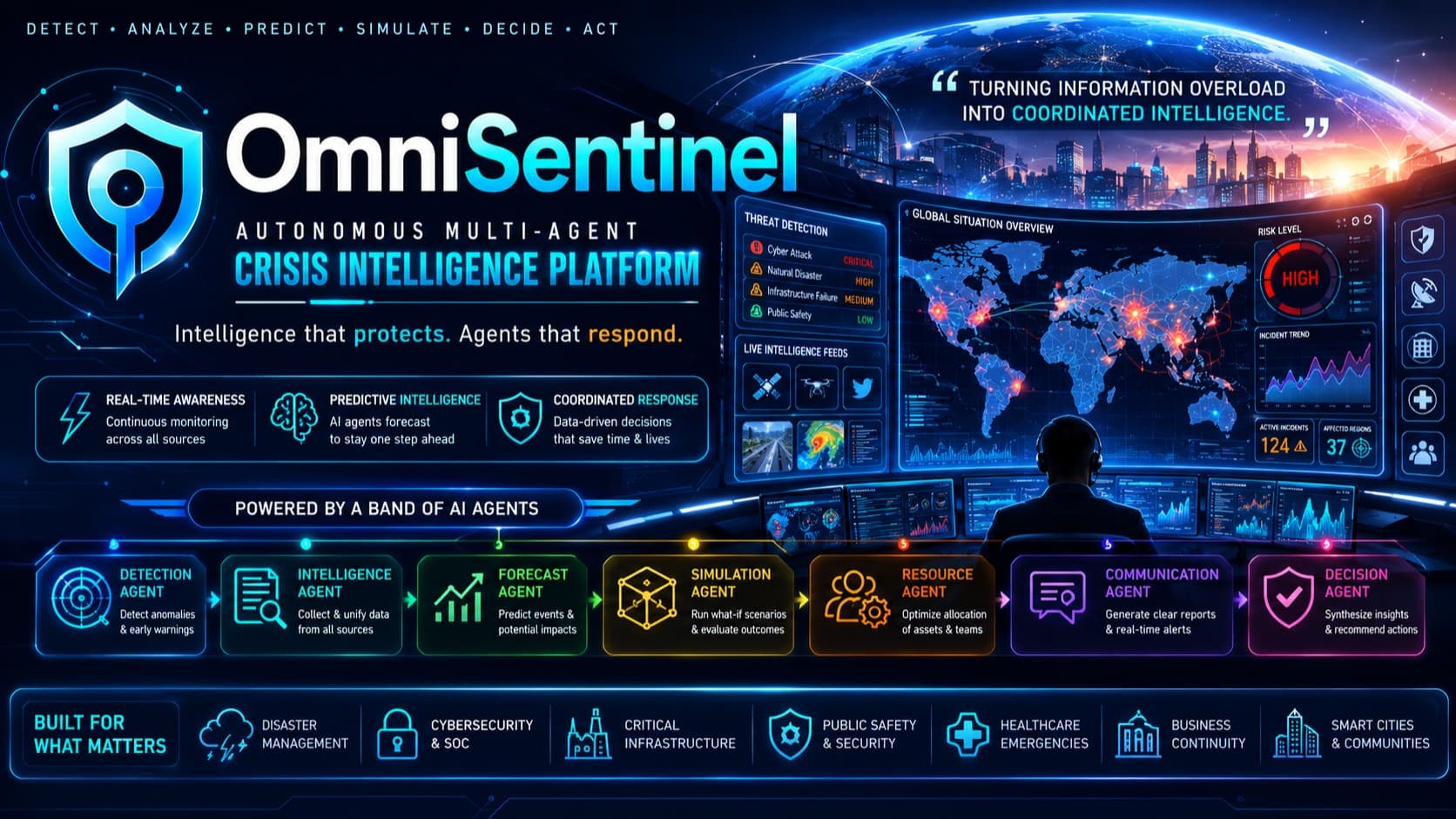
OmniSentinel is an autonomous multi-agent crisis intelligence platform that helps organizations, governments, and emergency teams detect, understand, and respond to critical events in real time. Modern crises such as natural disasters, cyberattacks, infrastructure failures, and public health emergencies generate vast amounts of fragmented information that can overwhelm human decision-makers. OmniSentinel transforms this complexity into coordinated intelligence through a Band of AI Agents working together as a unified command center. The platform combines specialized agents that continuously monitor data, identify threats, gather intelligence, forecast potential developments, simulate response scenarios, and recommend optimal actions. Instead of operating independently, these agents collaborate, validate findings, and refine recommendations to provide accurate and actionable insights. This collective reasoning approach enables faster situational awareness and more confident decision-making during high-pressure events. OmniSentinel provides a real-time view of evolving situations, helping users understand current risks, anticipate future impacts, and evaluate possible response strategies before taking action. For demonstration purposes, the platform can simulate scenarios such as cyberattacks, severe weather events, infrastructure outages, or large-scale emergencies, showcasing how multiple AI agents coordinate autonomously to analyze information and generate strategic response plans within seconds. By turning information overload into coordinated intelligence, OmniSentinel empowers decision-makers to respond faster, smarter, and more effectively when every second matters.