Point-E

Introduction to Point-E: 3D Models from Text Prompts

Point-E is a groundbreaking system developed by OpenAI, capable of generating 3D point clouds from text descriptions. This technology facilitates a rapid 3D object creation from textual prompts within a mere 1-2 minutes on a single GPU.

While the quality may still be evolving, the efficiency and speed offer an appealing alternative to other state-of-the-art methods. The following sections explore Point-E's theoretical model, use cases, set-up guide, and essential resources for 3D AI enthusiasts.

What you need to know about Point-E

OpenAI's Point-E leverages a two-step diffusion model to transform textual prompts into 3D point clouds. By first generating a synthetic view with a text-to-image diffusion model, it then produces a 3D point cloud, conditioning on the generated image.

Although slightly behind in terms of sample quality, its ability to sample one to two orders of magnitude faster makes it practical for various use cases.

Use Cases and Tips: Point-E in Action

1. Quick 3D Model Generation

  • Applications: Design prototypes, visual concepts, educational materials.
  • Tips: Utilize simple categories and colors for optimal results.

2. Integration with Other OpenAI Tools

  • Examples: Pairing with ChatGPT for interactive design, enhancing visuals with DALL-E.
  • Tips: Consider hardware capabilities to ensure smooth integration and performance.

How to Set Up Point-E: Step-by-Step Guide with Code Samples

Installation

Install Point-E using pip with the following command:

Getting Started with Examples

Here are some sample notebooks to help you dive into Point-E:

  • image2pointcloud.ipynb - sample a point cloud, conditioned on some example synthetic view images.
  • text2pointcloud.ipynb - use our small, worse quality pure text-to-3D model to produce 3D point clouds directly from text descriptions. This model's capabilities are limited, but it does understand some simple categories and colors.
  • pointcloud2mesh.ipynb - try our SDF regression model for producing meshes from point clouds.

Evaluation Scripts

For advanced users, P-FID and P-IS evaluation scripts are available:

Blender Rendering Code

For 3D rendering, utilize the Blender script - blender_script.py

# blender_script.py

Conclusion

Point-E by OpenAI opens doors to rapid 3D object generation with minimal hardware requirements. As it continues to evolve, Point-E stands as a promising alternative to existing methods, making it an appealing option for professionals and enthusiasts in the fields of 3D AI and design. Explore, experiment, and create with Point-E!

Point-E top builders

Explore the top contributors showcasing the highest number of Point-E app submissions within our community.

OpenAI Point-E AI technology Hackathon projects

Discover innovative solutions crafted with Point-E, developed by our community members during our engaging hackathons.

Fresno LUX: A Living City

Fresno LUX: A Living City

Fresno LUX is a prototype for a living intelligence layer across an entire city. Fresno already contains enormous amounts of intelligence: residents know where problems exist, nonprofits know where help is needed, businesses know where opportunities exist, educators understand gaps in learning, researchers generate knowledge, and government maintains critical infrastructure and data. The problem is that much of this intelligence is fragmented across disconnected systems. Fresno LUX connects those pieces. The platform creates a shared city graph where people, organizations, resources, needs, projects, observations, experiments, and outcomes become connected nodes. Instead of simply collecting data, LUX continuously asks: What is happening? What do we know? What is missing? What can we test? What changed? A community problem can become an observable signal. That signal can become an experiment. The experiment produces evidence. Evidence changes the system's understanding. That updated understanding informs the next action. Observe → Connect → Understand → Act → Measure → Learn → Converge. The goal is to move Fresno from disconnected information toward collective intelligence—a system where knowledge can travel across boundaries and successful solutions can be discovered, tested, measured, and replicated. LUX is designed to make the invisible connections visible: the relationship between a neighborhood and its resources, between a student and educational opportunity, between a business and workforce capacity, between environmental conditions and community health, and between an idea and measurable real-world impact. This hackathon prototype demonstrates the beginning of a Living Fresno Graph: a city that can observe itself, learn from evidence, and coordinate toward better outcomes.

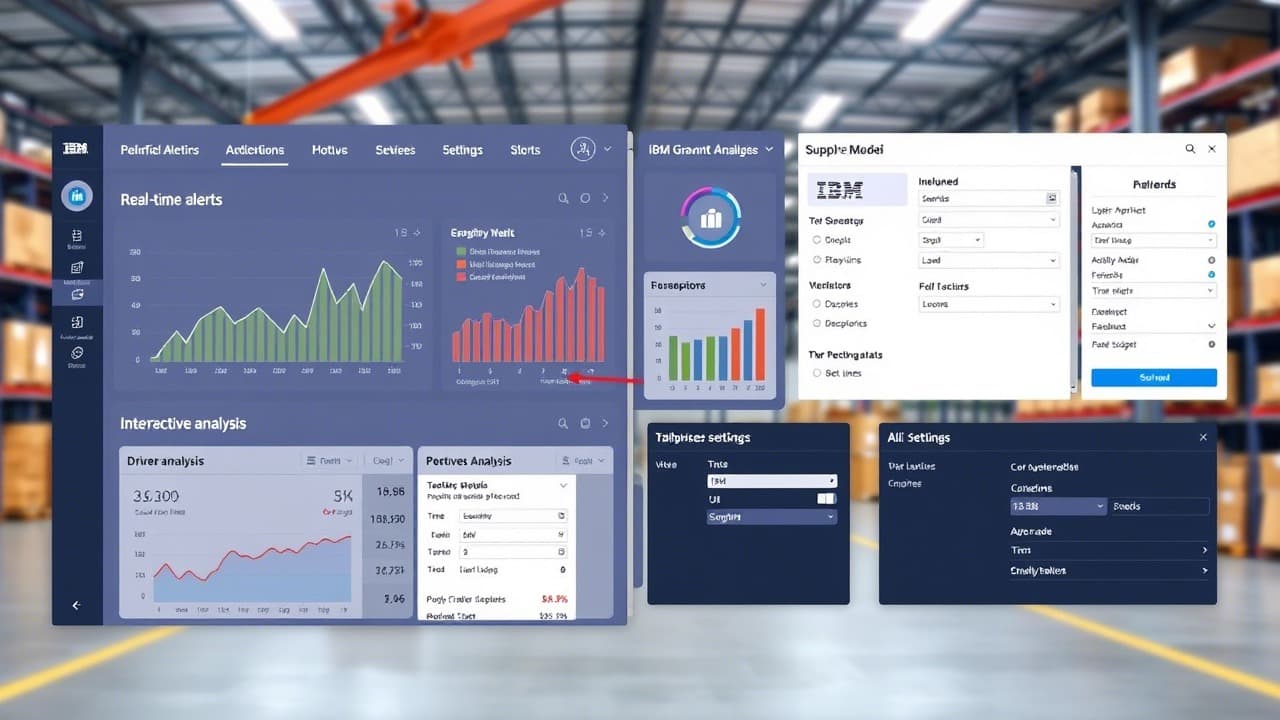
SupplyGenius Pro

SupplyGenius Pro

Core Features 1. Document Processing & Analysis - Automated analysis of supply chain documents - Extraction of key information (parties, dates, terms) - Compliance status verification - Confidence scoring for extracted data 2. Demand Forecasting & Planning - AI-powered demand prediction - Time series analysis with confidence intervals - Seasonal pattern recognition - Multi-model ensemble forecasting (LSTM, Random Forest) 3.Inventory Optimization - Real-time inventory level monitoring - Dynamic reorder point calculation - Holding cost optimization - Stockout risk prevention 4. Risk Management - Supply chain disruption simulation - Real-time risk monitoring - Automated mitigation strategy generation - Risk score calculation 5. Supplier Management - Supplier performance tracking - Lead time optimization - Pricing analysis - Automated purchase order generation 6. Financial Analytics - ROI calculation - Cost optimization analysis - Financial impact assessment - Budget forecasting 7. Real-time Monitoring - Live metrics dashboard - WebSocket-based alerts - Performance monitoring - System health tracking 8. Security Features - JWT-based authentication - Role-based access control - Rate limiting - Secure API endpoints -- Technical Capabilities 1. AI Integration - IBM Granite 13B model integration - RAG (Retrieval Augmented Generation) - Custom AI toolchains - Machine learning pipelines 2. Data Processing - Real-time data processing - Time series analysis - Statistical modeling - Data visualization 3. Performance Optimization - Redis caching - Async operations - Rate limiting - Load balancing 4. Monitoring & Logging - Prometheus metrics - Detailed logging - Performance tracking - Error handling