Pinecone

Pinecone is a cutting-edge technology provider specializing in vector similarity search. Founded in 2020, Pinecone offers a scalable and efficient solution for searching through high-dimensional data.

General
AuthorPinecone
Repositoryhttps://github.com/pinecone-io
TypeVector database for ML apps

Key Features

  • Swiftly finds similar items in vast datasets, providing precise results for recommendations and searches
  • Offers near-instant responses, ideal for applications needing quick feedback
  • Integrates into existing applications with minimal setup
  • Handles large datasets and ensures consistent performance as data grows

Start building with Pinecone's products

Pinecone offers a suite of products designed to streamline vector similarity search and accelerate innovation in various fields. Dive into Pinecone's offerings and unleash the potential of your data-driven applications. Don't forget to explore the apps created with Pinecone technology showcased during lablab.ai hackathons!

List of Pinecone's products

Pinecone SDK

The Pinecone SDK empowers developers to integrate vector similarity search capabilities into their applications seamlessly. With easy-to-use APIs and robust documentation, developers can leverage the power of Pinecone's technology to enhance search experiences and unlock new insights.

Pinecone Console

The Pinecone Console provides a user-friendly interface for managing and querying vector indexes. With intuitive controls and real-time monitoring features, users can efficiently navigate through vast datasets and optimize search performance.

Pinecone Hub

Pinecone Hub is a centralized repository of pre-trained embeddings and models, offering a treasure trove of resources for accelerating development cycles. From image recognition to natural language processing, Pinecone Hub provides access to a diverse range of embeddings for various use cases.

System Requirements

Pinecone runs on Linux, macOS, and Windows systems, needing a minimum of 4 GB RAM and sufficient storage for datasets. A multicore processor is recommended for optimal performance, with stable internet for cloud access. Modern browsers with JavaScript support are necessary, while GPU acceleration is optional for enhanced performance.

Pinecone top builders

Explore the top contributors showcasing the highest number of Pinecone app submissions within our community.

Pinecone AI technology page Hackathon projects

Discover innovative solutions crafted with Pinecone, developed by our community members during our engaging hackathons.

AEGIS//GRID

AEGIS//GRID

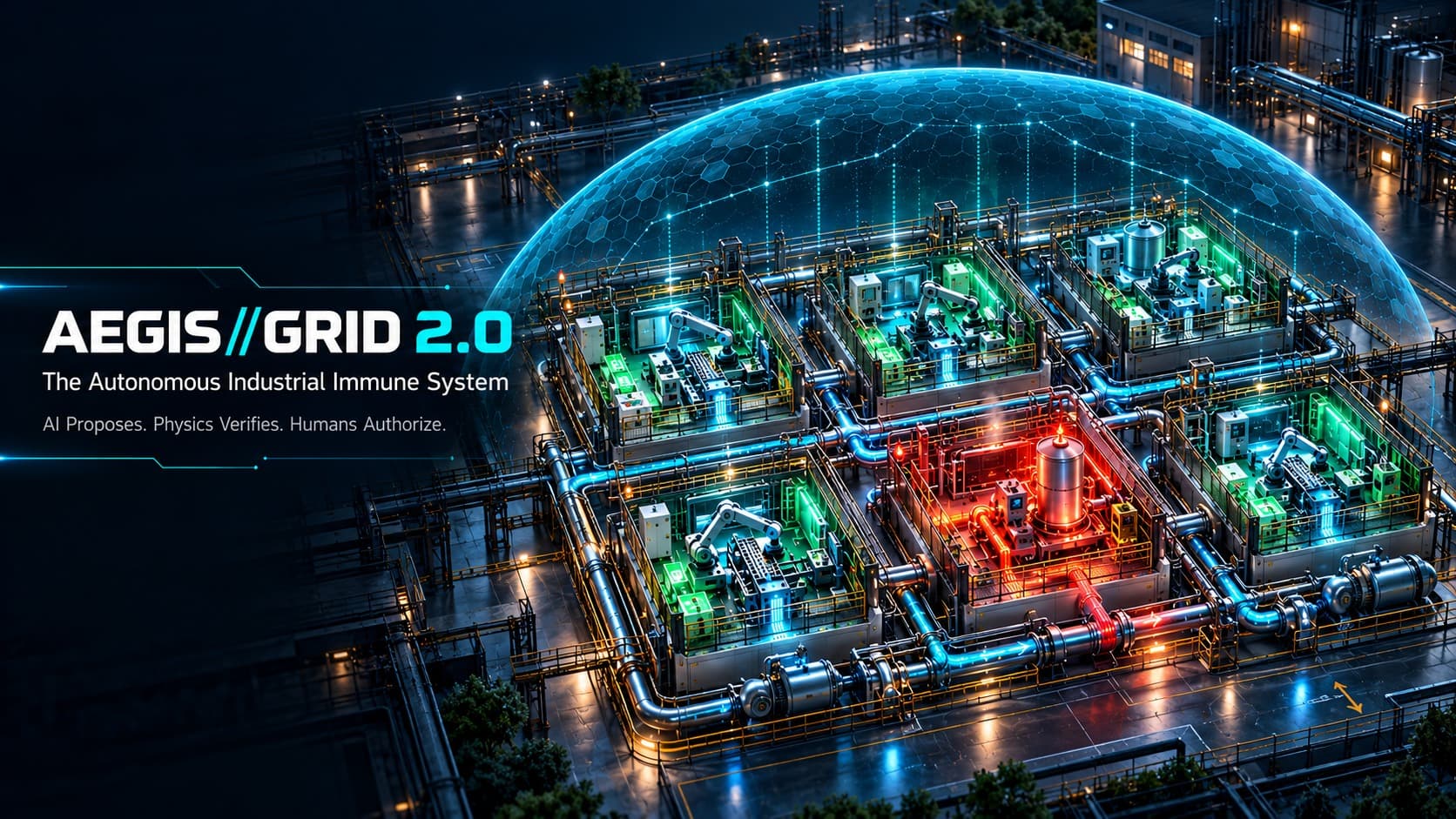
AEGIS//GRID 2.0 is an industrial AI prototype designed to make automated investigation and recovery decisions safer, more explainable, and auditable. The system combines a native C++20 digital twin of six interconnected manufacturing cells with a physics-based anomaly detector. It models thermal behavior, shared coolant flow, and equipment faults, including sensor spoofing and restricted cooling. When an anomaly is detected, a LangGraph multi-agent workflow uses AMD Token Factory hosted inference to investigate potential causes. Pinecone retrieval supplies contextual evidence from 1,235 synthetic plant records and 103 external reference records. AI-generated recovery options are evaluated using native counterfactual simulation and independent safety rules rather than being executed directly. AEGIS//GRID separates intelligence from execution authority. An operator must authorize an incident-specific action through WebAuthn. The independent executor then verifies a short-lived cryptographic capability, checks simulator state and safety constraints, and records an auditable execution receipt. In a verified commissioned simulator demonstration, an authorized safe stop reduced the hottest cell temperature from 42.37°C to 33.45°C over 120 simulated seconds. Simulator evaluation achieved 73% fault-diagnosis recall, 100% precision within the evaluated test set, and 70% thermal-hazard forecasting recall. The project also passed 453 automated checks across Python, C++, Node.js, and Chromium. AEGIS//GRID demonstrates a practical approach to trustworthy industrial autonomy: AI proposes, physics verifies, humans authorize, and independent safeguards control simulator execution. This is a simulator-validated prototype, not a certified production or physical-factory control system.

DepLens

DepLens

When developers and AI coding assistants push code changes, verification is manual, monolithic, and repetitive. Teams run entire test suites regardless of what changed, check documentation manually, and struggle to diagnose failures when they occur. Impact analysis is guesswork-no one knows if a change to a utility function will break 50 tests or 5. Crucially, failure diagnosis requires tribal knowledge; similar failures recur because the system has no persistent memory to learn from past incidents. DepLens is an autonomous verification system designed as the verification engine for IBM Bob 2.0. Instead of blindly executing all checks, it determines what to verify based on change impact, executes targeted verification in parallel, and learns from failures over time. The system is powered by three autonomous gents: Impact Analysis Agent (LangChain + ReAct): Parses the Git diff, queries the codebase AST call graph, and computes the exact blast radius (which functions, tests, and API routes are affected). It outputs structured impact metadata (categories, affected functions, affected tests, blast radius score). Verification Strategy Agent (LangChain + Policy Engine): Evaluates the impact analysis and formulates a minimal, adaptive verification plan. If API routes changed, it runs api_probe. If Python core logic changed, it runs targeted pytest. If docs or signatures changed, it checks documentation consistency. It explicitly logs its rationale (e.g., "Skipped app_lifecycle because no startup code changed"). Failure Analysis Agent (LangChain + Vector DB): Analyzes verification results, searches semantic failure history in FAISS for similar past precedents using vector embeddings, extracts root causes, and suggests surgical remediation. Multi-Agent Orchestration: Three LangChain agents run sequentially; every decision is explainable and inspectable. Adaptive Verification Tracks: run_tests.py: Targeted pytest runner with structured summary extraction. doc_checker.py: AST-to-doc synchronizer detecting stale API endpoints. api_probe.py: Real-time HTTP route verification. dependency_check.py: Risk delta scanner for manifests (requirements.txt, package.json). app_lifecycle.py: Startup/shutdown probe. Persistent Vector Memory: FAISS stores failure embeddings (via Google text-embedding-004) for semantic case matching across runs. Asynchronous APIs: FastAPI endpoints (/api/v1/verify/submit, /api/v1/verify/history) allow external agents to trigger verification and poll status asynchronously. Developers: Run deplens verify locally before committing to get instant blast-radius feedback and targeted checks. IBM Bob 2.0 Agents: Trigger /api/v1/verify/submit to autonomously verify generated code before opening PRs. CI/CD Pipelines: Run bash backend/SUBMISSION_DEMO.sh to eliminate redundant full-suite test runs and fail fast on real issues. A user or Bob agent submits a code change (Git diff range). DepLens analyzes the AST impact (2s), plans adaptive verification (1s), runs targeted tools (2–8s), queries failure memory (1s), and produces a structured verification-report.md alongside an API response. CREATIVITY & UNIQUENESS Traditional CI/CD pipelines execute rigid, static verification scripts regardless of commit scope. DepLens computes verification adaptively using AST graph traversal and agentic ReAct reasoning. By coupling semantic vector memory to verification results, DepLens ensures that neither developer nor AI agent repeats the same mistake twice. EFFECTIVENESS & MEASURABLE IMPACT Execution Speedup: Cuts verification cycles down to 9 seconds on real commits by pruning unnecessary full-server boot checks. Real Bug Detection: Autonomously caught a stale reference to an obsolete /api/v1/analyze endpoint in userguide.md:92 when the endpoint had moved to /build. Zero Regressions: 246+ passing unit tests across the core platform.

Fresno LUX: A Living City

Fresno LUX: A Living City

Fresno LUX is a prototype for a living intelligence layer across an entire city. Fresno already contains enormous amounts of intelligence: residents know where problems exist, nonprofits know where help is needed, businesses know where opportunities exist, educators understand gaps in learning, researchers generate knowledge, and government maintains critical infrastructure and data. The problem is that much of this intelligence is fragmented across disconnected systems. Fresno LUX connects those pieces. The platform creates a shared city graph where people, organizations, resources, needs, projects, observations, experiments, and outcomes become connected nodes. Instead of simply collecting data, LUX continuously asks: What is happening? What do we know? What is missing? What can we test? What changed? A community problem can become an observable signal. That signal can become an experiment. The experiment produces evidence. Evidence changes the system's understanding. That updated understanding informs the next action. Observe → Connect → Understand → Act → Measure → Learn → Converge. The goal is to move Fresno from disconnected information toward collective intelligence—a system where knowledge can travel across boundaries and successful solutions can be discovered, tested, measured, and replicated. LUX is designed to make the invisible connections visible: the relationship between a neighborhood and its resources, between a student and educational opportunity, between a business and workforce capacity, between environmental conditions and community health, and between an idea and measurable real-world impact. This hackathon prototype demonstrates the beginning of a Living Fresno Graph: a city that can observe itself, learn from evidence, and coordinate toward better outcomes.

Nexus AI

Nexus AI

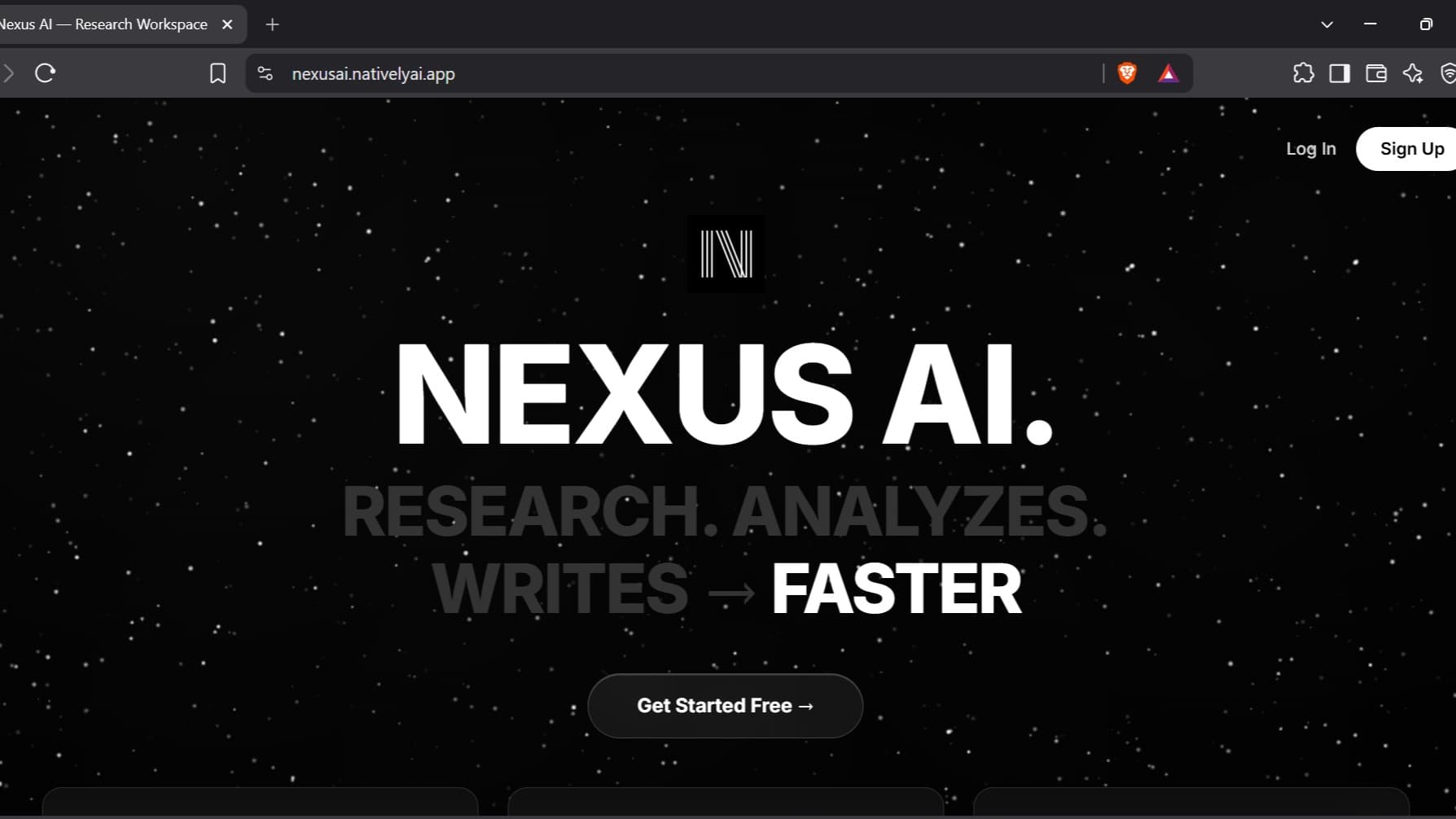
NEXUS AI: by Vita Robotics is an advanced, next-generation research intelligence system engineered to eliminate manual overhead and accelerate the pathway from scientific hypothesis to publication. Originally designed as a universal academic assistant and specially adapted for time-constrained medical professionals, NEXUS AI solves the critical problem of information overload caused by millions of annual paper publications. By integrating directly with primary research repositories like PubMed, ArXiv, and ClinicalTrials.gov, the platform enables deep semantic literature discovery beyond simple keyword matching. Its professor-grade AI Analyzer evaluates study methodologies, statistical rigor, p-values, and potential bias in dense PDFs within seconds. To accommodate busy clinicians and researchers on the move, NEXUS AI converts complex studies into shift-ready text and audio briefings with interactive playback controls. Additionally, the unified Manuscript Studio streamlines the writing, citation formatting, and polishing process, allowing researchers to draft publication-ready medical and academic papers up to three times faster. Features like the real-time Originality Radar check tone, argument depth, and plagiarism to ensure peer-review readiness. Built with enterprise-grade 256-bit SSL encryption, GDPR compliance, and a strict zero-data-training policy, NEXUS AI guarantees that unreleased intellectual property, clinical trial data, and sensitive hypotheses remain completely secure and confidential.

AutOps - Autonomous Operations

AutOps - Autonomous Operations

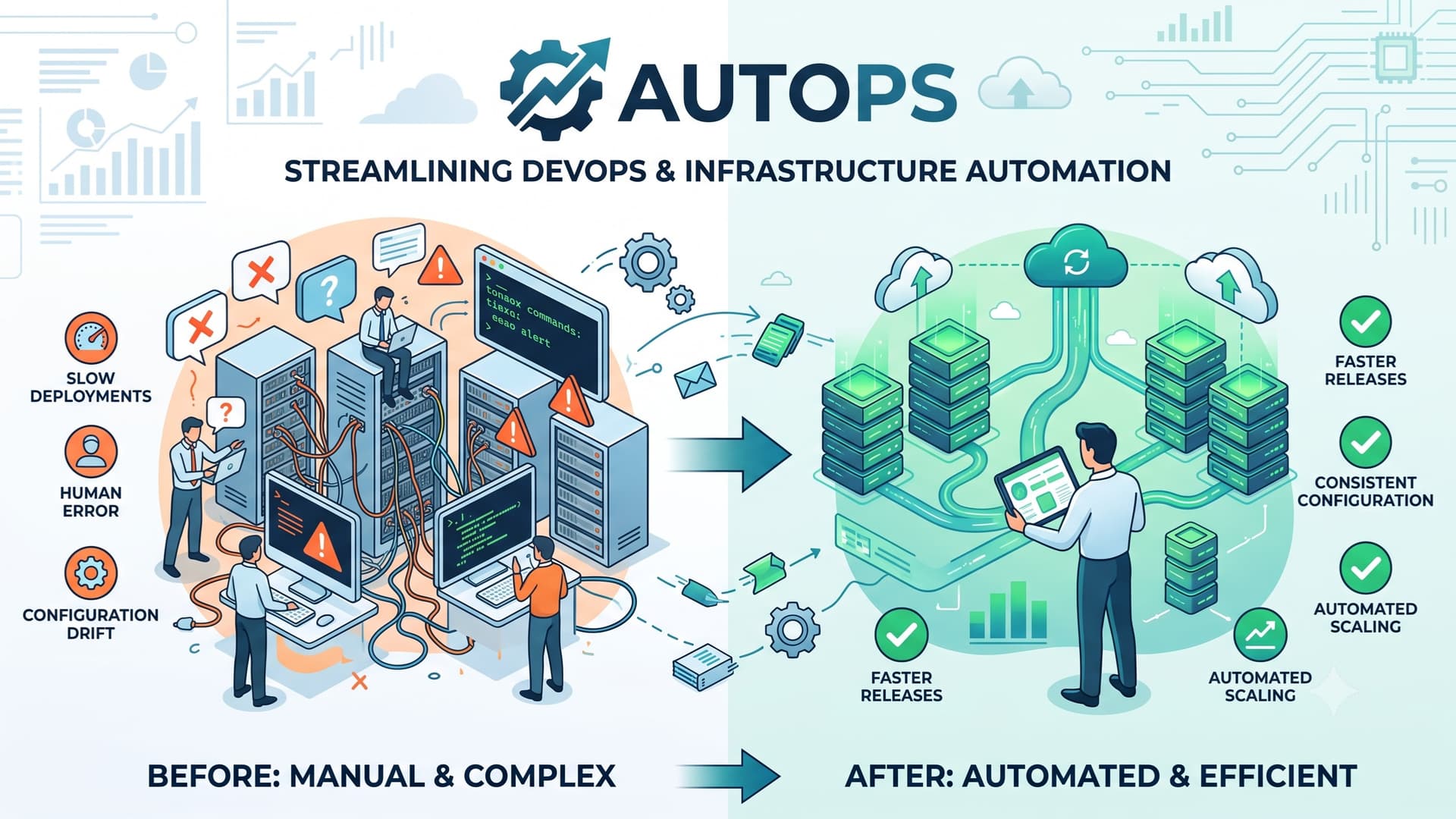
AutOps is an autonomous, AI-driven virtual system administrator designed for real-time monitoring, intelligent diagnosis, and automated remediation of server environments. Instead of relying on traditional ping monitors, AutOps acts as a 24/7 intelligent agent that watches over your containerized infrastructure. When a service goes down, it instantly fetches the relevant error logs, uses an embedded Large Language Model (LLM) to diagnose the exact root cause of the crash, and formulates a precise fix. Key Features: Discord Command Center: It transforms Discord into a secure, mobile-friendly command-and-control terminal using a custom Python bridge, allowing administrators to manage servers directly from their phones. Human-in-the-Loop (HITL) Safety: To prevent the AI from making destructive changes autonomously, AutOps enforces a strict safety mechanism. The AI generates a remediation proposal and sends an alert to the admin via Discord. The fix is only executed if the admin explicitly replies with an !approve command. Microservices Architecture: The system operates securely within Docker and is powered by n8n, a visual orchestration engine that routes complex background health checks, webhook events, and SSH command executions. Ultimately, AutOps reduces the tedious, multi-step troubleshooting process (connecting to a VPN, authenticating SSH, manually hunting for logs) into a simple mobile notification and a 5-second approval response—drastically lowering both the Mean Time to Detect (MTTD) and Mean Time to Resolve (MTTR) for server incidents.