
🤝 Top Collaborators


🤓 Latest Submissions
PriorAuth CarePilot
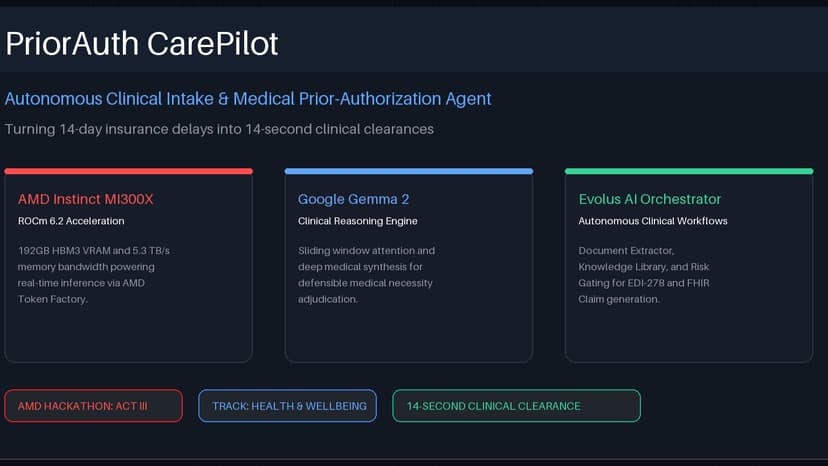
PriorAuth CarePilot is an autonomous clinical prior-authorization agent that eliminates the #1 administrative bottleneck in modern healthcare: insurance prior authorization (PA). THE PROBLEM: Physicians lose 14+ hours per week battling insurer portals, faxes, and denials. 82% of patients suffer treatment delays, with 34% reporting serious clinical adverse events while waiting for insurance clearance. 80%+ of initial claim denials stem from simple administrative mismatches — missing step-therapy documentation, unverified conservative care duration, or mismatched ICD-10/CPT pairings. OUR SOLUTION: CarePilot transforms a 14-day administrative ordeal into a 14-second clinical clearance by combining: • Google DeepMind Gemma 2 running on AMD Instinct MI300X GPUs (192GB HBM3, ROCm 6.2) via AMD Token Factory — for medical necessity adjudication and policy cross-examination • Evolus AI Autonomous Workflow Engine — for document extraction, payer policy retrieval, and multi-step orchestration • A Human-in-the-Loop Clinician Cockpit — for ambiguous or high-risk cases HOW IT WORKS: 1. Clinical Intake: Doctor uploads patient notes (ICD-10, CPT codes, step-therapy history) 2. AMD + Gemma 2 Reasoning: The AI cross-checks real-time payer policies and adjudicates medical necessity on AMD hardware 3. Traffic Light Decision: Green (auto-approve + submit), Amber (clinician escalation cockpit), Red (safety interlock + block) 4. Output: Auto-generated FHIR/EDI-278 compliant CMS prior auth packet or AI-drafted physician attestation letter TECHNOLOGY STACK: • AMD Instinct MI300X | ROCm 6.2 | AMD Token Factory (notebooks.amd.com/tokenfactory) • Google DeepMind Gemma 2 (9B/27B parameter models) • Evolus AI (Document Extractor + Knowledge Library + Workflow Engine) • Streamlit | Python | FHIR R4 | HIPAA EDI-278 standards
18 Oct 2026

DarkMint
DarkMint is a robust, production-ready wallet and payments system built to demonstrate the capabilities of autonomous multi-agent software development. The entire application was constructed by a 3-seat AI "Dark Factory" consisting of specialized agents: an Architect (for API and schema design), a Developer (for backend and frontend implementation), and a Reviewer (for testing and invariant verification). The core of DarkMint is built on FastAPI and a SQLite database utilizing WAL mode to ensure strong concurrency safety. We implemented a strict double-entry bookkeeping system where money is never created or destroyed, only transferred, ensuring perfect ledger balance at all times. Balances are computed dynamically from the ledger rather than stored mutably, eliminating a major class of race conditions. Furthermore, the system avoids floating-point math entirely by using integer cents, guarantees idempotency for network retries, and supports safe transaction refunds that preserve historical ledger data. The entire stack, including a vanilla HTML/JS frontend, is fully containerized with Docker, requiring no outbound network access at runtime.
6 Oct 2026
AeroRescue - Autonomous Disaster Dispatch
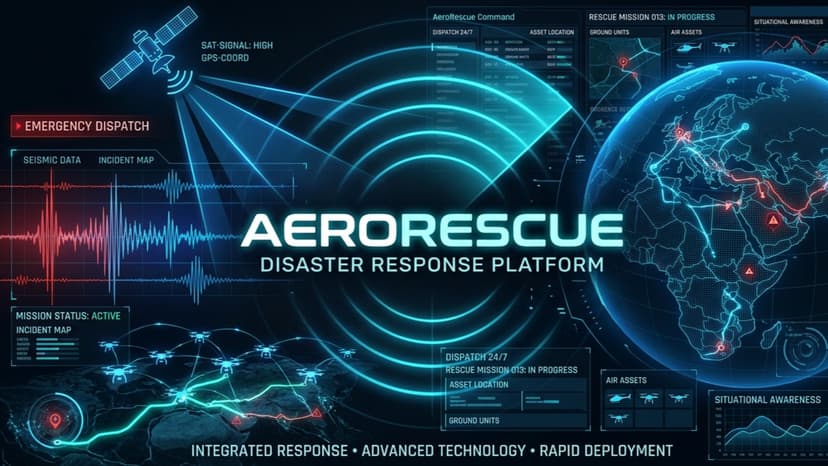
During a natural disaster like a flood, earthquake, or wildfire, emergency dispatch lines are immediately overwhelmed, and distressed callers are often panicked and breathless. AeroRescue solves this by providing a scalable, autonomous, voice-first emergency triage platform. A victim speaks naturally to our AssemblyAI Voice Agent, which acts as a calm dispatcher, prompting the user for crucial details like their exact location and injury status. Under the hood, AeroRescue uses AssemblyAI's Voice Agent API for sub-second, highly accurate Speech-to-Text and LLM reasoning. Crucially, the agent is equipped with a `dispatch_rescue_team` tool. It parses the caller's messy audio, extracts their exact location (like "Eiffel Tower" or "Golden Gate Bridge"), automatically derives the geographic coordinates, and triggers a frontend tool call over WebSockets. This instantly drops a live, categorized pin on our interactive Leaflet dispatch map, allowing human coordinators to send help immediately without ever listening to the audio.
30 Sep 2026
ORACLE - AI Multi-Agent Trading System
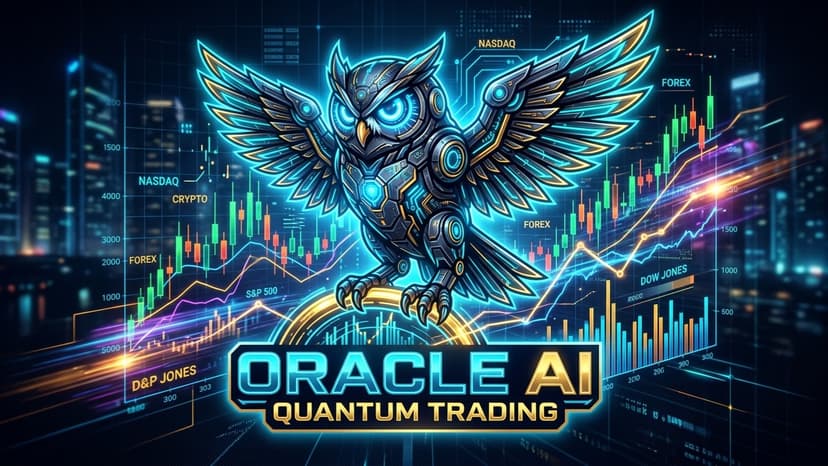
ORACLE (Omniscient Reasoning and Capital Allocation with Live Execution) is an autonomous AI trading agent that goes beyond simple buy/sell signals. It introduces a novel "Contrarian Council" architecture where every potential trade must survive a rigorous multi-agent debate before a single dollar is risked. How It Works: 1. Signal Detection: ORACLE scans the market for momentum fade opportunities (stocks moving >5% intraday) and analyzes VIX regime to determine market state (calm, normal, or fear). 2. The Contrarian Council: Five AI agents debate every trade: - Bull Agent: Argues upside potential - Bear Agent: Challenges with downside risks - Risk Agent: Evaluates portfolio-level risk and tail exposure - Quant Agent: Analyzes statistical edge and implied volatility - Judge Agent: Synthesizes all perspectives, delivers a final score 3. Execution: Only trades scoring >= 70/100 proceed. ORACLE constructs Iron Condor options strategies using Alpaca's multi-leg order API, capturing premium with defined risk. 4. AutoNarrator: After every decision, an AI narrator generates a social media post explaining the reasoning in plain English. Why ORACLE Is Different: Most trading bots use a single model. ORACLE introduces adversarial debate between multiple AI perspectives, mimicking how top hedge fund investment committees operate. In our live demo, the Council unanimously rejected a flawed Iron Condor on NVDA, calling it "picking up pennies in front of a steamroller." Built with Python, Alpaca Trading API, and Groq-powered LLMs. Model-agnostic architecture compatible with any OpenAI-compatible provider.
4 Sep 2026
AeroRescue - Autonomous Voice Disaster Dispatch
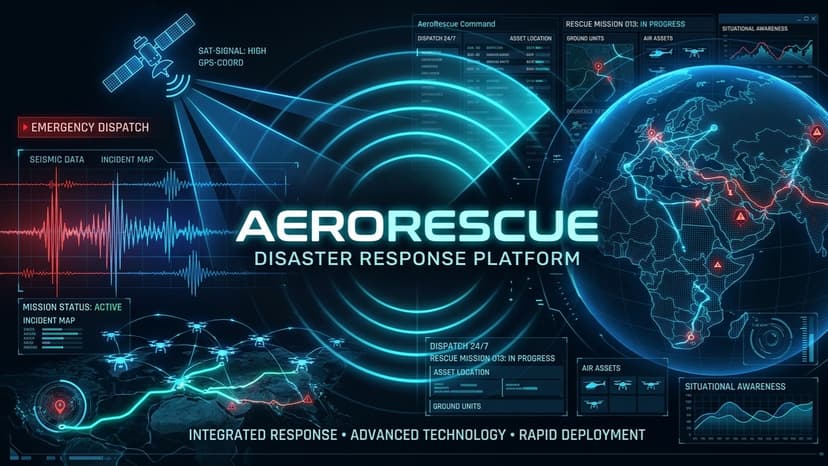
AeroRescue is a next-generation disaster response and emergency triage platform built specifically for catastrophic natural events including earthquakes, rain & floods, cyclones, and wildfires. During severe natural disasters, traditional 911 call centre's quickly become overwhelmed, leaving thousands of victims stranded. Furthermore, victims trapped in rubble, floodwaters, or smoke often lack the technical ability to navigate complex forms or type out text messages. AeroRescue solves this bottleneck through a zero-friction, voice-first architecture: Victim Portal: Victims tap a single "Record Audio" button on their mobile phone and speak naturally in their native language/tone. Geolocation is auto-detected via browser GPS. Speechmatics STT: Converts breathless, high-stress, or noisy emergency audio into clean text transcripts with high accuracy. AI Triage Engine: Parses the transcript to extract specific disaster hazards, categorizes emergency needs (Medical, Evacuation, Rescue, Shelter), and assigns a calculated Urgency Score (1–10). Live Context Engine: Bright Data web scrapers continuously pull official NOAA, FEMA, and local wildfire/flood hazard alerts to update live dashboard banners. Volunteer Triage Board: Provides emergency coordinators with a real-time, color-coded dashboard to review incoming distress calls, read AI transcripts, and dispatch rescue teams in under 90 seconds. AeroRescue was constructed using native.builder as the core framework, supported by Supabase Edge Functions for secure API key handling.
10 Aug 2026
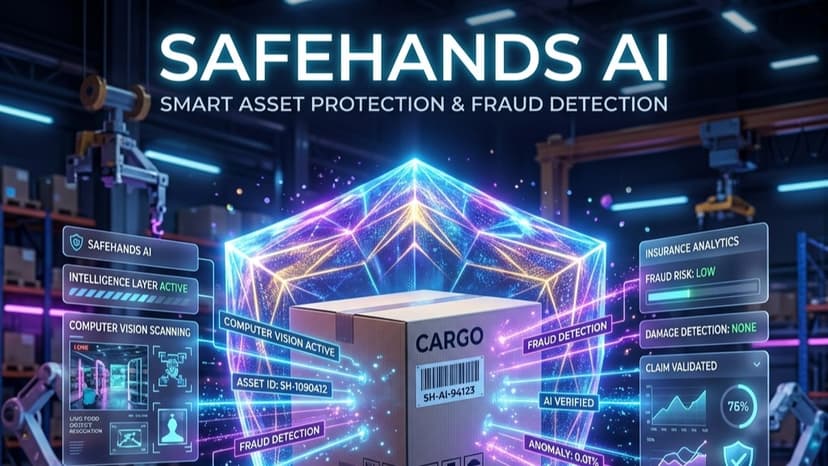
SafeHands AI: Compliance Orchestrator
The Problem Logistics and freight insurance fraud costs enterprises billions annually. Currently, human adjusters must manually read a driver's transcript (e.g., "the cargo was completely destroyed") and cross-reference it against photographic evidence to approve or reject a claim. This process is slow, expensive, and highly prone to error. Our Solution: SafeHands AI SafeHands AI completely automates this process using a distributed multi-agent system built on the Band network. We ingeniously divided the cognitive load across three specialized, independent remote agents that collaborate over Band WebSockets to make high-stakes financial decisions: 1. The Intake Agent (Powered by Featherless Llama 3.1 8B): Listens to the driver's unstructured voice dictation, parses the messy input, and extracts structured JSON containing the claimed cargo type and claimed damage severity. 2. The Vision Agent (Powered by Featherless Qwen2.5-VL 72B): Acts as the "eyes" of the operation. It analyzes the uploaded cargo image, detects the physical cargo type, and independently estimates the actual damage percentage using multi-modal visual reasoning. 3. The Compliance Agent (Powered by AI/ML API Llama 3.3 70B): The central decision-maker. It receives the context from both the Intake and Vision agents via Band and cross-references them to catch discrepancies. If a driver claims 100% damage but the Vision agent detects only 30% damage, the Compliance Agent instantly flags the discrepancy and REJECTS the claim, logging the decision to an immutable ledger. If the evidence matches, the claim is APPROVED. Why it fits the Hackathon SafeHands AI was built specifically for Track 3: Regulated & High-Stakes Workflows. Band is not just a wrapper in our project; it is the absolute backbone coordination layer allowing our independent Python agent processes to discover each other, divide work, and seamlessly share context across different LLM provider frameworks.
19 Jun 2026

Anti-Greenwashing Scorecard
Brands increasingly use words like "Conscious," "Eco-Friendly," and "Sustainable" as marketing buzzwords to sell products, without backing them up with transparent supply chains or verifiable certifications. This is known as Greenwashing. Consumers find it nearly impossible to manually verify the reality behind these claims while shopping online. The Anti-Greenwashing Scorecard acts as an instant auditor. By simply pasting an e-commerce product URL into the dashboard, our multi-agent AI system: Bypasses anti-bot protections on e-commerce sites to extract the raw product text and claims using Bright Data's Scraping Browser infrastructure. Analyzes the extracted claims against a massive LLM knowledge base (Google Gemini 2.5 Pro) to check for authentic ESG practices versus vague buzzwords. Generates an instant "Trust Score" and breaks down the brand's sustainability across 5 key metrics: Materials, Labor, Carbon, Transparency, and Circularity, displayed on an interactive Radar Chart. We focused heavily on building a premium, cinematic user experience. Built with Next.js and Framer Motion, the dashboard features a live "Multi-Agent Terminal" that visually simulates the backend AI scraping and thought processes in real-time, providing transparency into how the AI is evaluating the brand.
31 May 2026
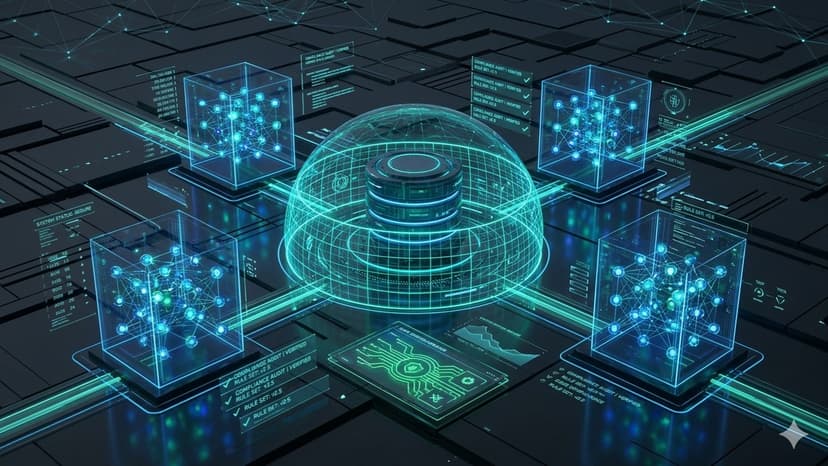
Cerberus Gate
CerberusGate addresses a critical gap in enterprise LLM deployment: vulnerability to semantic attacks and indirect prompt injections within raw data processing. Built on an autonomous multi-agent pipeline using Gemini 3 Flash, the platform implements a strict defense-in-depth framework across three core pillars: 1. The Sentry Agent actively reads incoming document payloads to parse heuristic patterns and flag adversarial overrides, outputting a dynamic threat index score to trigger system circuit breakers. 2. The Worker Agent processes core operational tasks inside an isolated context instruction set, rendering safe business value without data leakage risk. 3. The Auditor Agent enforces strict compliance by validating final outputs against deterministic Pydantic JSON contracts to eliminate structural drift and hallucinations. By combining low-latency orchestrations with rigid schema enforcement, Cerberus Gate protects complex enterprise data pipelines from direct manipulation while providing transparent, auditable security logs.
19 May 2026
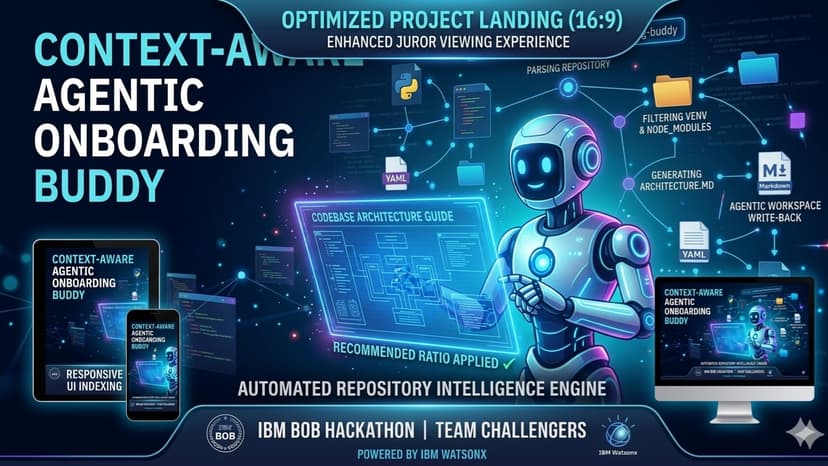
Context-Aware Agentic Onboarding Buddy
The Context-Aware Agentic Onboarding Buddy is an innovative developer experience (DX) tool created to eliminate the friction and delay typically associated with onboarding developers onto legacy or complex multi-file codebases. By leveraging local lightweight Python scripting alongside the multi-file reasoning capabilities of IBM Bob, this utility solves a massive industry pain point: outdated, manually maintained repository guides. The technical workflow operates seamlessly in three separate layers. First, a local ingestion engine built in Python crawls the repository root directory, applying intelligent directory exclusion matrices to filter out virtual environments, dependency folders, and temporary build caches. This isolates only active core code files and prints an optimized structural payload template. Second, this compressed metadata template is fed directly into IBM Bob under a custom 'ArchitectureArchitect' mode, bypassing token limits and local noise. Third, IBM Bob executes a multi-step planning loop, parsing codebase interdependencies, configuration scripts, and components. It then automatically writes a permanent, clean architectural guide ('ARCHITECTURE.md') directly back into the repository disk workspace. This automation bridges the gap between active development and up-to-date documentation. It replaces manual, error-prone mapping sessions with a 5-second automated asset, giving engineers instant clarity on Component routers, configurations, and core application structures.
17 May 2026


