ExecuTorch

ExecuTorch is Meta's production-grade framework for on-device AI inference, allowing PyTorch models to run natively on mobile phones, wearables, embedded systems, and AI PCs without cloud connectivity. Unlike conversion-based pipelines, ExecuTorch exports models directly from torch.export to a .pte binary format, retaining PyTorch semantics through the entire deployment stack. It reached general availability (v1.0) in October 2025 and is already in production across Meta's Ray-Ban Smart Glasses, Meta Quest headsets, and billions of on-device AI feature interactions on Instagram, WhatsApp, and Messenger.

General
GA date18 Oct 2025 (v1.0)
DeveloperMeta / PyTorch
TypeOn-Device AI Inference Framework
LicenseBSD License
GitHubpytorch/executorch
Documentationdocs.pytorch.org/executorch

Core Features

  • PyTorch-native export — models go from torch.export directly to .pte format with no ONNX or TFLite conversion step.
  • 50 KB base runtime — minimal core footprint suitable for microcontrollers and embedded targets.
  • Ahead-of-time compilation — models compiled offline to .pte binaries, reducing on-device startup overhead.
  • Single-line backend switching — swap hardware accelerators (CPU, NPU, GPU) without rewriting model code.
  • Quantization tooling — INT8, INT4 (per-block), QAT+LoRA (QLoRA), and SpinQuant quantization via integrated PyTorch tools.
  • Selective operator builds — include only operators the model uses, minimizing binary size.
  • Multimodal support — composable backbone for LLMs, vision-language models, image segmentation, depth estimation, OCR, ASR, and object detection.
  • Hugging Face Optimum-ExecuTorch — over 80% of the most-downloaded edge-friendly models on Hugging Face run on ExecuTorch out of the box.

Supported Hardware Backends

BackendTargetStatus
XNNPACK + Arm KleidiAICPU (Android, iOS, Linux, AI PCs)Stable
Apple Core MLApple silicon (iOS, macOS)Stable
Qualcomm AI Engine / Hexagon NPUAndroid (Qualcomm SoCs)Stable
Arm Ethos-U NPUEmbedded / MCUStable
Vulkan GPUCross-platform GPU (Android, Linux)Stable
Apple MPS (Metal Performance Shaders)iOS / macOS GPUAlpha
MediaTek NPUAndroid (MediaTek SoCs)Beta
Samsung Exynos NPUAndroid (Samsung SoCs)Alpha
Intel OpenVINOAI PCs (Windows / Linux x86)Alpha
CUDALinux / Windows GPUExperimental

Hardware partners include Apple, Arm, Cadence, Intel, MediaTek, NXP Semiconductors, Qualcomm, and Samsung.


Performance (Llama 3.2 1B Quantized)

DeviceDecode SpeedPrefill Speed
Samsung Galaxy S24+>40 tokens/s>350 tokens/s
OnePlus 1250.2 tokens/s260 tokens/s

Quantization reduces model size by ~52% (2.3 GiB to 1.1 GiB) and peak runtime memory by ~39%, with 2.5x average decode latency improvement over BF16 baseline.


Tools and Resources


Ecosystem and Integrations

  • Powers on-device AI in Meta Ray-Ban Smart Glasses (live translation, visual captions, menu translation) and Oakley Meta Vanguard glasses (athletic performance insights).
  • Runs scene understanding, depth estimation, hand tracking, and persistent room memory on Meta Quest 3 / Quest 3S.
  • Llama 3.2 1B and 3B models were co-developed with Qualcomm and MediaTek for optimized Snapdragon deployment via ExecuTorch.
  • Backend available in Hugging Face Optimum-ExecuTorch for direct integration with the Hugging Face model hub.
  • Complements PyTorch Mobile for teams already in the PyTorch ecosystem, offering a significantly smaller runtime and better edge-hardware coverage.

Get started by cloning github.com/pytorch/executorch and following the quickstart guide, or install via pip install executorch for model export tooling.

Meta Executorch top builders

Explore the top contributors showcasing the highest number of Meta Executorch app submissions within our community.

Meta Meta Executorch AI technology Hackathon projects

Discover innovative solutions crafted with Meta Executorch, developed by our community members during our engaging hackathons.

Super Secure SYST v2.3 - 6-Gas AI Guardian

Super Secure SYST v2.3 - 6-Gas AI Guardian

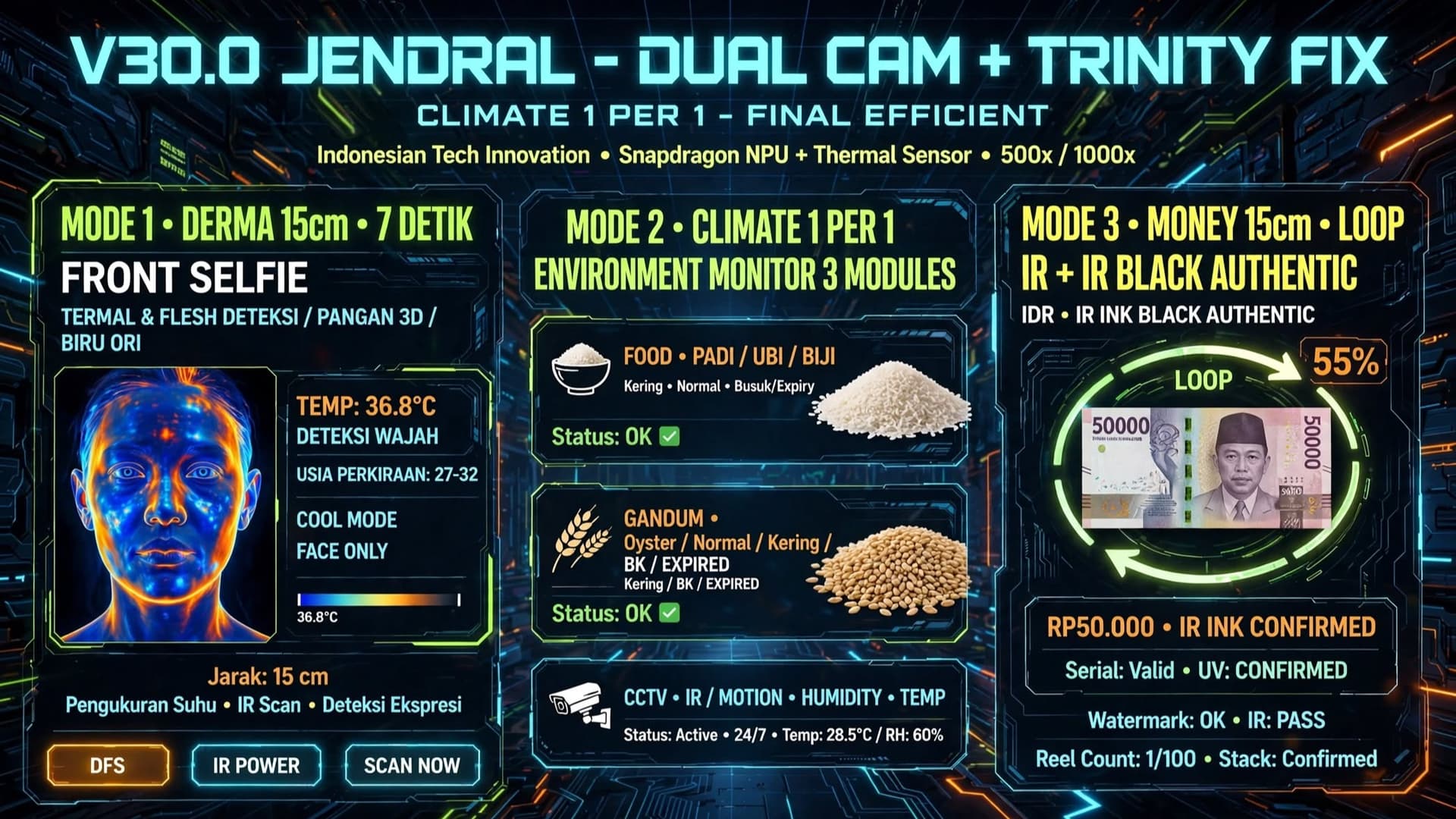
SUPER SECURE SPACE GUARDIAN - SIMULATOR TEORI UNTUK JUDGING DIGITHOOK ⚠️ INI SIMULATOR TEORI 01-02-03 BUAT JUDGING PAK - YANG AKTUAL ROBOTIK NDIR 4 PLUS THERMAL PLUS CCTV LAGI KITA RAKIT DI RUANG TEDUH - POWER WAJIB KABEL DATA WIFI/KABEL LAN ESP32 OTAK PLUS KONEKSI INCLUDE 01 THEORY: Fire risk theory: thermal anomaly >600C + HC >10% LEL = Elevated risk. NDIR 4-ch: 3.33um CH4/BBM/LPG/Ethanol 45C, 4.26um CO2, 4.64um CO, 3.91um Ref. Sekarang jamannya WiFi serba wireless, CCTV saja terhubung hanya WiFi walau mesti ada kelistrikan yang terus memberi power. Untuk mall/plaza/DPR, power WAJIB KABEL dan data bisa kabel LAN biar stabil. 02 OBSERVATION: Simulator dashboard F-21 HMDS 85% TRANSP di super-secure-syst-v23.streamlit.app - HUD GUDANG JAKARTA AREA C12. 30-sec DETECT / 270-sec STANDBY, sampling 5 menit, 90 hari circular log. Data gas di dashboard ini SIMULASI UI UNTUK DEMO, bukan NDIR aktual. 03 OPINION: Jika aktual robotik (ESP32 di ruang teduh) baca HC >10% LEL + thermal white hot 612C + O2 drop >0.5% = Confirmed heat + flammable vapor. Action: pompa 350mL ON, cut gas valve relay, buzzer+strobo, laser pointer, Evolus Workflow alert via AMD MI300X. ARSITEKTUR AKTUAL RUANG TEDUH: HIDUNG NDIR 4 (kabel power) -> OTAK+KONEKSI ESP32-S3 (WiFi include, power kabel) -> MATA MLX90640 Thermal 32x24 + IMX219 CCTV (power kabel, data WiFi/LAN) -> MONITOR APP PY (baca Serial COM3/MQTT, BUKAN random). GITHUB: Alchaliveret/super-secure-syst-v23 - README sudah ada disclaimer simulator teori. Alat aktual tidak di-deploy di cloud, diuji di lab ruang teduh untuk enterprise.

Aichaliveret - Smart Cotton SCM

Aichaliveret - Smart Cotton SCM

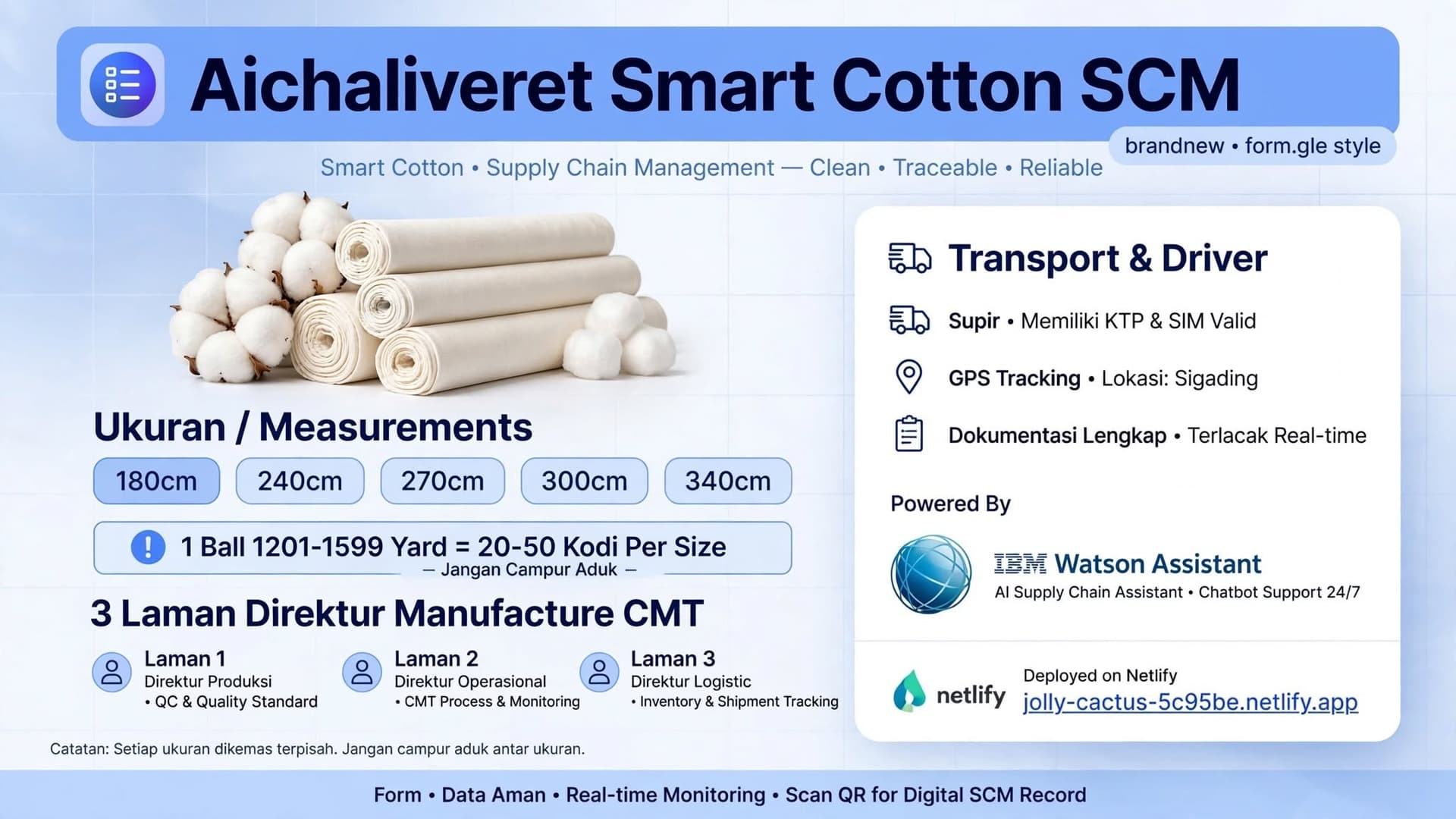
Problem: Traditional garment factories in Indonesia still use handwritten notebooks for cotton fabric. 1 ball is 1201-1599 yards consisting of several rolls, cut to 180cm = 20-50 kodi only, 240cm = 20-50 kodi only, etc. This repeats daily/weekly/monthly. Manual counting is cheap (10 rupiah/paper) but causes repeated clerical work, mixed calculations across sizes, lost data, and no visibility for Direktur, Manufacture, and CMT Konveksi. Existing apps are complex, cost 200rb/month, and create phobia with too many tables. Solution: Aichaliveret v20 SCM Brandnew - a brandnew form.gle experience that is efficient and effective. Input data per ball only but continuous and repeating. Operator selects potongan size (180,240,270,300,340,Custom) - system isolates that size and never mixes calculations (jangan dijumlah campur aduk). Operator types Jumlah Yard 1201-1599 (validated), adds rolls via + button (Google Form style - Bisa otomatis tambah kotak diatas). System auto-calculates: Kodi = Yard*0.9144/(cm/100)/20 and validates 20-50 kodi saja per ball. Save creates "Potongan kain ukuran 180cm tersimpan" in its own table, separate from 240cm table. Target users & interaction: - Laman 1 Direktur: sees all - all sizes tables, total yard, WIP Jadi Kirim, transport supir. - Laman 2 Manufacture: operator gudang - input ball, roll, select potongan, save to Gudang/Mayan. - Laman 3 CMT: receives kirim, confirms Diterima, inputs Dijahit, auto Jadi Pakaian Jumlah dalam Kodi. - Supir: each ball is connected to transport data - nama, nomer KTP/SIM, no polisi, tujuan Sigading diketter, GPS Maps, Recant Klik Selesai, Pesan dan Saran. What makes it creative & unique: - Per-size isolation logic: 1 ball 1201-1599 yard = 20-50 kodi for THAT size only, not mixed. No other SCM does this. - Form.gle brandnew UI: single centered column 780px, white cards, purple top bar, + button to add box - no table phobia. - Efficient: localStorage auto-save like "All changes saved in Drive", works offline, deploy to Netlify jolly-cactus-5c95be.netlify.app. - Transparent formula: pcs = meter / (potongan/100), kodi = pcs/20, inline validation. Effectiveness: Reduces paper waste, replaces 200rb/month complex system with simple free static site, prevents mixing errors, gives Direktur full control, speeds up daily 20-50 kodi flow from Gudang to CMT with GPS-tracked supir. Tested with real handwritten diagram from factory. Tech: Single HTML file, vanilla JS, localStorage, SVG flowchart Direktur-Manufacture-Gudang-CMT.

Fresno LUX: A Living City

Fresno LUX: A Living City

Fresno LUX is a prototype for a living intelligence layer across an entire city. Fresno already contains enormous amounts of intelligence: residents know where problems exist, nonprofits know where help is needed, businesses know where opportunities exist, educators understand gaps in learning, researchers generate knowledge, and government maintains critical infrastructure and data. The problem is that much of this intelligence is fragmented across disconnected systems. Fresno LUX connects those pieces. The platform creates a shared city graph where people, organizations, resources, needs, projects, observations, experiments, and outcomes become connected nodes. Instead of simply collecting data, LUX continuously asks: What is happening? What do we know? What is missing? What can we test? What changed? A community problem can become an observable signal. That signal can become an experiment. The experiment produces evidence. Evidence changes the system's understanding. That updated understanding informs the next action. Observe → Connect → Understand → Act → Measure → Learn → Converge. The goal is to move Fresno from disconnected information toward collective intelligence—a system where knowledge can travel across boundaries and successful solutions can be discovered, tested, measured, and replicated. LUX is designed to make the invisible connections visible: the relationship between a neighborhood and its resources, between a student and educational opportunity, between a business and workforce capacity, between environmental conditions and community health, and between an idea and measurable real-world impact. This hackathon prototype demonstrates the beginning of a Living Fresno Graph: a city that can observe itself, learn from evidence, and coordinate toward better outcomes.

 LifePilot — On-Device Wellness Co-Pilot

LifePilot — On-Device Wellness Co-Pilot

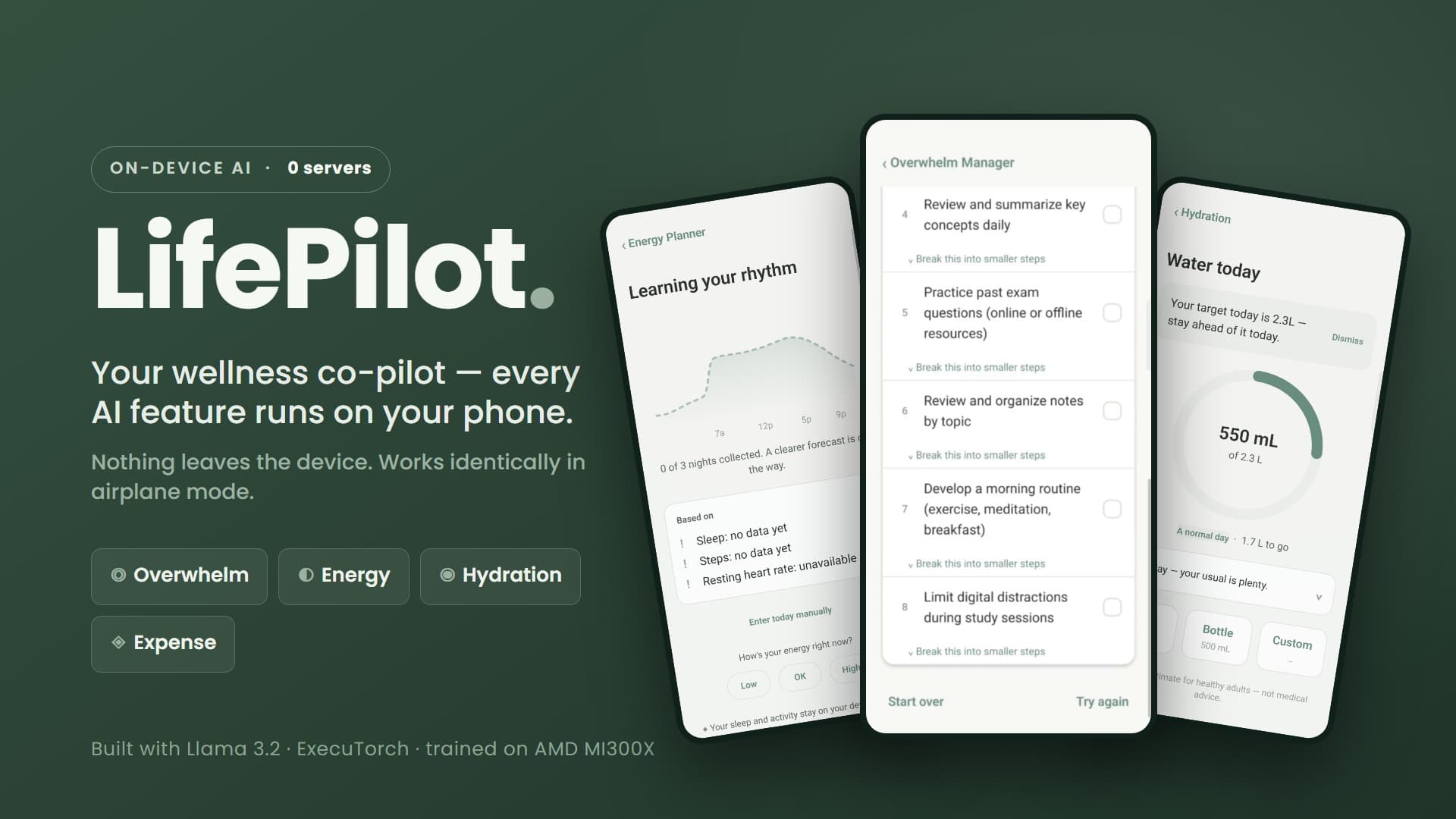
Every AI wellness app works the same way: your tasks, sleep, spending, and health data get shipped to someone else's servers before you get an answer. LifePilot removes that trade-off — every model runs on the device itself. LifePilot is a calm, offline-first wellness app with four features, each backed by its own on-device model: • Overwhelm Manager — describe what's overwhelming you; an on-device Llama 3.2 1B model breaks it into a concrete 5–8 step plan, personalized from on-device memory that never syncs anywhere. • Energy Planner — a trained time-series model predicts your energy curve for the day from recent sleep and activity. • Hydration Tracker — a trained regression model sets a personalized daily water target and explains why. • Expense Scanner — point the camera at a receipt; on-device OCR plus trained models extract the merchant, total, currency, and category. No photo or text ever uploaded. Every model is exported to ExecuTorch and runs directly on the phone's own chip. There is no server-side inference path — put the phone in airplane mode and everything still works identically. That's not a fallback; it's the only mode. Where AMD fits: the four trained models (energy, hydration, and two expense models) are trained and exported on AMD Instinct MI300X GPUs via ROCm, on AMD's ROCm cloud notebooks — real GPU compute producing the exact .pte files that ship in the app. All four features are built and running on a real Android device today, including the on-device Llama agent generating multi-step task breakdowns in airplane mode. Privacy isn't a marketing line here — it's the architecture.

ExecuTorch