Mistral AI

Mistral AI develops a wide spectrum of AI models and services, enabling developers, researchers, and businesses to build, deploy, and fine-tune large language and multimodal models.
The company focuses on open weights, reasoning capability, multimodality, and enterprise-grade features such as long context windows, domain-specific deployments, and fine-tuning options.

General
Founded2023 (Paris, France)
FoundersArthur Mensch, Guillaume Lample, Timothée Lacroix
Valuation~€14 billion (Series C, September 2025)
InvestorsASML (largest shareholder), Microsoft, CMA CGM, others
TypeLarge language and multimodal models

Mistral Models

Mistral divides its lineup into open models (weights freely available) and premier models (API-first, enterprise-grade).
Here are the most important families:

  • Mistral 7B – Compact, open-weight dense model for efficient deployment.
  • Mixtral 8×7B / 8×22B – Sparse mixture-of-experts models balancing performance and cost.
  • Mistral NeMo 12B – Strong open-weight model for multilingual and reasoning tasks.
  • Codestral – Code-oriented models for software engineering and developer tools.
  • Pixtral – Multimodal family supporting text + image inputs (e.g. Pixtral-12B, Pixtral Large).
  • Magistral – Reasoning-focused models; Magistral Small (open-weight) and Magistral Medium (enterprise).
  • Mistral Medium 3 / 3.1 – Premier multimodal models with ~131K context length, enterprise-grade APIs.
  • Mistral Large / Large 2 (123B) – Very large dense models with long context, available via API.
  • Specialized Models – OCR models (e.g. mistral-ocr-2503), embeddings, moderation, and speech (Voxtral).

La Plateforme

Mistral provides its own developer and enterprise platform, called La Plateforme, where you can:


Mistral AI - Boilerplates

Get started quickly with open-weight or API integrations:


Mistral AI - Tutorials

Learn how to build with Mistral’s models:


Mistral AI

Most important links to explore Mistral’s ecosystem:


Mistral AI top builders

Explore the top contributors showcasing the highest number of Mistral AI app submissions within our community.

Mistral AI AI technology page Hackathon projects

Discover innovative solutions crafted with Mistral AI, developed by our community members during our engaging hackathons.

ContractGuard — API Safety for AI Coding Agents

ContractGuard — API Safety for AI Coding Agents

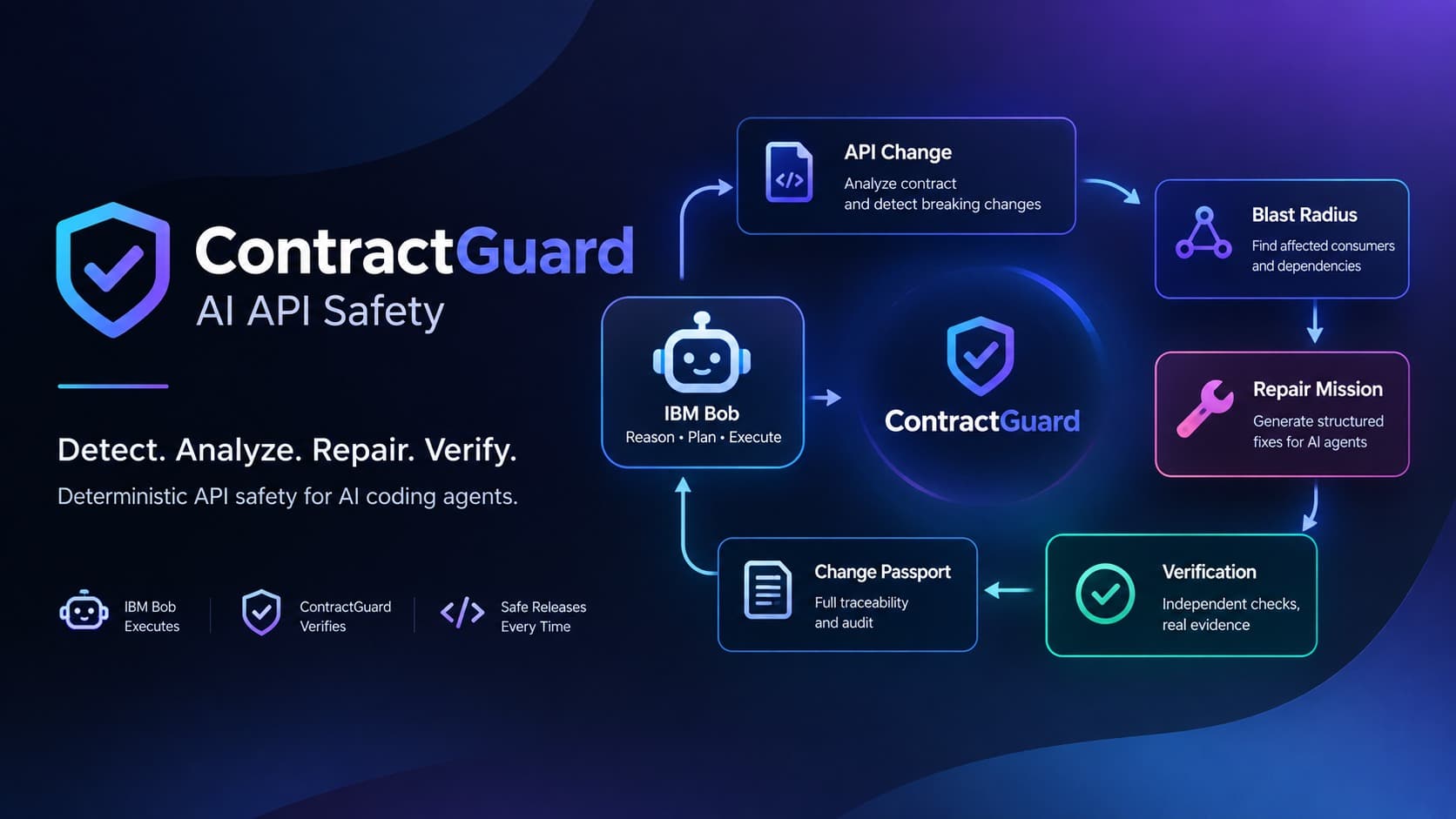
AI coding agents can modify software faster than ever, but they can also introduce changes whose impact is difficult to predict. When an API contract changes, developers need to know which consumers are affected, what must be repaired, and whether the final result is actually compatible. ContractGuard is a deterministic verification layer designed to work alongside AI coding agents such as IBM Bob. It analyzes API contracts, detects breaking changes, calculates their blast radius across known consumers, generates structured repair missions, and independently verifies the resulting state. The workflow is simple: a developer simulates or introduces an API change, ContractGuard determines its impact, and IBM Bob uses the resulting structured information to repair the affected consumers. ContractGuard then runs deterministic compatibility checks and tests to determine whether the release is ready. A Change Passport and evidence record provide a reproducible trace of what was changed, what was affected, and what was verified. The target users are software developers and engineering teams using AI coding agents to maintain APIs and multi-service applications. Developers interact with ContractGuard through its web interface, CLI, and MCP integration with Bob. What makes ContractGuard different is the separation between AI execution and deterministic verification. Bob can reason, plan, modify code, and iterate, but it does not get the final say on compatibility. ContractGuard acts as an independent verification layer that provides structured feedback until the system reaches a verified READY state. The prototype demonstrates this with a producer API and three consumers: an API response field is renamed from status to paymentStatus. ContractGuard identifies the breaking change and affected consumers, Bob repairs them, and ContractGuard independently verifies that all three consumers are compatible again. AI reasons. Deterministic checks decide. Bob executes. Evidence proves.

VoxSales AI Voice Agent

VoxSales AI Voice Agent

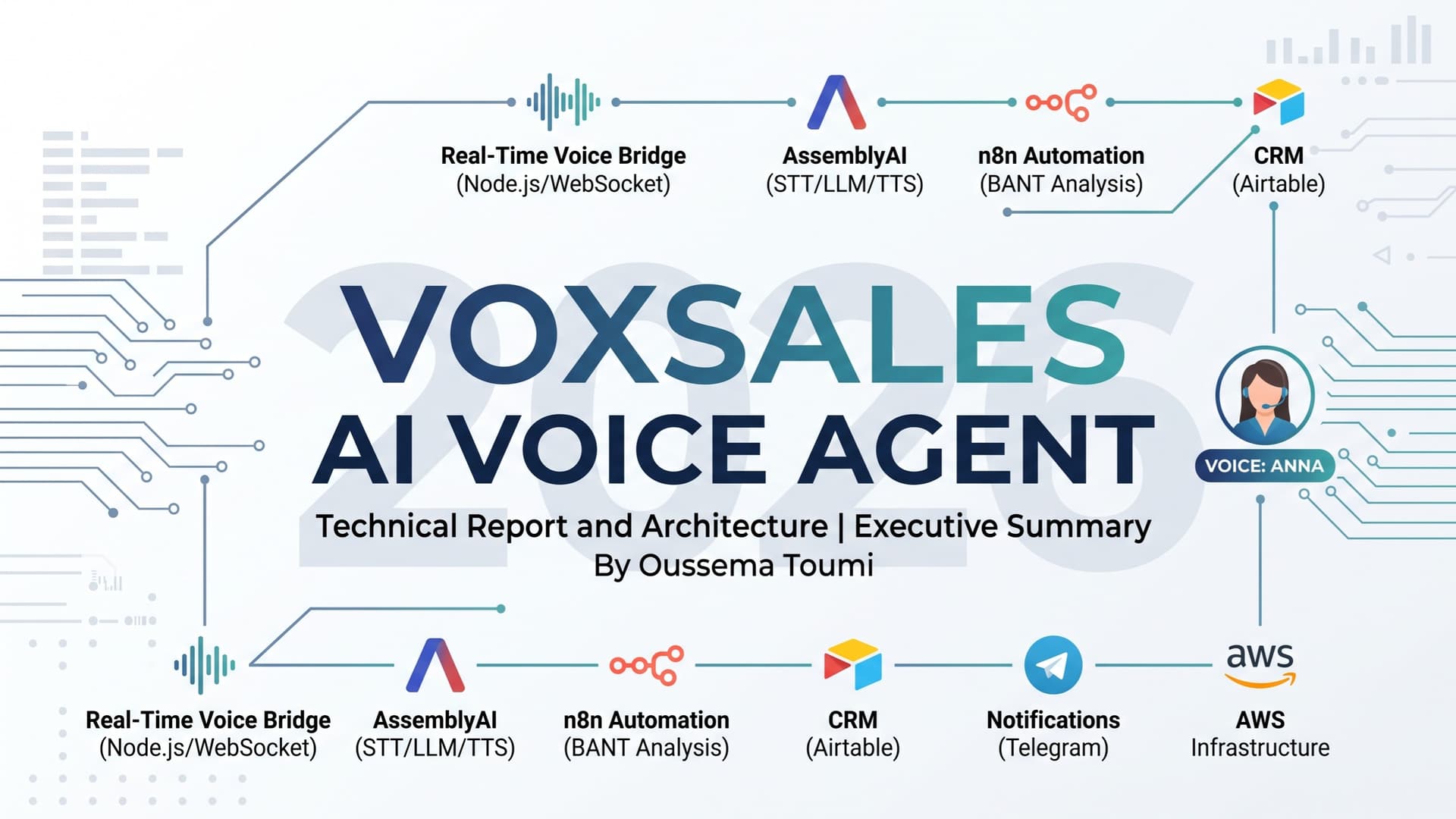
The VoxSales AI Voice Agent is a fully integrated, production-grade artificial intelligence voice solution designed to connect real-time speech-to-speech AI with a live CRM automation pipeline. Operating from a single browser-accessible cockpit, the system allows teams to conduct instant, bilingual voice conversations with prospective clients. The agent is powered by AssemblyAI and utilizes their highest-fidelity female voice, anna, to ensure clear audio with an optimal dynamic range and zero DC offset. The platform is built for speed, featuring a conversational latency of approximately 300 milliseconds and an instant semantic barge-in latency of under 200 milliseconds, which allows users to naturally interrupt the AI just like in a normal human conversation. During active calls, the agent can execute real-time function tools synchronously without blocking the audio flow. It can smoothly schedule product demonstrations, instantly dispatch Telegram alerts to the SecOps Lead, and capture lead data to update the live intelligence dashboard on the browser cockpit. Once a call concludes, the backend automation seamlessly takes over. Using an n8n workflow, the system feeds the call transcript to the Mistral-large-latest model to perform a complete BANT analysis, evaluating the prospect's Budget, Authority, Need, and Timeline. This intelligence is automatically logged into an Airtable CRM, and a final scorecard is sent directly to the team via Telegram, ensuring all data is perfectly synchronized without manual data entry.

Fresno LUX: A Living City

Fresno LUX: A Living City

Fresno LUX is a prototype for a living intelligence layer across an entire city. Fresno already contains enormous amounts of intelligence: residents know where problems exist, nonprofits know where help is needed, businesses know where opportunities exist, educators understand gaps in learning, researchers generate knowledge, and government maintains critical infrastructure and data. The problem is that much of this intelligence is fragmented across disconnected systems. Fresno LUX connects those pieces. The platform creates a shared city graph where people, organizations, resources, needs, projects, observations, experiments, and outcomes become connected nodes. Instead of simply collecting data, LUX continuously asks: What is happening? What do we know? What is missing? What can we test? What changed? A community problem can become an observable signal. That signal can become an experiment. The experiment produces evidence. Evidence changes the system's understanding. That updated understanding informs the next action. Observe → Connect → Understand → Act → Measure → Learn → Converge. The goal is to move Fresno from disconnected information toward collective intelligence—a system where knowledge can travel across boundaries and successful solutions can be discovered, tested, measured, and replicated. LUX is designed to make the invisible connections visible: the relationship between a neighborhood and its resources, between a student and educational opportunity, between a business and workforce capacity, between environmental conditions and community health, and between an idea and measurable real-world impact. This hackathon prototype demonstrates the beginning of a Living Fresno Graph: a city that can observe itself, learn from evidence, and coordinate toward better outcomes.