Snowflake

Snowflake Inc. is a leading cloud-based data platform company that empowers organizations to consolidate, store, and analyze data seamlessly across multiple cloud providers. Known for its Data Cloud, Snowflake offers a robust, flexible solution that enables data sharing, real-time analytics, and collaboration. Snowflake's architecture and capabilities make it ideal for modern data needs, from business intelligence and data engineering to AI and machine learning. Trusted by thousands of organizations worldwide, Snowflake serves sectors ranging from financial services to healthcare and technology, helping them derive actionable insights from their data.

General
CompanySnowflake
HeadquatersBozeman, Montana, USA
Founded2012
Repositoryhttps://github.com/snowflakedb

Products and Solutions

Data Cloud Platform

Snowflake’s core product, the Data Cloud Platform, allows users to store, process, and query data in a highly secure and scalable environment. The platform provides cross-cloud compatibility on AWS, Azure, and Google Cloud, enabling organizations to integrate, manage, and analyze data across cloud providers seamlessly.

Data Marketplace

The Data Marketplace enables organizations to securely share and acquire live, ready-to-query data sets from Snowflake’s ecosystem. Users can access data across different industries and functions, enabling new insights and data-driven decisions.

Snowpark

Snowpark is a developer tool within the Snowflake ecosystem designed to simplify building data-intensive applications. It allows data engineers, data scientists, and developers to use familiar programming languages (like Java, Python, and Scala) to create and manage data processing pipelines on Snowflake’s platform.

Native Application Framework

The Native Application Framework empowers developers to build, deploy, and manage applications natively within Snowflake, leveraging the power and scale of its platform. This framework simplifies data-driven application development and accelerates time-to-market for Snowflake-powered applications.

Getting Started with Snowflake

Snowflake makes it easy for developers and organizations to get started with their data cloud platform. Here are some steps to quickly onboard and begin using Snowflake for your data needs:

  1. Create a Snowflake Account: Start by signing up for a Snowflake account. Snowflake offers a free trial with credits to help you explore the platform.

  2. Explore the Snowflake Console: The Snowflake Web UI, or Snowflake Console, provides a user-friendly interface for managing databases, tables, and workloads. The console is where you’ll create schemas, run SQL queries, and configure settings.

  3. Install the Snowflake Connector or SDK: If you’re a developer, install the relevant SDK or connectors (e.g., Snowflake Connector for Python) to begin programmatically accessing Snowflake. These connectors are available through Snowflake’s GitHub or official documentation.

  4. Try Snowpark for Data Engineering Tasks: Snowpark enables you to write data manipulation code in Python, Java, or Scala. It’s an excellent choice for building data pipelines and ML workflows directly within Snowflake.

  5. Explore the Data Marketplace: Connect to Snowflake’s Data Marketplace to discover pre-existing data sets and start experimenting with third-party data in your workflows.

  6. Access Documentation and Tutorials: Snowflake provides extensive documentation, a learning center, and example projects to guide you through the platform. Tutorials cover everything from SQL basics to advanced machine learning integrations.

Snowflake top builders

Explore the top contributors showcasing the highest number of Snowflake app submissions within our community.

Snowflake AI technology page Hackathon projects

Discover innovative solutions crafted with Snowflake, developed by our community members during our engaging hackathons.

DevFlow AI

DevFlow AI

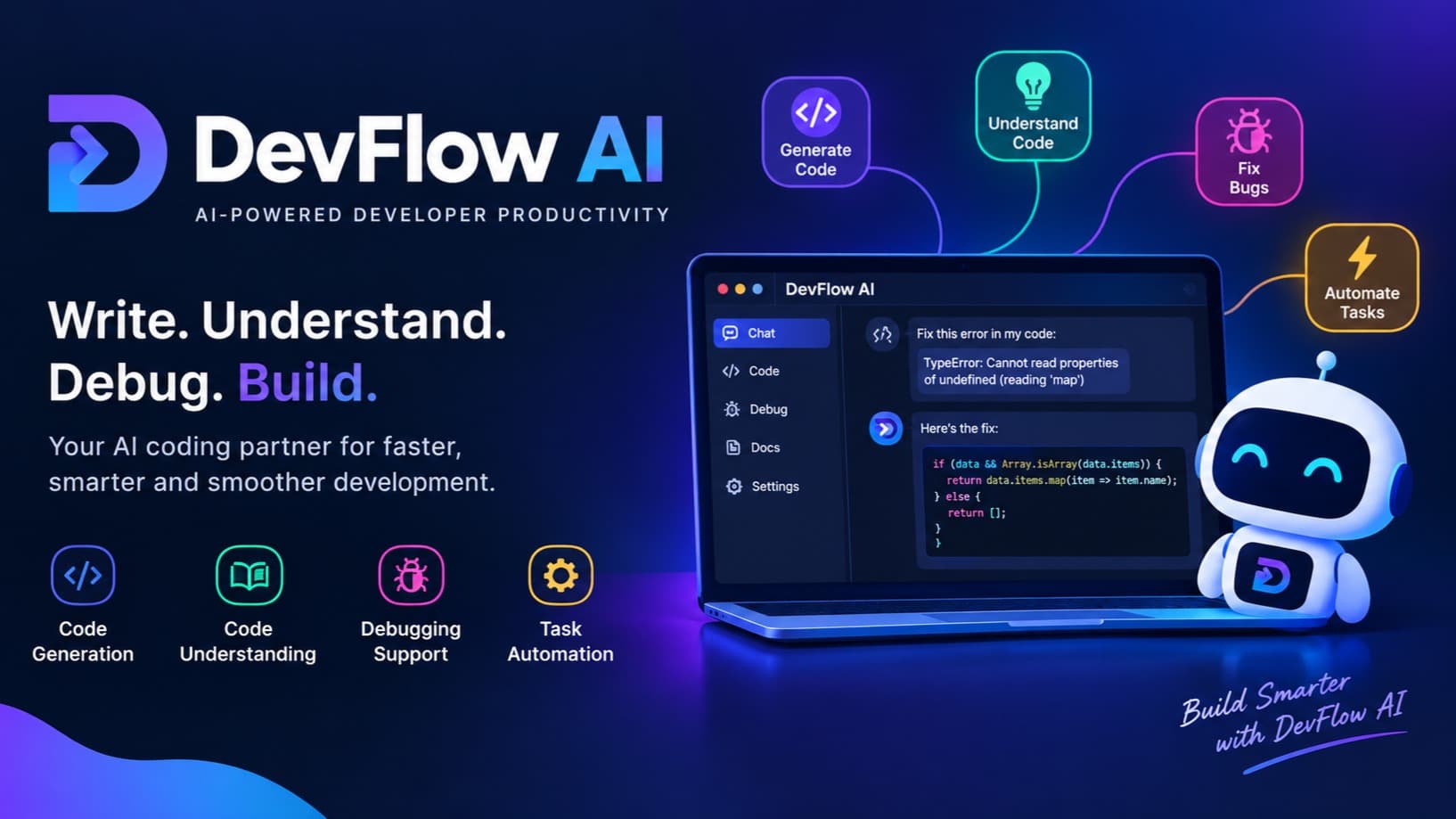
DevFlow AI is an AI-powered developer productivity platform designed to help developers spend less time on repetitive development tasks and more time solving meaningful problems. Problem: Developers often spend significant time understanding unfamiliar code, debugging errors, writing repetitive code, creating documentation, and performing routine development tasks. These activities can slow development, increase the chance of mistakes, and make it harder for developers to maintain productivity, especially when working on larger or unfamiliar projects. Solution: DevFlow AI provides an intelligent workspace that assists developers throughout their development workflow. Developers can use the platform to understand code, generate and improve code, identify and troubleshoot errors, and receive AI-assisted guidance while working on software projects. By bringing these capabilities into one developer-focused workflow, DevFlow AI reduces repetitive manual effort and helps developers move from a problem to a working solution more efficiently. Target Users: The primary users are software developers, students learning programming, individual developers, and development teams who want to improve their everyday coding workflow. How Users Interact: A developer can use DevFlow AI by providing a coding task, describing a problem, asking for an explanation, or requesting help with implementation and debugging. The system analyzes the developer's request and provides useful AI-assisted output that can be reviewed and applied to the project. Creativity and Uniqueness: DevFlow AI focuses on developer productivity rather than being only a general-purpose chatbot. Its purpose is to support multiple stages of the software development workflow in a single environment, helping developers understand, create, debug, and improve software. Impact: By reducing repetitive work and providing contextual AI assistance, DevFlow AI can help developers save time, reduce manual effort, improve consistency, and focus more on designing and building useful software. The project demonstrates how AI-assisted development can be integrated into practical developer workflows.

Fresno LUX: A Living City

Fresno LUX: A Living City

Fresno LUX is a prototype for a living intelligence layer across an entire city. Fresno already contains enormous amounts of intelligence: residents know where problems exist, nonprofits know where help is needed, businesses know where opportunities exist, educators understand gaps in learning, researchers generate knowledge, and government maintains critical infrastructure and data. The problem is that much of this intelligence is fragmented across disconnected systems. Fresno LUX connects those pieces. The platform creates a shared city graph where people, organizations, resources, needs, projects, observations, experiments, and outcomes become connected nodes. Instead of simply collecting data, LUX continuously asks: What is happening? What do we know? What is missing? What can we test? What changed? A community problem can become an observable signal. That signal can become an experiment. The experiment produces evidence. Evidence changes the system's understanding. That updated understanding informs the next action. Observe → Connect → Understand → Act → Measure → Learn → Converge. The goal is to move Fresno from disconnected information toward collective intelligence—a system where knowledge can travel across boundaries and successful solutions can be discovered, tested, measured, and replicated. LUX is designed to make the invisible connections visible: the relationship between a neighborhood and its resources, between a student and educational opportunity, between a business and workforce capacity, between environmental conditions and community health, and between an idea and measurable real-world impact. This hackathon prototype demonstrates the beginning of a Living Fresno Graph: a city that can observe itself, learn from evidence, and coordinate toward better outcomes.

LEFA AI - Governed Autonomous Alpha Companion

LEFA AI - Governed Autonomous Alpha Companion

Most finance products introduce themselves with charts, balances, and buttons. You speak to LEFA. LEFA is the user-facing base intelligence. The complicated architecture underneath exists to help LEFA make a better decision — not to make the user learn the architecture. You bring the human question. LEFA brings governed financial intelligence. See the engine room Inspect assets. 👁️ Observe → 📖 Ledger → ✨ Reveal Animated LEFA Observe Ledger Time Reveal timeline LEFA does not treat a convincing first answer as reality. Observe what is happening. Ledger what was known. Let time continue. Reveal what survived. The frontend tells the story. The backend preserves the truth. Time decides what survives. 🧠 What moves under LEFA? Animated LEFA backend control room The public experience stays light. The backend is intentionally heavy. HUMAN ↓ LEFA — base identity / final decision-maker ↓ CRUD — capture the event ↓ ARK — governed structured bloat ↓ BMP—stress test, filter and compress ↓ MAO — route bounded responsibility ↓ SWFUS — five internal ecosystems ↓ EVIDENCE + RECEIPTS + UNCERTAINTY ↓ LEFA ↓ DECISION / EXPLANATION The internal system does not replace LEFA's judgment. It filters unsupported certainty, preserves useful ambiguity, and returns better governed evidence to the base model. OPEN // Why the backend expands before it compresses 🌱 Five agents. Five ecosystems. One LEFA. Animated LEFA SWFUS five-agent ecosystem The five internal agents do not talk to the user. They receive governed information from LEFA's backend and operate inside bounded ecosystems. S Sovereign Ingestion What may enter as a governed signal? W Witness Isolation What must be preserved independently as testimony? F Fluid Vectoring What interpretations or directions remain plausible? U Unified Synchronization What accepted state must align before action? S Severance Execution What must be cut, held, or rejected? Rich at the center. Minimal at the edges.