Gemma 2

Gemma 2 is the second-generation open large language model (LLM) from Google, built to advance performance, scalability, and responsible AI development. This model family supports diverse applications, from complex conversational AI to advanced content moderation systems. Based on Google’s leading transformer architecture, Gemma 2 builds on the Gemma foundation, incorporating enhanced safety, accessibility, and multi-platform deployment capabilities.

General
Relese dateFebruary 2024​
AuthorGoogle DeepMind in collaboration with Google AI teams
WebsiteGoogle AI Gemma
RepositoryGoogle AI Developer Resources​
TypeAdvanced open-source AI, large language model

Key Features:

  • Enhanced Parameter Options: Gemma 2 is available in configurations up to 27 billion parameters (2B, 9B, and 27B) for handling large-scale, complex language tasks​.

  • ShieldGemma Safety Classifiers: ShieldGemma, a suite of safety-focused classifiers, helps detect and mitigate harmful content, addressing issues like hate speech, harassment, and explicit material.​

  • Efficient Transformer Architecture: Supports processing up to 8192 tokens in a single pass, enhancing performance in long-form text processing and providing nuanced output across complex language tasks​.

  • Flexible, Scalable Deployment: Optimized for both edge devices and cloud infrastructure, making it suitable for local, distributed, and high-demand deployment environments​.

  • Integration with Leading AI Platforms: Works seamlessly with Google Cloud’s Vertex AI, Keras, JAX, and PyTorch, providing adaptable and efficient customization options for developers​.

Applications:

  • Enterprise AI: Suitable for high-scale, complex applications such as automated data analysis, market predictions, and large-scale content creation.

  • Content Moderation Systems: The ShieldGemma classifiers filter harmful content, making it a good choice for moderation in social media, online communities, and customer service settings​.

  • Multilingual Applications: With enhanced token processing, Gemma 2 is optimal for tasks requiring intricate language understanding and cross-language generation, ideal for global customer support and translation tools.

  • Conversational AI and Chatbots: Instruction-tuned models within Gemma 2 make it highly effective for advanced conversational systems, chatbots, and interactive voice assistants​.

Get started building with Gemma 2:

You can start developing with Gemma 2 by accessing model weights from Google AI Studio and Kaggle. With integrated ShieldGemma safety tools, the model is prepped for responsible and large-scale deployments. The model’s compatibility with Google Cloud, Vertex AI, and popular AI frameworks makes it easy to customize for both edge and cloud solutions. Explore the full suite of resources on Google AI Gemma to unlock the potential of Gemma 2 and build robust, responsible AI applications​.

Gemma 2 top builders

Explore the top contributors showcasing the highest number of Gemma 2 app submissions within our community.

Google Gemma 2 AI technology Hackathon projects

Discover innovative solutions crafted with Gemma 2, developed by our community members during our engaging hackathons.

Turno

Turno

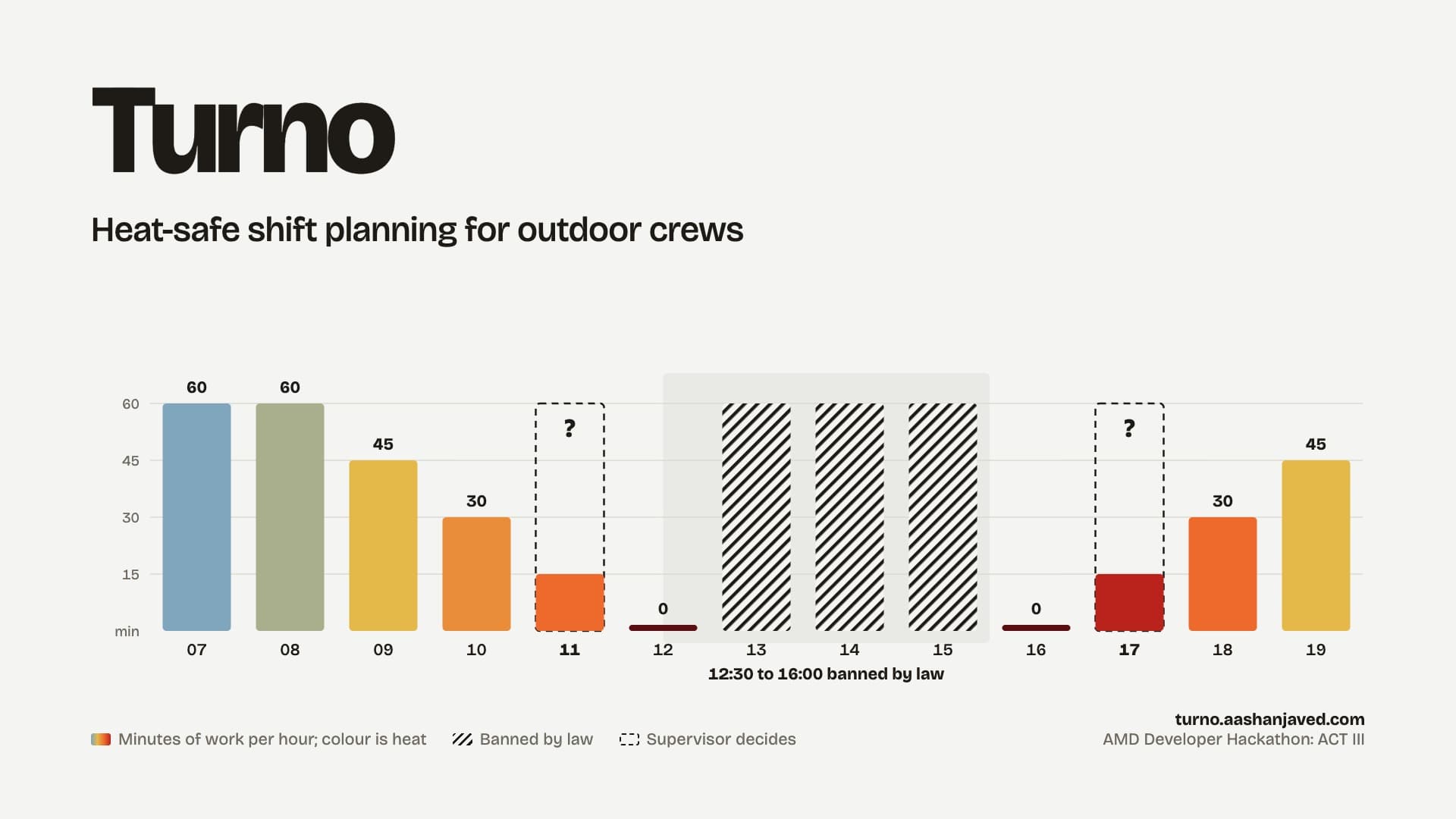
Italian regions ban outdoor work from 12:30 to 16:00 on days rated ALTO for heat risk. A supervisor still has to plan the other hours, prove the ban was kept, and brief the crew. On ERA5 (June to August 2026, five sites), 59 to 66% of heat-restricted working hours fall outside the ban window. Turno plans those hours. How it works. ECMWF's 10-member open-data ensemble gives WBGT for every member and hour (Liljegren, thermofeel). Fixed NIOSH limits set 60, 45, 30, 15 or 0 minutes of work per hour, planned on the hottest member. Hours where members are 30 minutes of work apart go to the supervisor with the reason. The supervisor confirms the Worklimate rating; until then the ban is assumed. Output: a day strip, a bilingual crew briefing, a compliance log. On AMD. AMD Token Factory (AMD Radeon Cloud) runs the ordinance reader: MinerU2.5-Pro reads each region's signed PDF and DeepSeek-V4-Flash proposes every rule field with a verbatim quote. Code accepts a field only if the quote is in the document and contains the value. DeepSeek-V4-Flash also explains each hand-off. Off AMD: Gemma 4 writes the crew briefing through Google's Gemini API, and the forecast is ECMWF open data. No GPU instance was available, so the planned Aurora run on an MI300X did not happen. Pre-registered results: settings chosen on June dates; July and August (10 dates, 5 sites) untouched. One day ahead, a single ECMWF forecast over-planned work in 6.6% of heat-restricted hours; Turno in 1.1%, handing 3.0 to 17.0% of working hours to the supervisor. The reader accepted 0 wrong fields across two runs, and a live Lombardia re-read verified 7 of 7. Limits. Truth is ERA5 (0.25 degrees); there is no thermometer on site. ECMWF open data is 3-hourly. The number check proves every number came from the plan; it does not prove each sentence is right. Not tried with a real crew; no substitute for the employer's risk assessment. Live app: turno.aashanjaved.com. Code (MIT): github.com/Aashan47/turno

ShiftGuard: AI Shift-Handover Workbench

ShiftGuard: AI Shift-Handover Workbench

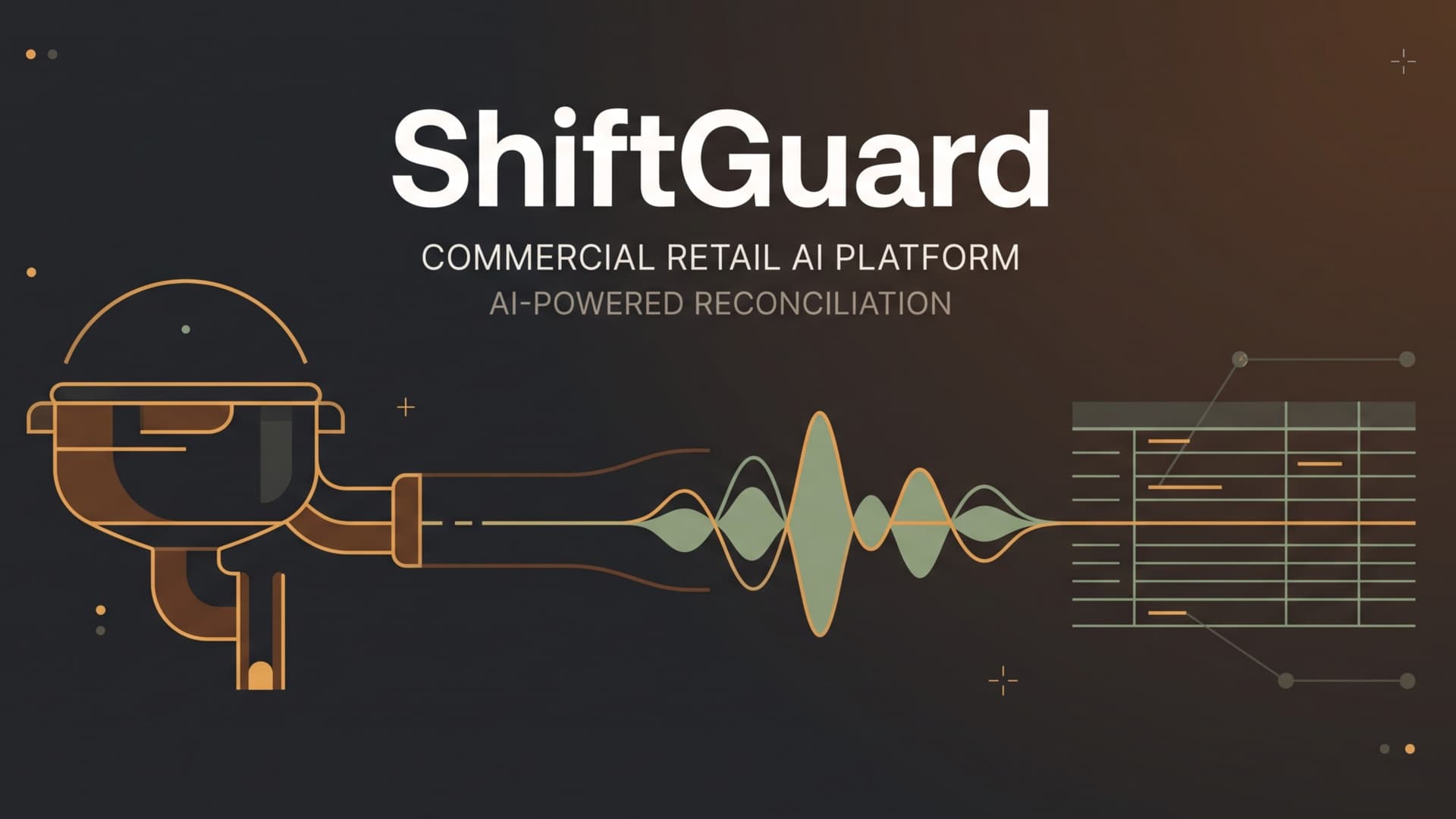
In high-volume food and beverage retail, store shift handovers happen every 6 to 8 hours under tight time pressure. Outgoing baristas and shift leads communicate operational issues via hurried, multilingual voice notes and shorthand messages (e.g., "tadi grinder macet 20 menit, buang beans 200g, es batu abis"). Because standard POS and ERP systems only capture clean transactional data, discrepancies between frontline notes and back-office records slip through unnoticed, resulting in phantom inventory, unlogged waste, and equipment stalls during peak morning rushes. ShiftGuard is a commercial shift-handover reconciliation workbench built for the Reinvent Commerce track. It combines Google Gemma 3-27B-IT running on AMD Instinct GPUs (via the AMD Token Factory API) with a deterministic 5-rule verification engine to turn messy shift notes into verified, actionable store handovers. How ShiftGuard Works: 1. Multilingual Claim Extraction (Google Gemma 3-27B-IT on AMD): Parses colloquial Indonesian and English shift notes into structured operational claims while enforcing an anti-hallucination exact substring quote gate. 2. Deterministic 5-Rule Verification Engine: Cross-checks every extracted claim against 10 store ground-truth records (POS sales exports, void logs, cash counts, espresso cycle counters, cleaning logs, incident books, inventory ledgers, stock sheets, and supplier purchase orders). 3. 3-Axis Epistemic Triage Ledger: Categorizes findings across Severity, Evidence Status (Supported, Contradicted, Not independently verified), and Workflow Status. Gemma generates specific technician and vendor mitigation actions that supervisors can apply in one click. 4. 30-Second Incoming Briefing & Audit Trail: Unlocks shift sign-off only after critical blockers are resolved, synthesizing a 30-second executive briefing for the incoming shift lead alongside an append-only audit log.