Snapdragon

Snapdragon is Qualcomm's brand for its system-on-chip (SoC) family, combining processing, graphics, neural processing, modem, and radio connectivity on a single piece of silicon. From the Snapdragon 8 Elite powering flagship Android smartphones to the Snapdragon X Elite running Windows Copilot+ PCs, the platform targets the full spectrum of connected devices. Snapdragon is the primary hardware platform for on-device AI in consumer electronics, with the Hexagon NPU achieving up to 100 TOPS on the latest generation.

General
DeveloperQualcomm
TypeSystem-on-Chip Platform
LicenseProprietary (silicon); developer tools include open-source components
GitHubqualcomm/ai-hub-models
DocumentationQualcomm AI Hub Docs
AI Hubaihub.qualcomm.com

Core Features

  • Hexagon NPU — dedicated neural processing unit optimized for AI inference; achieves 40 TOPS (8 Gen 3) to 100 TOPS (8 Elite); ranked #1 on MLPerf Inference v4.0 mobile benchmark.
  • Heterogeneous AI Engine — workloads dynamically distributed across Hexagon NPU, Adreno GPU, and Oryon/Kryo CPU for optimal power efficiency.
  • Qualcomm AI Hub — cloud platform with 175+ pre-optimized models and remote profiling on 50+ real Snapdragon devices; install with pip install qai_hub_models.
  • Multi-precision support — FP32, FP16, INT16, and INT8 inference; enables quantized LLM deployment on mobile hardware.
  • On-device LLM execution — validated with Llama, Mistral, Qwen3, IBM Granite, and Stable Diffusion variants via AI Hub.
  • Sensing Hub — ultra-low-power always-on processor for continuous sensor monitoring without waking the main cores.

Snapdragon Platform Variants

VariantSegmentNPU PerformanceNotable Devices
Snapdragon 8 EliteFlagship mobile (2024-2025)100 TOPSSamsung Galaxy S25 series
Snapdragon 8 Gen 3Flagship mobile (2023-2024)~40 TOPSSamsung Galaxy S24 series
Snapdragon X EliteWindows laptops / Copilot+ PC45 TOPSMicrosoft Surface Laptop
Snapdragon X2 EliteWindows laptops (2025)80 TOPSNext-gen Copilot+ PCs
Snapdragon AR2AR glassesUltra-low powerVarious XR wearables

Tools and Resources

  • Qualcomm AI Hub — aihub.qualcomm.com — browse pre-optimized models, run cloud profiling sessions, and download deployment artifacts.
  • AI Hub Models (GitHub) — github.com/qualcomm/ai-hub-models — open-source Python library (BSD-3-Clause) with 200+ model recipes.
  • AI Engine Direct SDK (QNN) — low-level SDK for building applications directly targeting the Hexagon NPU.
  • AI Model Efficiency Toolkit (AIMET) — quantization, pruning, and compression tools for edge-friendly model preparation.
  • Snapdragon Neural Processing Engine (SNPE) — runtime that converts ONNX and TensorFlow models to Snapdragon-native format.
  • Qualcomm Device Cloud — remote access to physical Snapdragon hardware for testing without owning devices.
  • ONNX Runtime Execution Provider — plugin for running ONNX models with Hexagon NPU acceleration.
  • Developer Discord — discord.com/invite/qualcommdevelopernetwork.

Ecosystem and Integrations

  • Verified integrations with Amazon SageMaker, Hugging Face, Roboflow, Dataloop, EyePop.ai, and NOTA AI for model preparation and deployment.
  • ExecuTorch (Meta/PyTorch) includes a stable Qualcomm AI Engine backend for deploying PyTorch models directly to the Hexagon NPU.
  • Llama 3.2 1B and 3B models from Meta were co-optimized for Snapdragon via QAT+LoRA quantization, achieving over 350 tokens/s prefill on Galaxy S24+.
  • Copilot+ PCs built on Snapdragon X Elite are Windows-native AI development targets, with NPU exposure via DirectML and QNN.

Start building with the Qualcomm AI Hub quickstart or clone the ai-hub-models repository and run pip install qai_hub_models to access the full model library.

Qualcomm Snapdragon top builders

Explore the top contributors showcasing the highest number of Qualcomm Snapdragon app submissions within our community.

Qualcomm Qualcomm Snapdragon AI technology Hackathon projects

Discover innovative solutions crafted with Qualcomm Snapdragon, developed by our community members during our engaging hackathons.

Code2Edge: Deployment with Proof

Code2Edge: Deployment with Proof

Porting a PyTorch model to a microcontroller sounds like a model problem, but it's really a pipeline problem. A keyword-spotting model needs audio resampled, windowed, FFT'd, run through a Mel filterbank, log-compressed, and normalized before it ever reaches the network — and the constants controlling each step (window size, FFT convention, epsilon values) are usually scattered across config files nobody rereads. Get one of them wrong in the C rewrite and the device still boots fine; it just quietly predicts the wrong thing, with no black-box "pass/fail" test telling you why. Code2Edge solves this with stage-wise differential parity instead of black-box testing. The same audio corpus runs through both the Python reference pipeline and the generated C pipeline, and every intermediate tensor is compared — max/mean absolute error, cosine similarity, and eventually prediction agreement. If a stage drifts past tolerance, the system flags exactly which stage and offers a deterministic hint (e.g., "shape mismatch at framing — check hop length"), so debugging starts from evidence instead of guesswork. Bob drives this as an orchestrator, not a black-box code generator. An MCP server gives it five hardware-aware tools (profiling the model, inspecting the pipeline, checking the target, running parity tests, benchmarking) plus workflow tools for starting runs and gating steps. Bob follows a fixed sequence: analyze the repo, produce an Edge Readiness Report, pause for a human APPROVE/REJECT, generate code, run a host parity gate (with a 3-attempt repair loop before escalating to a human), build for the MCU, run a device parity gate, benchmark on real silicon, and open a pull request. The target users are embedded/ML engineers who need confidence that a ported pipeline behaves identically to its source model — not just that it compiles. The project is grounded in a real trained workload: a 119,372-parameter DS-CNN for 12-class keyword spotting (96.65% test accuracy), deployed to an STM32U585 (Cortex-M33) on an Arduino UNO Q. What makes this different is the discipline around honesty: every reported number is explicitly labeled real (measured from an artifact) or mock (a placeholder for an unavailable dependency), and the two are never mixed. Host-side parity is fully real and passing across 500 samples and 4 pipeline stages. Physical benchmarking is real and passing on actual silicon (50/50 correct inferences). Device-side parity is real but currently limited to a single fixture rather than the full corpus — an openly disclosed gap, with a hardware-validation guide checked in to finish the job.

Team Xcel- VisionKnob

Team Xcel- VisionKnob

VisionKnob is an interactive AI-powered image understanding system that combines physical hardware controls with computer vision and multimodal AI. The idea behind the project is to make image analysis more intuitive, private, and engaging by allowing users to interact with AI through a physical knob instead of relying only on a keyboard or mouse. The system uses an Arduino UNO Q and Modulino hardware as the physical interface. Users can turn or press the knob to navigate through images, select an image, and interact with the AI assistant. A Streamlit-based interface displays the selected image and allows the user to ask questions about what the image contains. VisionKnob uses a Gemma vision model to analyze the selected image and generate natural-language responses. For example, a user can ask the system to describe an image, identify important objects, explain what is happening in a scene, or answer specific questions about visual details. One of the main goals of VisionKnob is to explore how physical computing and generative AI can work together to create more natural human-computer interactions. Instead of AI existing only as a chatbot, VisionKnob connects AI with real-world hardware controls, making the interaction more tangible and accessible. The project also focuses on local and privacy-conscious AI processing. By using models that can run locally, sensitive images do not necessarily need to be uploaded to external cloud services. This makes VisionKnob useful for applications where privacy, offline access, or low-latency responses are important. VisionKnob demonstrates how multimodal AI, embedded hardware, and modern user interfaces can be combined into a practical system for visual exploration, education, accessibility, research, and future smart-device applications.

MapLLM

MapLLM

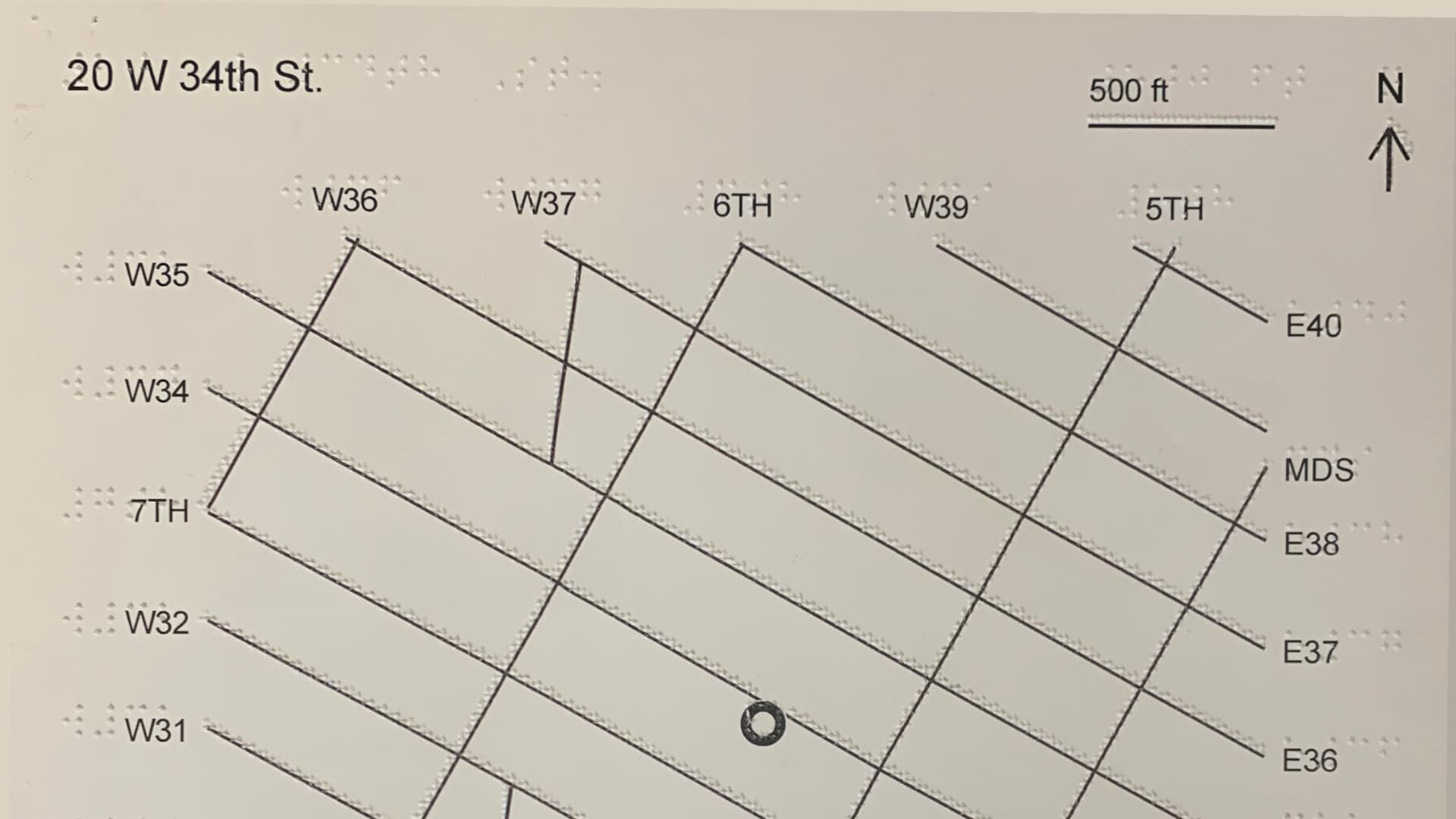
Digital maps are great for navigation but nearly useless for exploration if you're blind: a screen reader gives you a list, never a layout. Tactile maps give real spatial layout under your fingers, but a sheet only fits a dozen braille labels — no store names, distances, hours, or "what is this?" MapIO keeps the cheap embossed sheet and moves all the information into audio. A camera looks down at the map; SIFT homography locks the sheet and MediaPipe tracks your index fingertip, which becomes your avatar on a street-and-POI graph. Wherever you touch, you hear what's there. The audio layer is unbounded, so density is limited by curiosity, not emboss space. For open-ended questions ("what's the closest coffee, and how far from here?") MapIO uses Gemma 4 served locally by Qualcomm AI Hub GenieX on the Snapdragon X Elite NPU. The model never guesses distances or routes: it calls tools on the map graph (get_distance, nearby POIs, guide_to_destination) and speaks deterministic answers. Everything runs on-premises; nothing leaves the LAN. The Qualcomm angle is two chips, two roles. The X Elite is the room's brain: one local LLM and speech server shared by every map. The Arduino UNO Q (QRB2210) is a sub-$60 map station that runs the whole perception loop on-device — SIFT, hand tracking, graph lookup, TTS — and streams speech straight to a speaker over Bluetooth. Plug in, it boots, it says "Map detected." A laptop alone works, and that's a supported deployment. But a board per map is what makes a museum floor or classroom practical: N cheap stations, one shared server, touch feedback that never crosses the network. Next: speech-to-text on the UNO Q itself, and unified Q&A that follows a visitor from map to map.