Llama 3

Explore Meta Llama 3, the next generation of state-of-the-art open-source large language models, offering groundbreaking features and enhanced performance.

Key Features

  • State-of-the-Art Performance: Meta Llama 3 introduces new 8B and 70B parameter models, establishing a new state-of-the-art for large language models at those scales.
  • Model Architecture: Meta Llama 3 adopts a relatively standard decoder-only transformer architecture, with several key improvements over previous versions, including a tokenizer with a vocabulary of 128K tokens for more efficient language encoding.
  • Training Data: Meta Llama 3 is pretrained on over 15T tokens collected from publicly available sources, ensuring high-quality training data for optimal model performance.
  • Scaling Up Pretraining: Efforts have been made to scale up pretraining in Meta Llama 3 models, with detailed scaling laws developed for downstream benchmark evaluations.
  • Instruction Fine-Tuning: Meta Llama 3 innovates on instruction fine-tuning approaches to fully unlock the potential of pretrained models in chat use cases.

Start building with Meta Llama 3's products

Discover the capabilities of Meta Llama 3 and unlock new possibilities in AI development. Dive into our offerings and experience the power of cutting-edge language models at your fingertips.

List of Meta Llama 3's products

Llama 3 Models

Meta Llama 3 models are available on various cloud platforms, including AWS, Google Cloud, and Microsoft Azure, offering unparalleled performance and scalability. With support from leading hardware platforms, Meta Llama 3 sets a new standard for large language models.

Trust and Safety Tools

We are committed to developing Meta Llama 3 responsibly and offer a range of trust and safety tools, including Llama Guard 2, Code Shield, and CyberSec Eval 2, to ensure responsible usage of our models.

Meta AI Assistant

Built with Llama 3 technology, Meta AI is one of the world's leading AI assistants, offering intelligence augmentation and productivity enhancement across various tasks. Try Meta AI today and experience the future of AI assistance.

System Requirements

Meta Llama 3 8B and 70B models represent the beginning of a series of releases, with plans for models exceeding 400B parameters and new capabilities such as multimodality and multilingual conversation support. Stay tuned for detailed research papers and further advancements in Meta Llama 3 technology.

Llama 3 top builders

Explore the top contributors showcasing the highest number of Llama 3 app submissions within our community.

Llama 3 AI technology page Hackathon projects

Discover innovative solutions crafted with Llama 3, developed by our community members during our engaging hackathons.

BoLocal

BoLocal

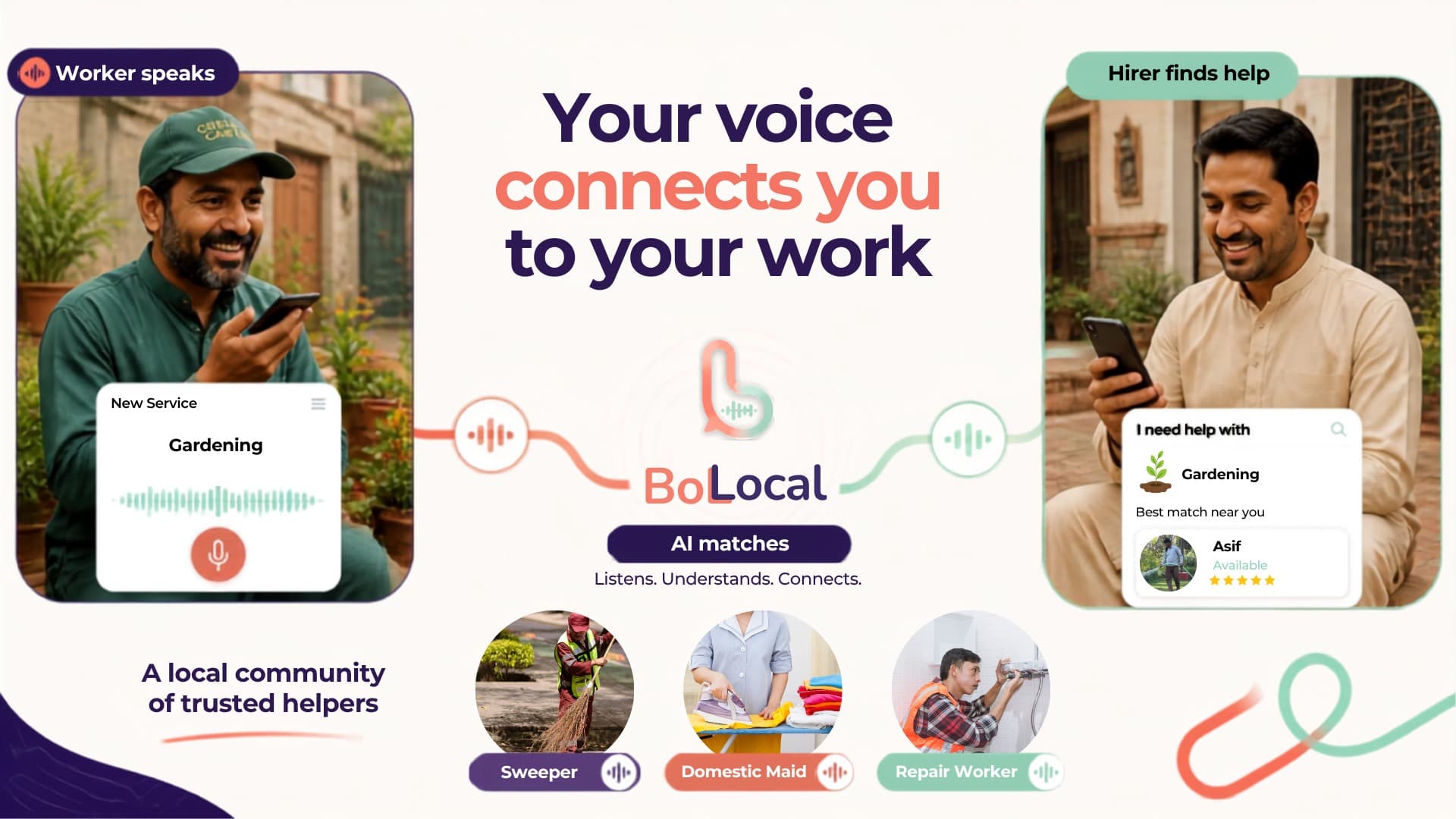
Many local and informal workers find employment through personal networks. Their skills and availability are often not digitally visible. At the same time, people looking for domestic or local service workers may have no structured way to discover who is available nearby and suitable for the work they need. Existing employment platforms often require users to read, type, create written profiles, prepare CVs, and navigate text-based interfaces. This creates barriers for workers with limited literacy or limited experience using formal digital employment platforms. We propose a local employment platform that uses Voice AI to bridge this gap. Workers can simply speak about the services they provide, their experience, location, and availability. People looking for workers can search through either voice or text. Instead of browsing generic job listings, they can describe what they need, such as someone for house cleaning in a particular area who is currently available. AI interprets the request and identifies relevant workers based on service, location, and availability. The platform includes phone and identity/age verification to provide employers with basic verified information about workers. Over time, profiles can be expanded with work history, ratings, and other information that supports informed hiring. The initial focus is on local services such as cleaning, cooking, household work, gardening, and similar services, with potential expansion to other informal service workers such as electricians, plumbers, drivers, and mechanics. The core idea is simple: workers should be able to make their skills discoverable without navigating a traditional employment platform, while people looking for local workers should have an easier way to find suitable, available workers. Voice AI provides the bridge between a worker's spoken description and a searchable digital employment profile.

Auditra

Auditra

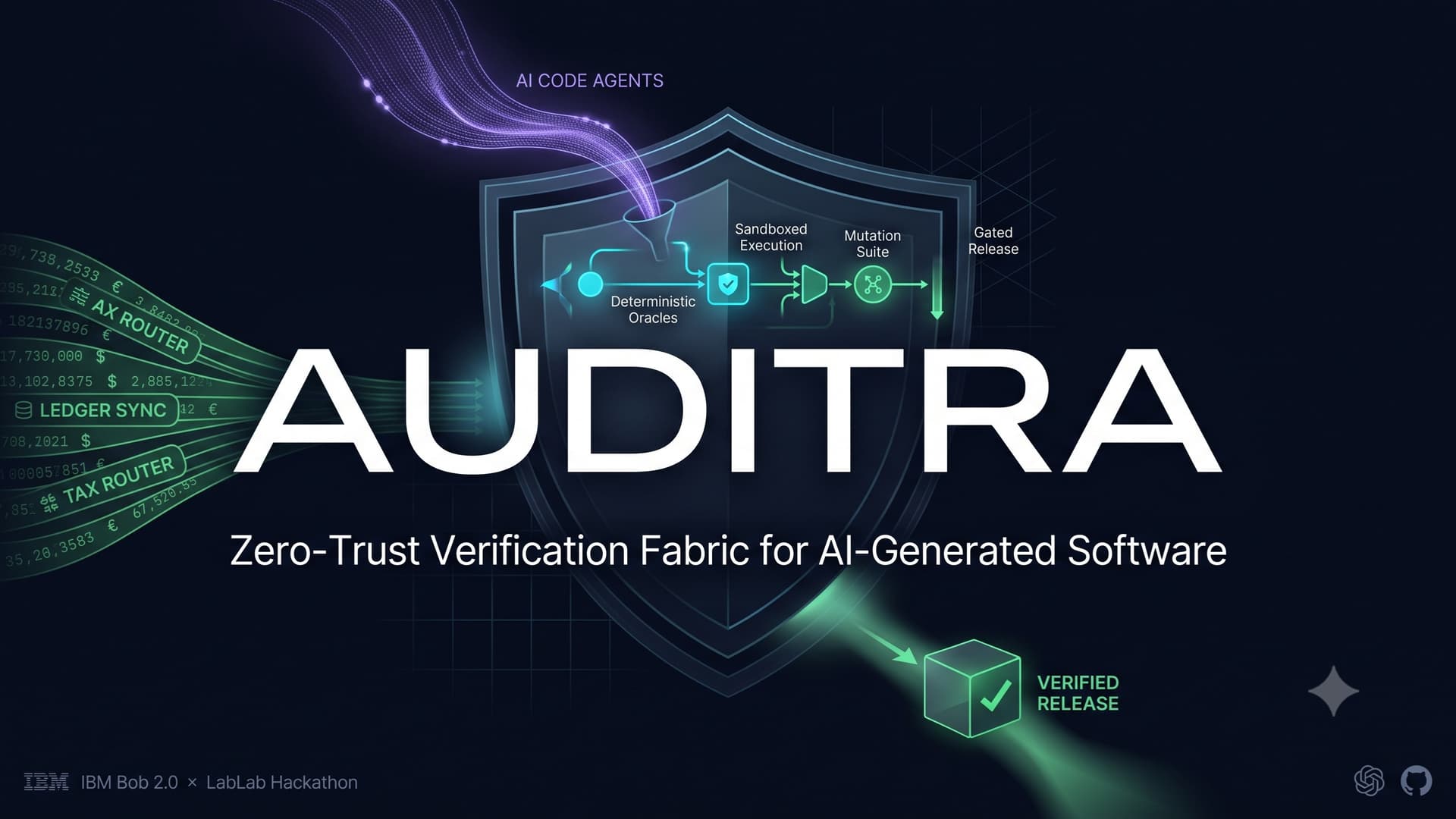
AI-generated software is becoming faster to produce, but speed creates a critical problem: how do we know AI-written code is actually safe to release? Traditional testing can miss adversarial edge cases, while asking the same AI that generated the code to judge whether it is correct creates a circular trust problem. Auditra is a zero-trust verification fabric for AI-generated software. Its core principle is simple: AI proposes; Auditra verifies. Auditra provides an independent verification layer between AI-generated code and deployment. It uses deterministic behavioral oracles, adversarial and boundary scenarios, AST/security validation, a lightweight isolated execution sandbox, mutation testing, and automatic rollback to evaluate proposed changes. The AI never controls the verification rules or decides whether its own code is correct. The platform currently demonstrates this across four intentionally vulnerable services: Tax Router, Billing Engine, Ledger Sync, and Fraud Detector. Auditra runs 58 verification scenarios across these services and uses 6 deliberate code mutations to demonstrate that its verification layer can detect meaningful behavioral changes. The target users are software developers, AI coding-agent users, engineering teams, and organizations adopting AI-assisted software development. Developers can interact with Auditra through its verification workflow or through IBM Bob 2.0 via MCP. Bob can request verification of an individual target or the entire system, receive deterministic feedback, and use that feedback to repair the code. Auditra then independently re-verifies the result. What makes Auditra different is its separation of generation and verification. Instead of making an AI agent both the programmer and judge, Auditra establishes an independent trust boundary around the generated code. A release is approved only when the defined behavioral and security checks succeed; otherwise, the release is blocked or the applied patch is rolled back. The result is a practical verification layer designed to make AI-assisted development more trustworthy, observable, and release-aware without removing the speed and flexibility of AI coding agents.

PlantAI:Plant Disease Diagnosis

PlantAI:Plant Disease Diagnosis

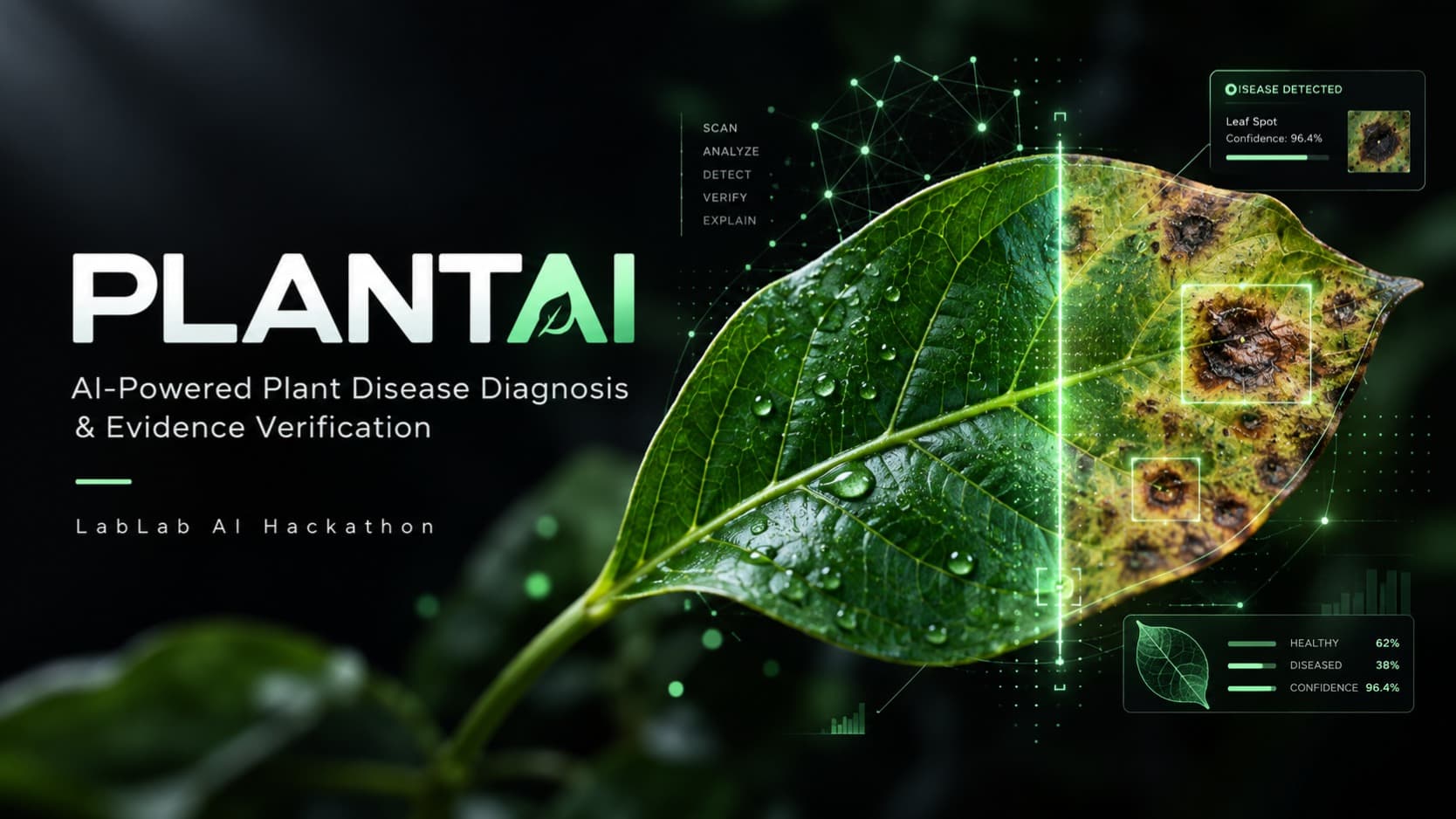
PlantAI is an agentic computer vision system designed to help farmers, agricultural students, researchers, and plant-care professionals identify plant diseases quickly and make more informed decisions. Plant disease diagnosis is often dependent on manual inspection or expert knowledge, which can be slow, subjective, and difficult to access—especially when symptoms look similar across different diseases. A wrong or uncertain diagnosis can lead to inappropriate treatment, crop loss, and unnecessary use of pesticides. PlantAI addresses this problem through an AI-powered diagnosis pipeline that combines computer vision with agentic evidence verification. Users interact with a simple interface by uploading an image of a plant leaf. The computer vision model analyzes the image and predicts the most likely disease. Instead of relying only on a single classification result, PlantAI uses an ensemble of deep learning models to improve prediction reliability. The system combines EfficientNetV2-S, ConvNeXt-Tiny, and Swin-Tiny through weighted ensemble learning. A supervisor agent then coordinates additional evidence-gathering steps, including retrieval-augmented generation (RAG), disease-specific knowledge retrieval, web research, and contextual information. The collected evidence is analyzed and fused with the computer vision prediction to provide a more explainable and reliable diagnosis. A key feature of PlantAI is its focus on evidence-backed AI rather than simply returning a disease label. The system can provide the predicted disease, confidence information, supporting evidence, and relevant diagnostic context. When the available evidence is insufficient or the prediction is uncertain, the architecture can support uncertainty handling and abstention rather than forcing an unreliable answer. What makes PlantAI unique is the combination of high-performance computer vision, ensemble learning, RAG, web research, and agentic verification in a single plant-disease diagnosis workflow. This creates a multi-stage system where visual recognition is supported by external evidence and reasoning rather than operating as an isolated image classifier. The target users can upload a plant image through the web application and receive an AI-generated diagnostic response in an accessible, conversational format. PlantAI is designed to make advanced AI-assisted plant disease analysis more accessible while providing a foundation for future agricultural decision-support applications. PlantAI demonstrates how computer vision and agentic AI can work together to transform image-based disease recognition into a more evidence-aware and reliable diagnostic workflow.

BobSpot — Evidence-Backed PR Verification

BobSpot — Evidence-Backed PR Verification

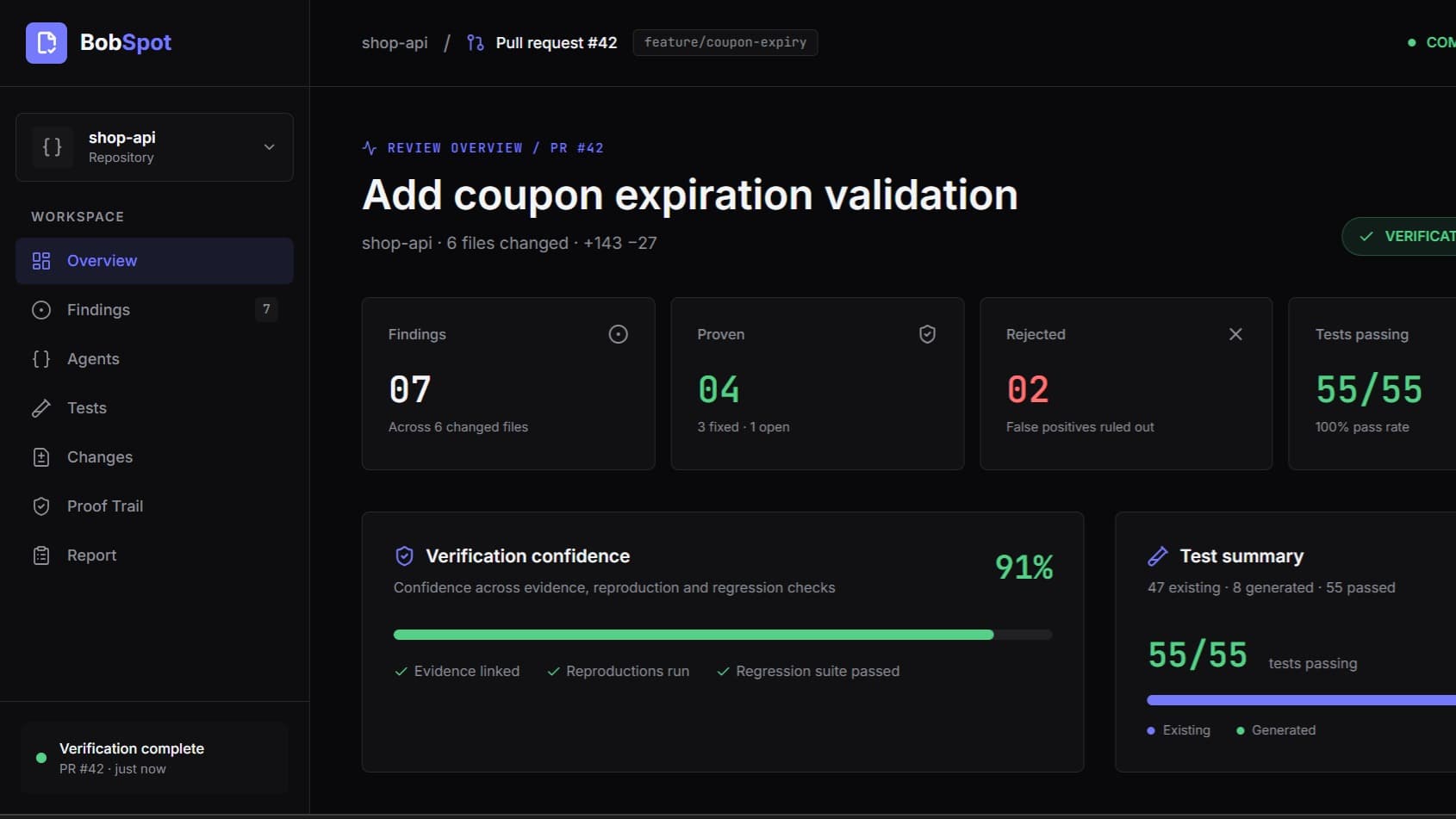
AI coding assistants can review pull requests fast, but their findings aren't always correct. A reviewer might flag "this allows an expired coupon to be accepted" — but is that true? Can it be reproduced? Does the fix actually work, or did it break something else? Today, developers still have to manually investigate every AI claim before they can trust it. That manual verification step is the real bottleneck. BobSpot removes it. Instead of treating an AI review comment as fact, we built a pipeline of specialized IBM Bob agents that investigate, reproduce, fix, challenge, and verify every finding — and nothing is marked a bug until there's executable evidence. The workflow: a developer submits a GitHub repo and PR number. A Context Agent reads the PR description, issue, and README to understand intended behavior. An Investigator Agent scans the diff for candidate issues. A Reproducer Agent writes and runs a real test to confirm or disprove each claim — if it can't reproduce the bug, the finding is REJECTED right there, no matter how confident the original claim sounded. Only reproduced bugs move forward: a Fixer Agent writes a minimal patch, an Adversarial Verifier actively tries to break that patch with edge cases (null values, timezone boundaries, boundary conditions), and a Regression Agent re-runs the full existing test suite to catch collateral damage. Every finding ends in one of five states — PROVEN, PROVEN FIXED, REJECTED, UNVERIFIED, or FIX FAILED — each backed by a visible trail of evidence, not just an agent's opinion. This matters because agreement between AI agents isn't proof. Multiple models can confidently repeat the same wrong assumption. BobSpot's core principle is that execution evidence outranks agent consensus — if five agents agree a bug exists but the reproduction test can't trigger it, the finding is rejected, full stop. Target users are developers, tech leads, and QA engineers who are already relying on AI-assisted review and need to know which findings are worth their time — and reviewers who want confidence before merging, not just another opinion to weigh. In the dashboard, a developer sees live agent status as verification runs (Investigator → Reproducer → Fixer → Adversarial Verifier → Regression), a findings list filterable by status and severity, and — for each finding — a full proof trail: the claim, the flagged code, the reproduction test and its before/after result, the proposed diff, every adversarial edge case checked, and the regression suite outcome. Rejected findings show exactly why the original claim was wrong, and failed fixes are flagged for human review rather than silently merged. What makes this creative and different from existing multi-agent reviewers is that we don't stop at "more agents reviewing the code" — we make the agents prove their own findings against real execution, and we make agents adversarial toward each other's work rather than cooperative toward a shared conclusion. It turns AI code review from an opinion developers have to double-check into a reproducible, auditable proof.

RepoMind : AI PR Reviewer & AST Blast Engine

RepoMind : AI PR Reviewer & AST Blast Engine

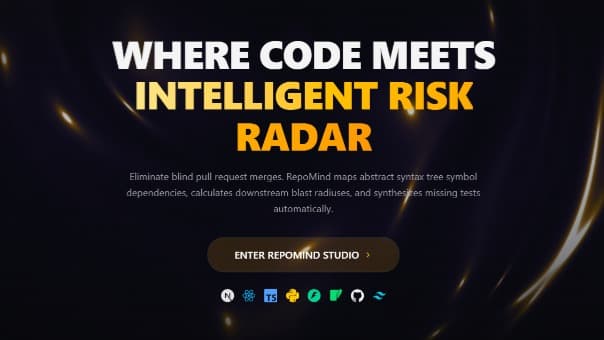
PROBLEM: Traditional code review tools only scan the lines changed inside a pull request diff. They are completely blind to downstream side-effects — when a function signature, class interface, or type definition is modified, callers and consumers spread across dozens of other files can silently break. Additionally, most AI-assisted review tools rely on a single LLM provider, making them fragile to API rate limits and outages. Worst of all, AI-generated code fixes frequently contain truncated snippets, placeholder stubs like "// ... existing code ...", or hallucinated imports that break production codebases when merged. SOLUTION — RepoMind 2.0: RepoMind is an enterprise-grade autonomous AI code review and AST blast radius platform that solves all three problems through five core innovations: 1. AST Blast Radius Engine: When symbols (functions, classes, variables) are modified in a PR, RepoMind's Abstract Syntax Tree engine recursively traverses the entire repository to identify every direct and transitive downstream consumer. This reveals hidden breaking changes before they reach staging — something no line-level diff tool can detect. 2. Autonomous GitHub App Bot (repomind-reviewer[bot]): RepoMind runs as a verified GitHub App. When a pull request is opened or updated, it receives a webhook event, validates the HMAC-SHA256 signature, fetches the diff, parses AST symbols, computes risk metrics, and posts a comprehensive formatted review comment — all without any human intervention. Authentication uses RS256 JWT installation tokens so the bot comments under its own verified identity. 3. Dual-Tier Resilient AI Pipeline: RepoMind routes inference through Groq LLaMA-3.3 70B Versatile as the primary high-throughput engine (~250 tokens/sec). If Groq is rate-limited or unavailable, the system automatically and silently falls back to Google Gemini 2.5 Flash, ensuring 100% review availability with zero manual intervention. 4. 1-Click AI Fix Deep-Linking: Every review comment posted by the bot includes actionable fix buttons — "Apply Safe Refactor", "Synthesize Test Suite", and "Code Integrity Patch". Each button is a deep link that opens the RepoMind Studio IDE, auto-loads the repository workspace, focuses the affected file, pre-fills the AI remediation prompt, and presents an inline unified diff for one-click commit back to GitHub. 5. Code Integrity Guardian: Before any AI-generated fix is presented or committed, it passes through strict pre-commit validation — rejecting truncated code, placeholder comments, syntax errors, and hallucinated APIs. Only 100% complete, drop-in replacement code reaches the user. TARGET USERS: Software engineering teams, open-source maintainers, and DevOps organizations who need intelligent, automated PR quality gates that go beyond surface-level linting. CREATIVE & UNIQUE ASPECTS: RepoMind is the only platform that combines AST-level multi-hop dependency tracing with an autonomous GitHub App bot and a browser-based Studio IDE connected through deep-link remediation. The 7-view Obsidian-themed IDE includes an interactive architecture node graph, domino-effect blast radius simulator, AI documentation catalog, SQLite telemetry dashboard, and real-time webhook monitor — providing a complete engineering intelligence workspace from a single platform. VERIFIED LIVE PROOF: The bot has been tested on a real production pull request (PR #6) on GitHub, where repomind-reviewer[bot] autonomously posted a full risk assessment with AST analysis and actionable fix prompts.