MetaGPT

MetaGPT is a groundbreaking AI technology, designed to transform the landscape of software development. This innovative AI model can be thought of as a collaborative software entity, bringing together different roles within a software company to streamline complex tasks.

General
Relese dateAugust, 2023
Repositoryhttps://github.com/geekan/MetaGPT
TypeCollaborative AI Agent

Start Building with MetaGPT

If you're ready to harness the power of MetaGPT for your software development projects, dive right in and start building!

MetaGPT Tutorials


MetaGPT Libraries


Learn More About MetaGPT

Installation Guide: Get MetaGPT up and running quickly with step-by-step instructions.

MetaGPT is the future of software development, bringing unprecedented efficiency and innovation to your projects.

MetaGPT top builders

Explore the top contributors showcasing the highest number of MetaGPT app submissions within our community.

MetaGPT AI technology page Hackathon projects

Discover innovative solutions crafted with MetaGPT, developed by our community members during our engaging hackathons.

Aichaliveret - Smart Cotton SCM

Aichaliveret - Smart Cotton SCM

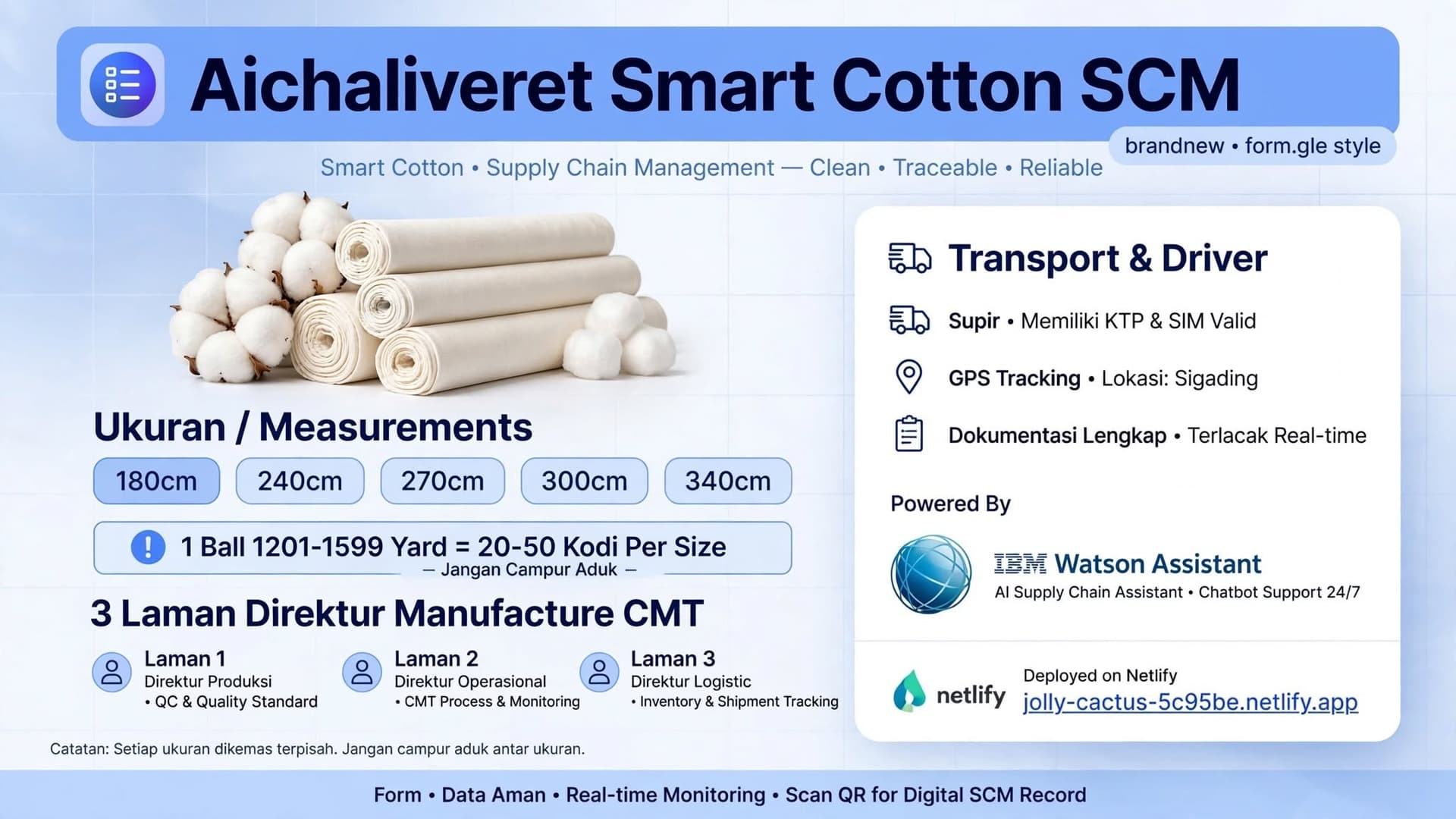
Problem: Traditional garment factories in Indonesia still use handwritten notebooks for cotton fabric. 1 ball is 1201-1599 yards consisting of several rolls, cut to 180cm = 20-50 kodi only, 240cm = 20-50 kodi only, etc. This repeats daily/weekly/monthly. Manual counting is cheap (10 rupiah/paper) but causes repeated clerical work, mixed calculations across sizes, lost data, and no visibility for Direktur, Manufacture, and CMT Konveksi. Existing apps are complex, cost 200rb/month, and create phobia with too many tables. Solution: Aichaliveret v20 SCM Brandnew - a brandnew form.gle experience that is efficient and effective. Input data per ball only but continuous and repeating. Operator selects potongan size (180,240,270,300,340,Custom) - system isolates that size and never mixes calculations (jangan dijumlah campur aduk). Operator types Jumlah Yard 1201-1599 (validated), adds rolls via + button (Google Form style - Bisa otomatis tambah kotak diatas). System auto-calculates: Kodi = Yard*0.9144/(cm/100)/20 and validates 20-50 kodi saja per ball. Save creates "Potongan kain ukuran 180cm tersimpan" in its own table, separate from 240cm table. Target users & interaction: - Laman 1 Direktur: sees all - all sizes tables, total yard, WIP Jadi Kirim, transport supir. - Laman 2 Manufacture: operator gudang - input ball, roll, select potongan, save to Gudang/Mayan. - Laman 3 CMT: receives kirim, confirms Diterima, inputs Dijahit, auto Jadi Pakaian Jumlah dalam Kodi. - Supir: each ball is connected to transport data - nama, nomer KTP/SIM, no polisi, tujuan Sigading diketter, GPS Maps, Recant Klik Selesai, Pesan dan Saran. What makes it creative & unique: - Per-size isolation logic: 1 ball 1201-1599 yard = 20-50 kodi for THAT size only, not mixed. No other SCM does this. - Form.gle brandnew UI: single centered column 780px, white cards, purple top bar, + button to add box - no table phobia. - Efficient: localStorage auto-save like "All changes saved in Drive", works offline, deploy to Netlify jolly-cactus-5c95be.netlify.app. - Transparent formula: pcs = meter / (potongan/100), kodi = pcs/20, inline validation. Effectiveness: Reduces paper waste, replaces 200rb/month complex system with simple free static site, prevents mixing errors, gives Direktur full control, speeds up daily 20-50 kodi flow from Gudang to CMT with GPS-tracked supir. Tested with real handwritten diagram from factory. Tech: Single HTML file, vanilla JS, localStorage, SVG flowchart Direktur-Manufacture-Gudang-CMT.

NEUTRON — AI Software Maintenance Agent

NEUTRON — AI Software Maintenance Agent

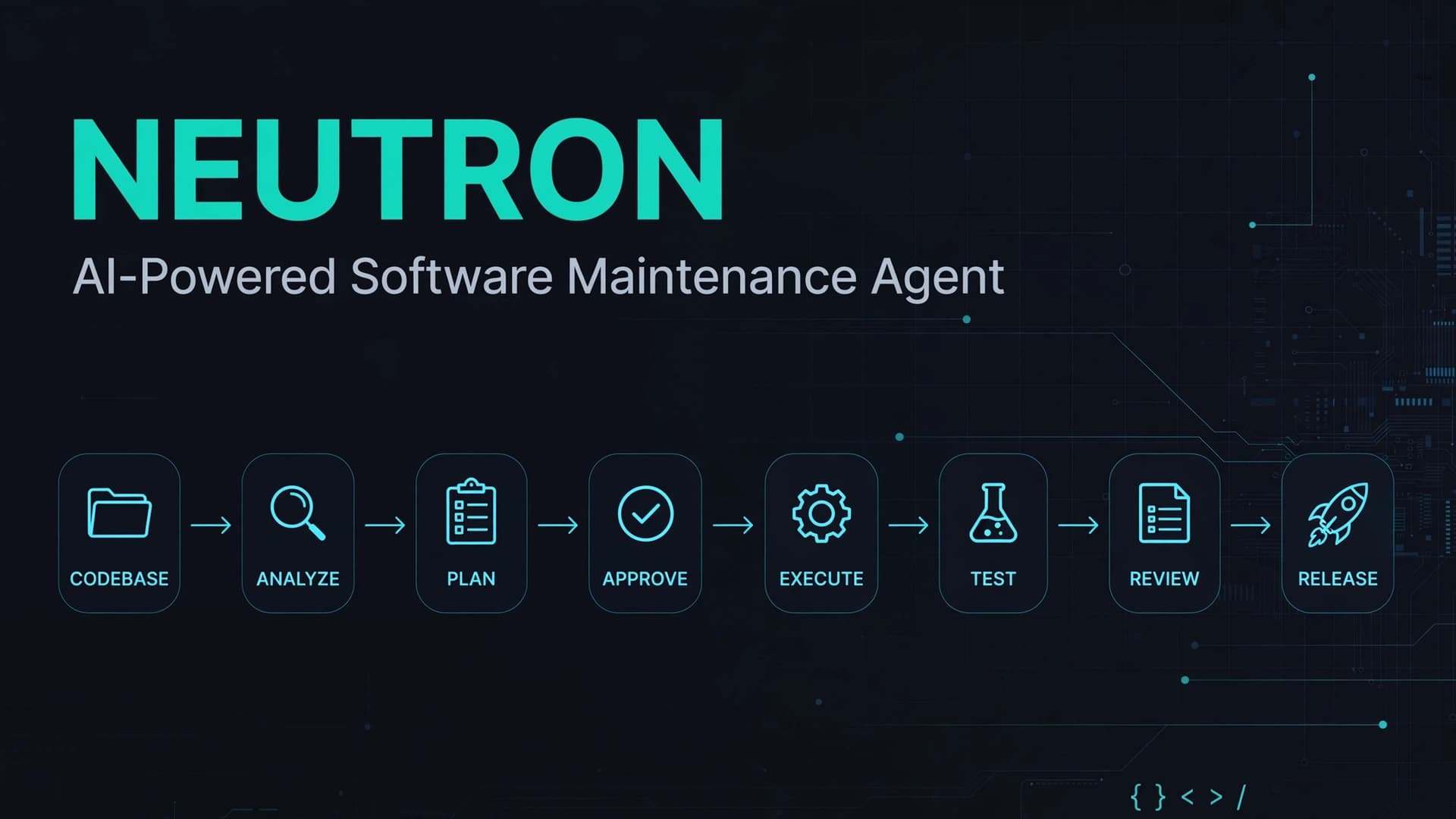
Software maintenance can become difficult when working with an existing project. Adding a feature or fixing a bug is rarely just about writing code. Developers need to understand the repository, find relevant files, identify what could be affected, plan the change, implement it, and verify that existing functionality still works. For students, individual developers, and small teams, this can take significant time. NEUTRON was built to address this problem. It is an AI-powered software maintenance and engineering agent that helps developers work with existing codebases through a structured workflow instead of treating AI as only a code-generation tool. A developer interacts with NEUTRON through its command-line interface and provides a maintenance request in natural language. The request can involve adding a feature, fixing a bug, or modifying an existing workflow. NEUTRON analyzes the repository, understands the requested change, considers its potential impact, and prepares an implementation plan. A key part of the workflow is human approval. NEUTRON does not immediately modify the repository after receiving a request. It presents the proposed plan so the developer can review it and decide whether the work should continue. This keeps the developer involved in important decisions and provides a controlled checkpoint before changes are made. After approval, NEUTRON coordinates specialized agents to work on the appropriate parts of the task. The workflow then moves toward validation through testing, security analysis, code review, and release-readiness checks. This makes NEUTRON more than a simple code generator; it is designed around the complete process of making and validating changes in an existing software project. The target users are developers, students, software engineering teams, and maintainers who regularly work with existing repositories. NEUTRON brings repository analysis, impact analysis, planning, implementation, testing, security, review, and release preparation into one connected workflow. The idea came from a simple observation: AI coding assistants are useful for generating code, but real software development involves much more than writing individual functions. An engineering assistant should understand the existing project, think about the impact of a change, create a plan, allow human review, execute approved work, and help verify the result. Human involvement is central to NEUTRON. It is not designed to blindly modify repositories or replace developers. Instead, it aims to reduce repetitive maintenance work while keeping developers responsible for reviewing and approving important changes. IBM Bob 2.0 was also used by our team as an active development partner while building and refining NEUTRON. Bob supported our development process, while NEUTRON itself remains the software maintenance system and does not depend on Bob as its runtime backend. Our goal is to make AI-assisted software maintenance more practical, organized, and controlled. By combining AI agents with structured workflows and human approval, NEUTRON helps developers spend less time on repetitive maintenance tasks while remaining in control of the changes made to their projects.

AI Code Understanding Assistant

AI Code Understanding Assistant

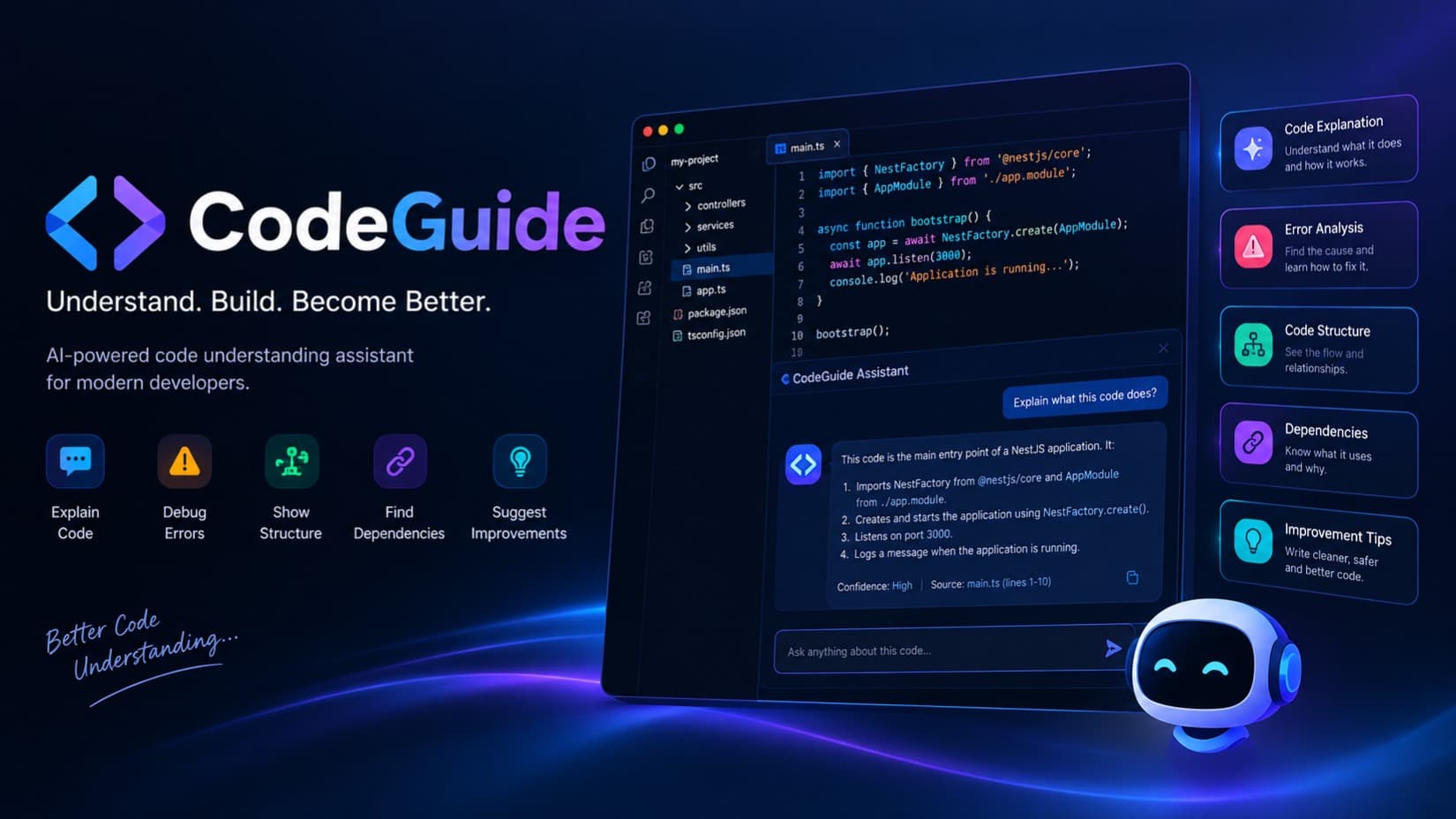
Developers often struggle not only with writing code, but with understanding code written by others, legacy code, unfamiliar repositories, generated code, and complex functions. A developer may ask: What does this code do? Why is it used here? Which parts depend on it? Is there an error? How can it be improved? Finding these answers often requires switching between the editor, documentation, search engines, debugging tools, and separate AI chat applications. Our AI Code Understanding Assistant solves this problem by bringing contextual code understanding directly into the developer workflow. The system combines a VS Code extension and developer interface with a NestJS backend and a dedicated FastAPI AI Engine connected to Ollama. A developer can select code or analyze a complete file from the coding environment. The system captures relevant context such as programming language, source code, file path, and optional developer context, and sends it to the backend. The backend forwards the request to the AI Engine, where specialized analysis capabilities process the code and return understandable results. The assistant supports multiple analysis areas including code explanation, error explanation, structure, dependencies, and improvement suggestions. Results are designed to be understandable and traceable, with confidence information and evidence such as source-code evidence. The system avoids inventing unsupported symbols, relationships, or confidence scores when they cannot be verified. Our target users are software developers, students, engineering teams, and anyone who needs to understand unfamiliar or difficult code quickly. Instead of leaving the development environment and manually explaining code to another tool, users can interact with the assistant as part of their normal coding workflow. The creative aspect of the project is the combination of developer-context capture, structured AI analysis, evidence-aware results, confidence handling, and a separate AI Engine architecture. This allows the system to provide more structured and explainable code understanding rather than returning only a generic AI response. The architecture also focuses on reliability and reproducibility. The backend provides request validation, correlation IDs, structured logging, error mapping, and health/readiness endpoints. Docker Compose provides a reproducible multi-service environment, while Ollama enables local model execution. We validated the complete workflow through real end-to-end testing: developer/client → NestJS backend → AI Engine → Ollama → LLM → backend response. Automated regression tests, Docker validation, service-to-service connectivity checks, error-path testing, security checks, and real Llama 3 and Qwen3 inference were used to verify the system. The result is a developer-focused AI assistant designed to reduce the time and effort required to understand code and help developers work more confidently with unfamiliar software.